Choreographing Connection
Choreographing Connection is Lynn Panting’s professional practice blog, offering reflections on her artistic work and the arts sector at large. Through her lens as a director, choreographer, and intimacy professional, she shares think pieces, resources, strategies, and insights that speak to the evolving landscape of the performing arts.
On Community
The concept of community is really hot right now.
It's become one of the most common words in the creative sector and beyond. It's on websites, strategic plans, grant applications, values, mission, and vision statements. Mine included.
I've been working on what I wanted to say about community for the last few months. Every time I think I've found the thesis, another idea quickly follows behind it. So forgive me, this is a thought journey.
The concept of community is really hot right now.
It's become one of the most common words in the creative sector and beyond. It's on websites, strategic plans, grant applications, values, mission, and vision statements. Mine included.
And I believe in it.
Community is an antidote to polarization, increasing isolation and loneliness. It's one of the ways we honour our shared humanity and break down barriers.
I believe in community. More specifically, I believe in the practice of community.
I do wonder if we have become better at talking about/ marketing community over actually practicing it.
Community is Not a Deliverable
Community is built over time through relationships and shared experiences. It's slow. It's trust earned through consistency. It's the accumulation of hundreds of small interactions that create a sense of belonging.
And that can't be delivered on a timeline.
I'm increasingly uncomfortable when I see organizations treating community as though it's a deliverable.
Simply gathering people in the same room does not a community make.
An audience can become a community, but an audience is not automatically a community.
Patrons may support an organization for years without feeling part of it.
Even board members may faithfully serve an organization without experiencing a sense of belonging.
Community is defined by relationship. It asks something of us. Time. Consistency. Generosity. Mutual investment. At the risk of being poetic it’s the willingness to know and be known.
Community is something we practice. It is an action.
Marketing Community Isn't the Same as Building It
Marketing is about communicating value. There's nothing wrong with marketing. We need to tell people who we are, what we do, and why our work matters. But marketing community isn't the same thing as practicing it.
The work of marketing is talking. The work of community is doing.
You Can't Build Community Around Yourself
A common conversation at high strategic levels:
"We want people to feel connected to our organization, our festival, our work. So how do we build community?"
That question makes me uncomfortable because it places us at the centre. And that is 100% the wrong starting point.
Community isn't about getting people to gather around us, it's about creating the conditions where people begin gathering around one another.
Community is an act of service. It asks us to look outward rather than inward.
You cannot own community.
Community Already Exists
This is a spicy take.
Organizations sometimes talk about building community for people who are described as underserved or underrepresented.
The intention is almost always generous… But, before we ask how we might create community, perhaps we should ask what community already exists?
Who's already doing the work?
Who are the trusted voices?
What relationships are already there that we simply haven't taken the time to see?
And don’t ask these questions so that you can take over. I know that you think that you would do a better job. Even if it were true, it’s not yours to take.
Community already exists. Our work is to participate in it well. To listen and to contribute.
Your Nervous System Comes to Rehearsal Too
You know the phrase, where ever you go, there you are?
Your nervous system is like that. It’s in the room for auditions, rehearsals, tough conversations, celebrations and everything in between.
Next, as part of the self-regulation series, I'd like to talk about what's happening in our bodies when we get dysregulated. Again, this is inspired by my training at IDC. I’ll drop some references at the bottom, check them out, if that’s of interest to you.
You know the phrase, where ever you go, there you are?
Your nervous system is like that. It’s in the room for auditions, rehearsals, tough conversations, celebrations and everything in between.
Your Body Is Trying to Keep You Safe
When our brain perceives a threat, our autonomic nervous system shifts into a sympathetic state to prepare us for action. Our heart rate increases. Blood is redirected to the muscles that would help us fight or escape.
If you're being chased by a bear, this response might save your life.
However, if you are being pursued by a bear only to exit Stage Left (if you know you know), this response can prevent you from doing your best work.
Our nervous systems can’t always distinguish between physical danger and social danger. As such, we can react to receiving a difficult note as though survival is at stake.
Fight. Flight. Freeze. Fawn.
These are all signs of dysregulation/common ways the nervous system responds when it perceives a threat.
Fight seeks safety through confrontation.
Flight seeks safety through escape.
Freeze seeks safety through stillness.
Fawn seeks safety through connection.
In a rehearsal room, these responses might look like arguing, avoiding, going blank, or people-pleasing. The behaviours are different, but they share the same underlying purpose: each is an attempt to find safety.
Regulation Is Contagious
Our nervous systems don't exist in isolation. We constantly influence one another. A calm, grounded director can help settle an entire rehearsal room. A regulated stage manager can help de-escalate a stressful production day.
The opposite is also true.
One dysregulated person can unintentionally activate everyone else.
So, self-regulation isn't just something we do for ourselves. It's something we offer the people we work with. This is why self-regulation is such a powerful skill.
First, it's our responsibility to arrive as regulated as we reasonably can, so we don't unintentionally add stress to the room. Second, our own regulation can help co-regulate the people around us. The way we show up shapes the environment we create together.
What Works for Me
These are a few practices that have made a meaningful difference:
Doing a brain dump before a stressful meeting so I'm not carrying twenty unfinished thoughts into the room. (I do it as a voice note, or voice to text)
Leaving transition time between tasks instead of rushing from one responsibility straight into another.
Walking.
Pausing before responding to feedback. (This is a struggle for me)
Always leaving at least 30 minutes between reading a difficult email and responding. (Life changing)
Protecting quiet moments between rehearsals instead of filling every break with conversation.
Stepping away from conversations that leave me feeling cynical/drained rather than connected.
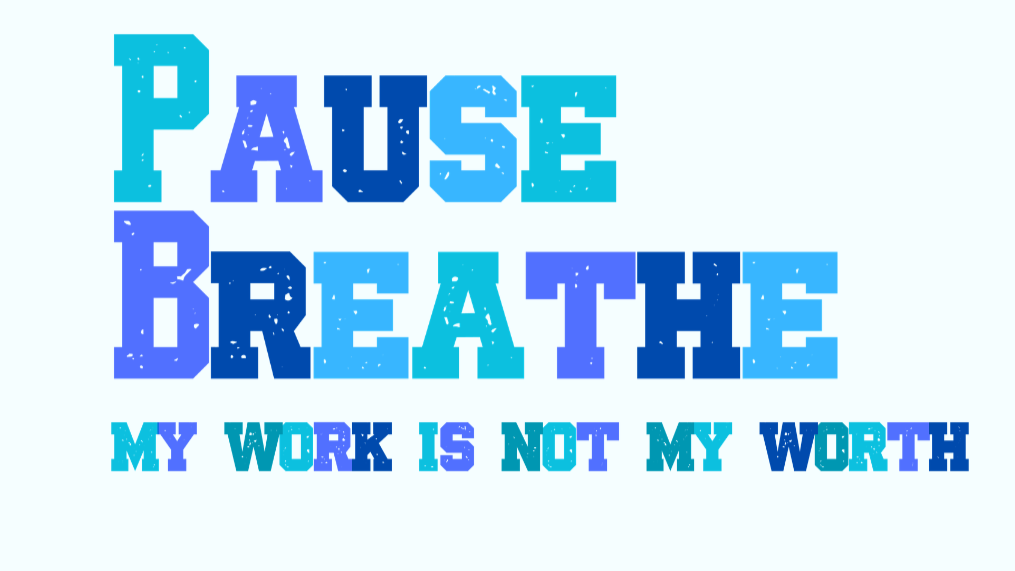
I also like affirmations and mantras tailored to the task at hand: My work is not my worth. I offer steadiness to the room. That is enough for today.
If You Are Curious
Here are some points of reference. I am really loving Deb Dana’s Nervous System Workbook lately.
Hank Green’s Autonomic Nervous System Crash Course: https://youtu.be/71pCilo8k4M?si=KIf1MKBT7cR-6T49 (be warned this is from 2015, the vibe is deeply millennial)
Anchored by Deb Dana (an introduction to understanding your nervous system and building regulation skills)
The Nervous System Workbook by Deb Dana (practical exercises for noticing and supporting your nervous system)

Why Creative Conflict Feels So Personal
Creative conflict feels personal because creative work is personal.
Artists create what feels like an extension of ourselves. It's no wonder that feedback and/or disagreement can feel so personal.

Creative conflict feels personal because creative work is personal.
Artists create what feels like an extension of ourselves. It's no wonder that feedback and/or disagreement can feel so personal.
To build a life in the arts also requires a tremendous amount of commitment. We sacrifice stability and risk economic uncertainty because we believe the work matters. That investment can make it even harder to separate criticism of the work from criticism of ourselves.
And look, passion is one of the great gifts of this profession. Creative life is a calling.
The challenge is learning to hold our passion without allowing our work to define our worth.
My work is not my worth.
My work is not my worth has become an important phrase and mantra for me of late.
The reality is this: not every grant application will be funded. In this last round of ArtsNL grants, 66% of project grants were rejected.
Likewise, work, if you get it, is not always going to resonate.
If my sense of worth rises and falls with those outcomes, that external validation, I'm giving away far too much control over my own life.
Centre the work.
So this is my antidote: centre the work.
Not “your” work, “THE” work.
The artists I love working with, those I return to again and again, are the ones who ask: How can I serve the work?
Make no mistake, these folks have strong points of view. They're passionate. They're smart. They do not back down from a scrap. I certainly don’t.
But what we do agree on is putting ego aside to serve the work at hand.
When you centre the work, you can let go of the idea that you're the only one responsible for its outcome. You're part of it. You have a responsibility to bring your your best, but the work doesn't live or die on your back.
And I find that incredibly liberating.
Some directors might balk at that idea. With love, I'd gently suggest that you were never making the show on your own anyway, babe. So get into it.
The best work I've ever been part of has always belonged to the room. It bloomed because a group of people were willing to bring their whole selves and then let the work become something bigger than any one of them could have made alone.
In Practice
So, in practice…. the next time you find yourself feeling defensive in a rehearsal, production meeting, or creative conversation, try asking yourself:
Am I protecting the work, or am I protecting my ego?
And then ask:
What best serves the piece we're making together?
A Thought
Perhaps we can let go of needing to be validated by the work, and instead allow the act of making it to be its own validation.
The Most Powerful Tool in the Arts Costs Nothing
I'm not going to bury the lead.
It's self-regulation.
The Most Powerful Tool in the Arts Costs Nothing.
I'm not going to bury the lead.
It's self-regulation.
The most powerful, game changing, under utilized tool in the arts is self-regulation. It’s free and you don’t need anyone else to give it to you.
I've been thinking about this a lot lately, so be forewarned. This is going to be a series.
I recently returned from the ID in-person intensive with Intimacy Directors and Coordinators (IDC). Before we ever stepped into the room together, our instructors spent a surprising amount of time talking about self-regulation and self-care.
I was surprised.
This was a room full of emerging and experienced professionals. Many people had multiple degrees, decades in the industry, and significant leadership experience. We had all chosen to pursue this work. I assumed self-regulation would simply be a given.
It wasn't.
Like so many creative spaces I've worked in over the years, I watched moments of activation pull people away from the work. Folks became defensive, withdrawn, frustrated, and overwhelmed.
And you know what? I saw myself.
I have certainly reacted defensively to a note, as previously discussed.
I have clapped back.
I have shut down.
I have behaved in ways that pulled everyone, myself included, away from the work.
There have been times when I was so caught up in my own activation that I failed to recognize what was happening around me. I was not seeing the room clearly. I missed signs that someone else was dysregulated and dangerous. Those experiences fundamentally changed how I think about professional practice.
That's why my hot take is that self-regulation is the most important professional skills an artist or creative can develop.
It keeps us focused on the work.
It allows us to stay connected to one another when conversations become difficult.
And ultimately, it helps keep our creative spaces safer.
More on this soon, but for now, an invitation:
Next time you notice yourself becoming activated (shoulders creeping up, face getting hot, chest tightening) see if you can pause.
Pause.
Take a breath.
Perhaps use an affirmation or a mantra.
Right now I’m digging: My work is not my worth.
It’s a practice.
Recs
If you are interested, this is what I’m taking a look at right now:
The Nervous System Workbook, Deb Dana
Atlas of the Heart, Brene Brown
Insight, Tasha Eurich (she also has an excellent article about self awareness in the Harvard Business Review)
Creds
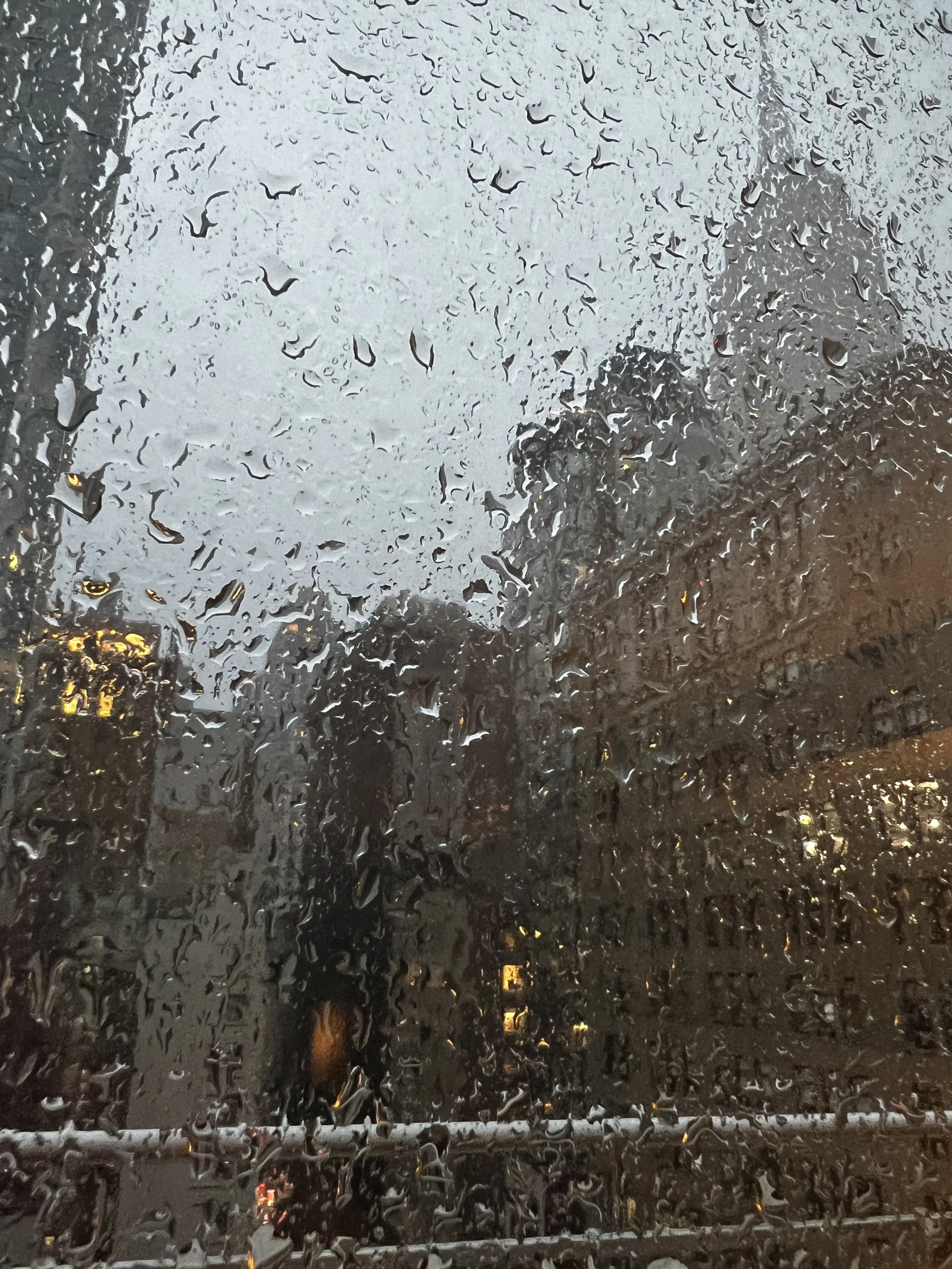
Reflections from NYC: Risk and the Potential for New Stories
What stories become possible when artists have the tools and support to approach intimacy with confidence and care? Reflections from New York on storytelling, creative risk, and intimacy direction.
*For a bit of context: I've just returned from New York after intensive in person training with Intimacy Directors and Coordinators (IDC), an organization dedicated to fostering safer, more collaborative practices around intimate content in performance.
I arrived in New York expecting to deepen my understanding of intimacy direction, specifically the technique. Angles. Sightlines. Gesture. Masking. The practical tools that allow intimate storytelling to happen safely and believably on stage.
I left with that, for sure, but also with a renewed appreciation for collaboration, leadership, and the conditions that allow artists to do their best work.
In some ways, I travelled to New York only to have many of my core values reinforced.
Like many people, my initial understanding of intimacy direction was rooted in safety, consent, and risk mitigation. The roles of intimacy director and intimacy coordinator emerged in response to the industry's reckoning following the #MeToo movement and the revelations surrounding Harvey Weinstein in 2017. Advocacy, accountability, and performer safety were rightly at the forefront of the conversation.
Those elements remain foundational to the work.
What surprised me during this training was how much space now exists for intimacy direction to embrace its creative function.
As the role becomes more established within the industry, intimacy directors are increasingly able to contribute not only as advocates and facilitators, but as storytellers.
That shift excites me.
What stories become possible when artists have the tools and support to stage intimate moments with confidence and care? What material might we explore that previously felt too difficult, too risky, or too complicated?
When I think about my future as an intimacy director, I find myself thinking more and more about the stories we unlock.
I think about the scenes that traditionally happen offstage. The blackout before the act. The implied encounter. The relationship that is talked about rather than shown. The aspects of human experience that can feel challenging to stage well.
Increasingly, I am interested in what becomes possible when artists have the support to approach that material thoughtfully.
How might we expand representation? How might we take creative risks while maintaining care for performers? How might we tell stories that previously felt inaccessible to artists, producers, or audiences?
For a long time, I approached intimacy direction primarily through a safety lens. Make no mistake, that advocacy work remains essential.
And… I now find myself equally interested in intimacy direction as a creative discipline. A tool for storytelling. A way to help artists bring difficult, vulnerable, joyful, messy, complicated human experiences onto the stage with greater specificity and intention.
That feels like exciting territory.
And, in many ways, still largely uncharted.
If any of this sparks your curiosity, please reach out. I'd love to grab a tea and chat. I'm also working on some educational materials for companies and organizations that want to better understand what an intimacy director does, how we work, and how the role can support both safety and storytelling.
On a practical note, part of my certification process involves continuing to apply this work in my own community. So if you're creating work that could benefit from intimacy direction, or if you'd like to learn more about the practice, I'd be delighted to chat. Please keep me in mind for future projects.
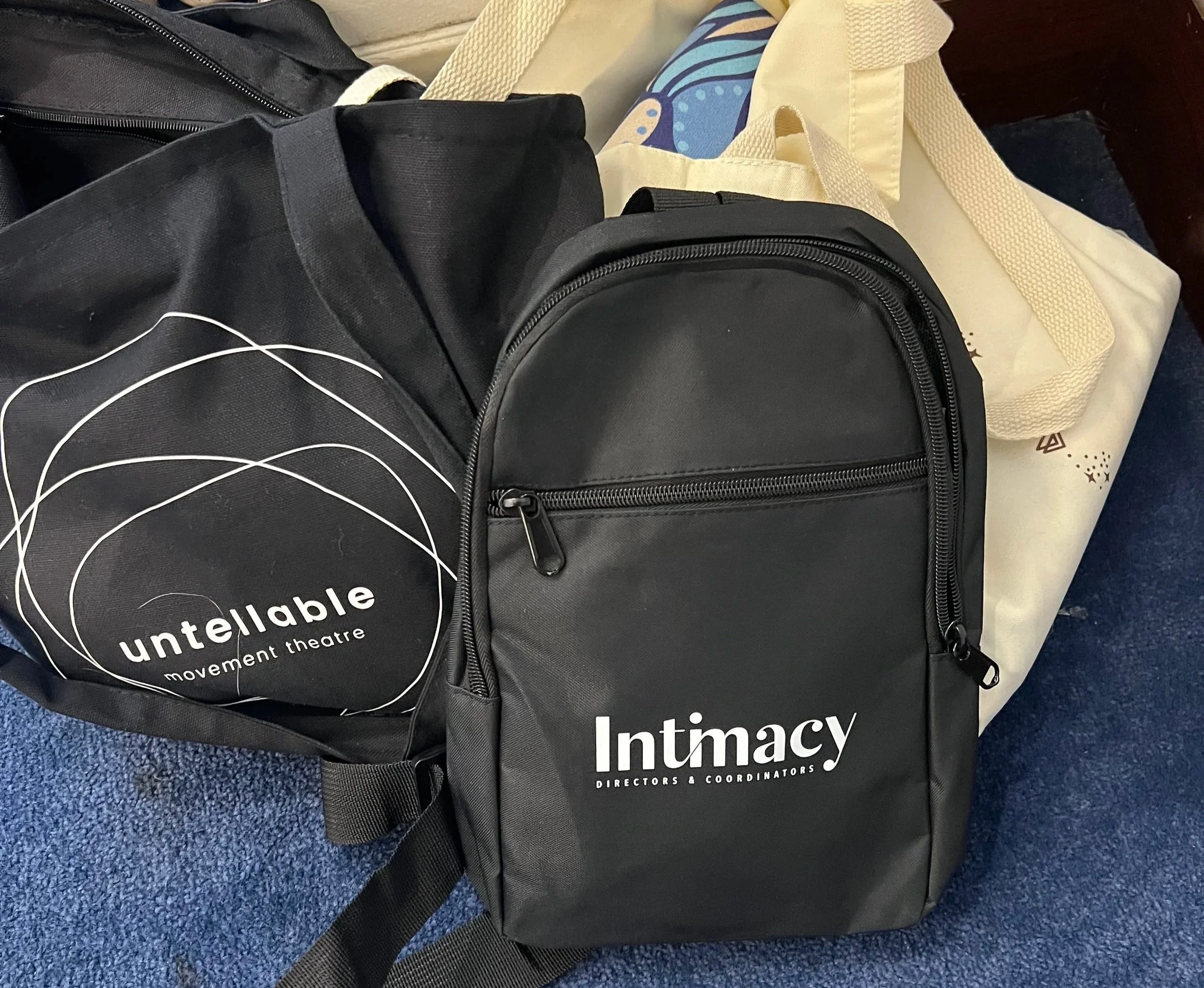
New York So Far
For the past week, I've been in New York participating in an in-person training cohort with Intimacy Directors and Coordinators (IDC), an organization dedicated to fostering safer, more collaborative practices for intimate content in theatre, film, television, and live performance.
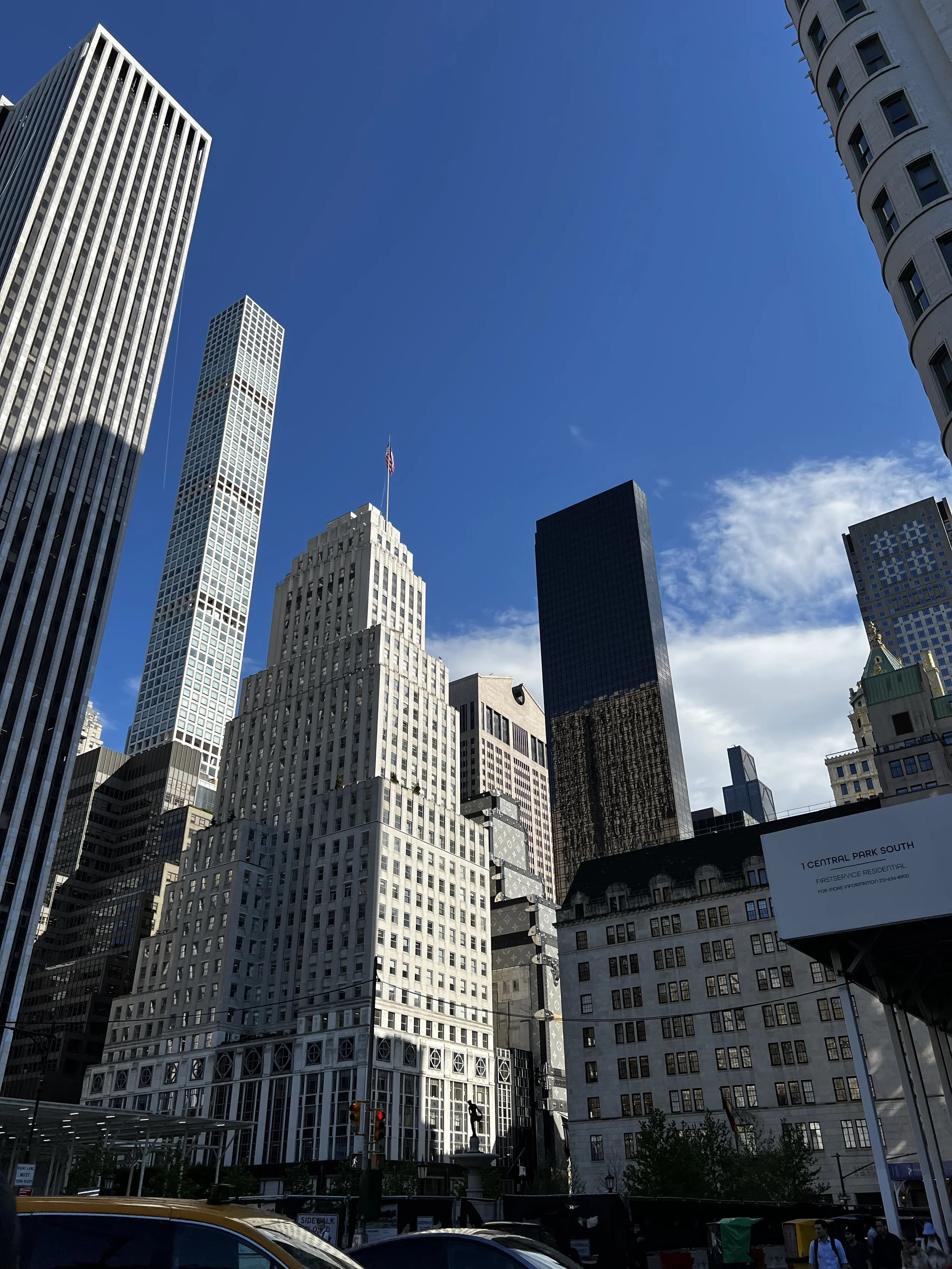
For the past week, I've been in New York participating in an in-person training cohort with Intimacy Directors and Coordinators (IDC), an organization dedicated to fostering safer, more collaborative practices for intimate content in theatre, film, television, and live performance.
This training is the culmination of nearly five years of engagement with IDC programming. Along the way, I've completed Foundations of Consent and Intimacy, Applications of Consent and Intimacy, the Accelerator Program, and attended the Intimacy Professionals Summit in both 2025 and 2026. Being accepted into this in-person cohort is an opportunity to deepen my practice alongside artists and educators from across the globe.
Before intimacy direction emerged as a distinct role, much of that work often fell to directors, choreographers, and movement specialists anyway, so this feels like a natural extension of the practice I've been developing throughout my career.
More broadly, of course, I'm interested in how we create rehearsal spaces where people can do their best work: spaces that are collaborative, equitable, creative, and grounded in care.
It’s all connected.
I've discovered through this training is that the work is as much about leadership as it is about intimacy choreography.
The questions I keep returning to are:
How much space do I take up?
How much space do I offer?
How do I create conditions for others to succeed?
There are two ideas that have resonated particularly strongly so far. The first is “share, don't tell”, which feels closely related to one of my own artistic mantras, “show, don't tell”. The idea is to invite collaborators into a process rather than prescribing solutions.
The second is “hold the space, don't own the space”, a reminder that leadership is stewardship rather than control.
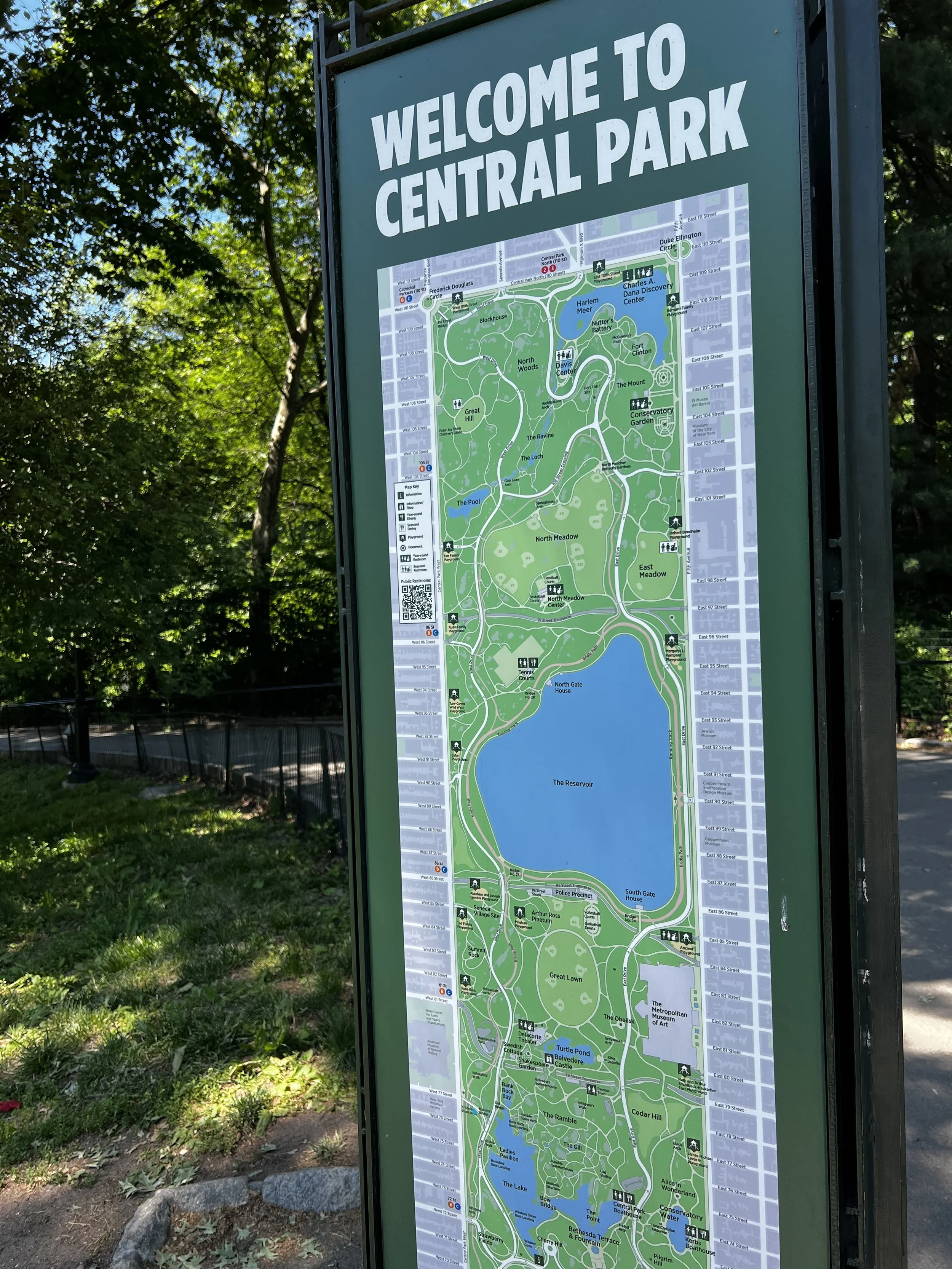
Of course, life in New York has not been limited to the studio.
I've spent many hours walking the city, letting myself wander and absorb its energy. I was also lucky enough to visit The Metropolitan Museum of Art and spend time with Art of Costume, an exhibition that left a profound impression on me.
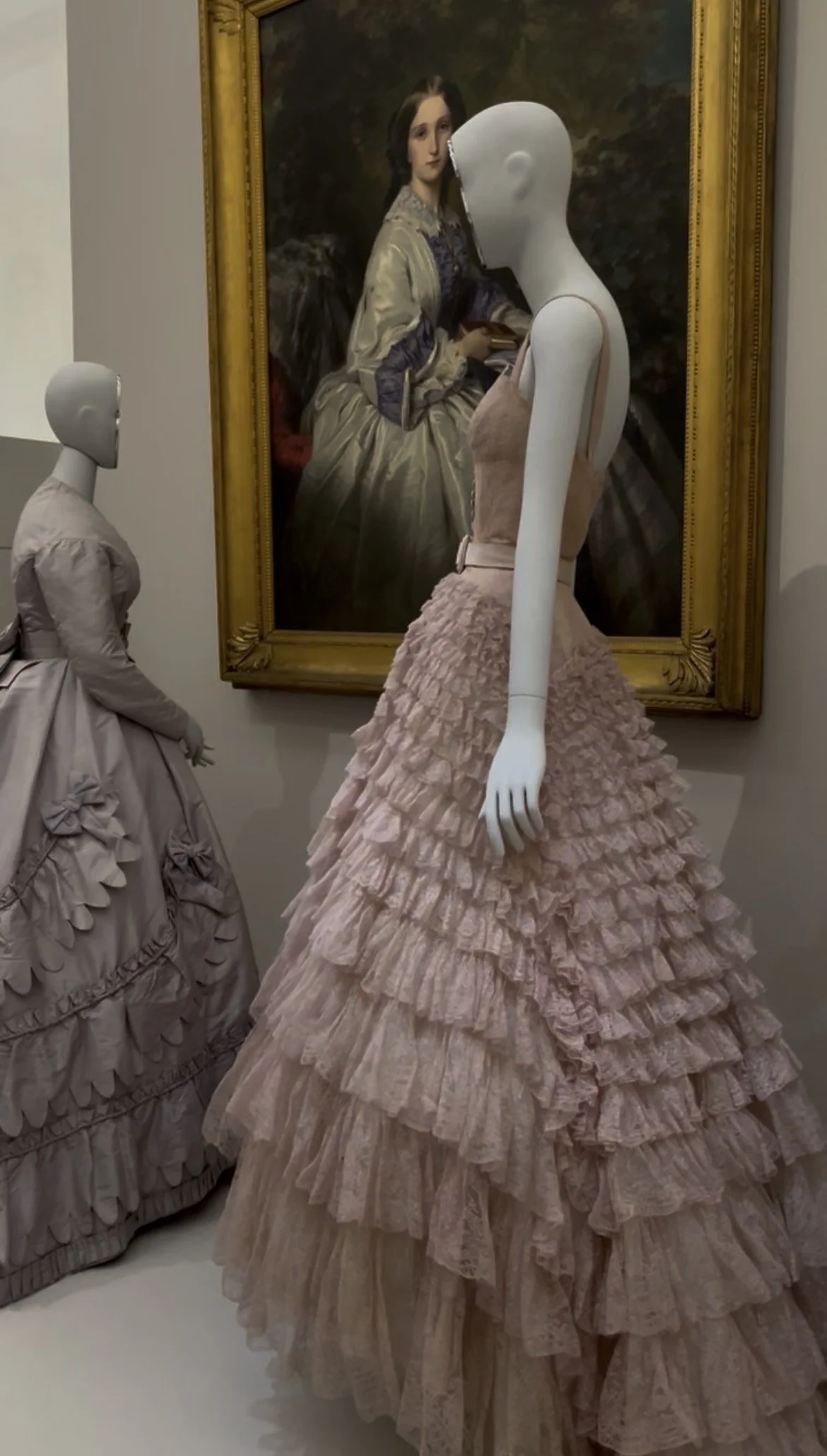
One gallery in particular, titled Bodily Being in Its Diversity, explored how fashion has idealized, distorted, and ultimately reclaimed diverse forms of embodiment.
The exhibition traced a journey from normative archetypes toward a recognition of bodily plurality, situating fashion within changing ideas of representation and identity.
I found the experience deeply moving.
The gallery was accompanied by Requiem for the Static King Part 1 by A Winged Victory for the Sullen, played through speakers placed at floor level. You felt it resonate through your body as you moved through the space. The combination of sound, texture, colour, craftsmanship, and extraordinary detail created an experience that felt almost spiritual.
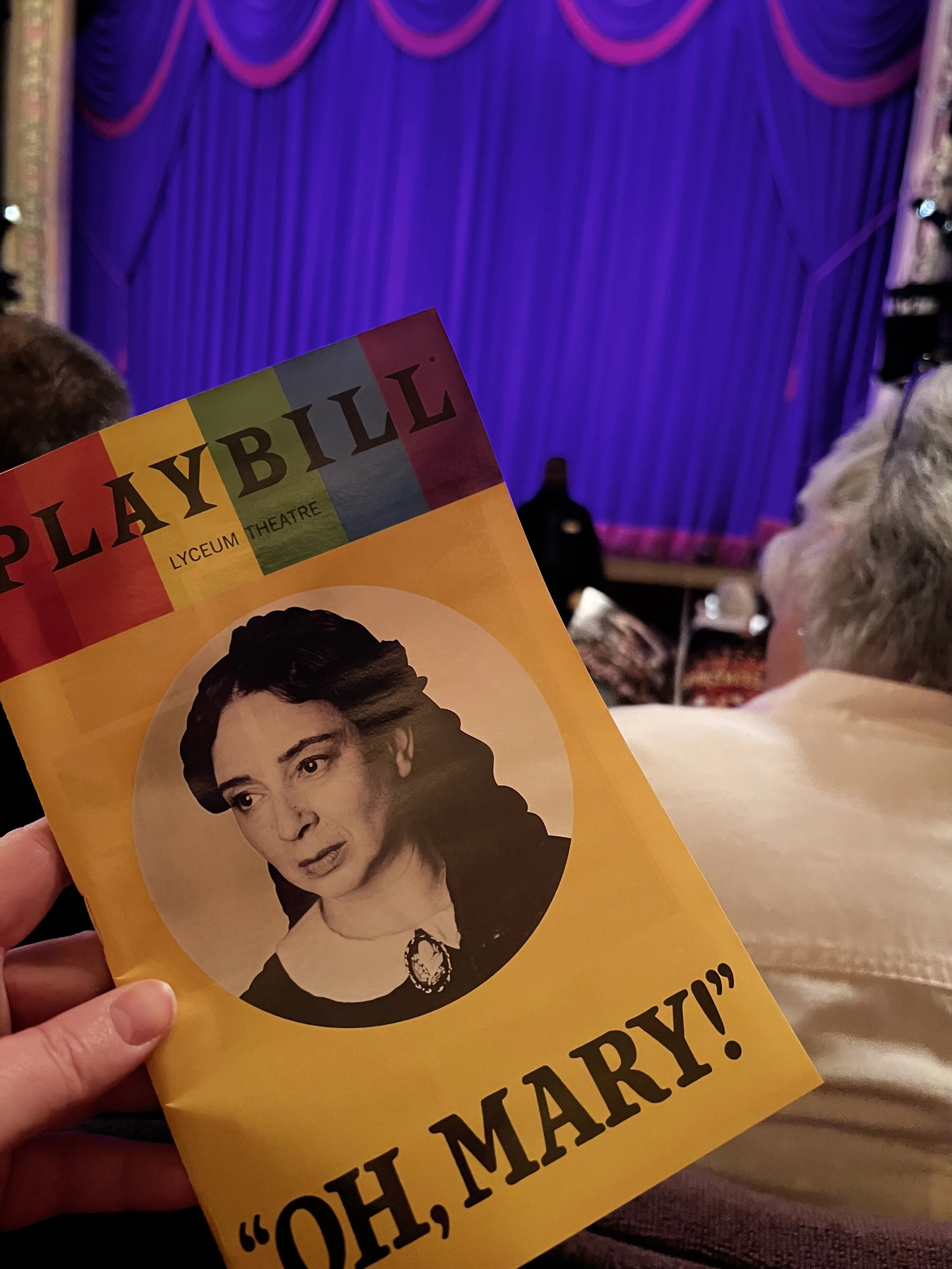
I also had the chance to see Oh, Mary! with Maya Rudolph in the title role. It was campy, ridiculous, and an absolute delight. I would go back again and again to see each different actor’s take on Mary.
More than anything, I feel grateful.
Time and space for professional development are privileges, especially for independent artists and arts workers. To step away from regular responsibilities and immerse myself fully in learning has been both energizing and affirming. The work is challenging and inspiring, and I'm returning home with new tools and renewed excitement for the future.
Off to Cats! (like, how often can you say that).

The Problem With Mission Drift
The problem is capacity.
No organization can meaningfully hold everything.
And when organizations continually stretch into new territories, something is inevitably neglected.

I’ve been thinking a lot about mission drift.
The tricky thing is that growth and responsiveness are not bad things. They are necessary and organizations should evolve alongside the communities they serve.
There is, however, a difference between responding to community and chasing whatever funding opportunity appears next.
What I observe is organizations expanding endlessly outward while still attempting to maintain everything they already hold. The metaphor is undercooked, but it feels like watching organizations swerve across multiple lanes of traffic, trying to occupy all available space while still insisting they are grounded in their original mandate (lane?)- you get it.
The problem is capacity.
No organization can meaningfully hold everything.
And when organizations continually stretch into new territories, something is inevitably neglected.
Entering someone else’s lane often means abandoning stewardship of your own.
Voice Is Built Through Consistency
I believe integrity is built through consistency.
The practice of returning to the values and communities that actually drive your mandate.
That doesn’t mean organizations can’t grow. Lanes can expand, intersect, overlap, and evolve. In fact, I believe that collaboration is where the most exciting work lives.
But collaboration and colonization are not the same thing.
There is a difference between partnering with people already doing the work and absorbing that work into your own organization because funding suddenly exists for it.
When an organization with little history of youth engagement suddenly launches a youth initiative, or when an organization that has historically centered white voices abruptly creates a BIPOC “stream,” the tension is often not about the work itself. It’s about history. It’s about trust.
I think about this as well when funders begin producing work in direct competition with the organizations they ostensibly exist to support. There is a difference between strengthening an ecosystem and competing with it for audiences and visibility.
I urge that we notice who has been doing the slow, relational work long before it became fundable or institutionally valuable. Especially when there are emerging artists and organizations who identified those gaps early, who have been doing the work.
Not Everything Is Yours to Hold
Strong ecosystems depend on trust and interdependence. They depend on organizations believing that community becomes richer when many groups are allowed depth, rather than a few exercising breadth.
Trying to occupy every lane is not leadership.
And honestly, I see this tension most clearly in legacy organizations attempting to maintain grassroots credibility while also preserving institutional elitism. Wanting to be both scrappy and apritational.
At some point, those contradictions collapse under their own weight.
Partnership is the Way Forward
Support the people already doing the work. Share resources. Share platforms. Share credit. Invest sideways instead of inward.
Let others build alongside you.
Director Overview & Pre-Meeting Notes for Scenes with Intimacy
I approach intimacy direction as both a creative and logistical practice. The goal is always to serve the story while protecting the people telling it.
What is Intimacy Direction?
Intimacy direction supports storytelling in moments involving sensual contact, simulated sex acts, hyper-exposure, nudity, and other intimate content in live performance by ensuring the work is:
Clear in intention
Clearly choreographed
Repeatable for performance
Built through a collaborative process
Sustainable over the course of a production
Like dance choreography or fight direction, intimacy direction brings structure and artistry to intimate material.
My Approach to Intimacy Direction
There is no single way to approach this work. Every production, story, and group of performers brings different needs, boundaries, experience levels, and creative goals.
My work is grounded in:
Clear storytelling
Performer agency and autonomy
Practical, repeatable choreography
Collaboration and communication
Professional working practices
I approach intimacy direction as both a creative and technical practice. The goal is always to serve the story while supporting the people telling it.
How I Work
I begin by identifying the function of the intimate moment within the story and translating that into choreography that aligns with both the artistic vision and performer boundaries.
Some performers prefer to build choreography step-by-step. Others are more comfortable exploring movement within clearly established parameters. My role is to facilitate a process that meets the needs of the performers and production while maintaining clear expectations and professional standards.
Regardless of how material is developed, all intimate content is ultimately:
Clearly choreographed
Repeatable in performance
Grounded in performer agency and consent
The process may vary. The expectation of repeatable choreography does not.
What You Can Expect
A professional, harassment-free working environment
Clear communication around intimate content
Collaboration with performers, directors, stage management, and the design team
Choreography that supports both storytelling and performer agency
Practical tools for maintaining consistency throughout the rehearsal and performance process
Before We Meet
If useful, consider:
What function does this intimate moment serve in the story?
What is your vision for the scene?
Are there specific actions, levels of nudity, or moments of physical contact that you would like to see?
What tone or audience experience are you hoping to create?
How do you typically like to work with collaborators?
What rehearsal time is available for this material?
Next Steps
We'll meet to:
Discuss the needs of the production
Explore your vision for the intimate content
Identify any logistical or creative considerations
Actor Overview & Pre-Meeting Notes for Scenes with Intimacy
Our initial call is a chance to get to know each other and talk through the work in a clear and supported way.
What is Intimacy Direction?
Intimacy direction supports storytelling in moments involving sensual contact, simulated sex acts, hyper-exposure, nudity, and other intimate content in live performance.
Like dance choreography or fight direction, intimacy direction brings specificity and repeatability to this work. Intimate moments are choreographed and rehearsed so performers can focus on storytelling rather than negotiating boundaries during performance.
The work is:
Clear in intention
Clearly choreographed
Repeatable for performance
Built through collaboration
Sustainable throughout the rehearsal and performance process
What You Can Expect
A professional, respectful working environment
Clear communication around intimate content
Collaboration and transparency throughout the process
Choreography that supports both storytelling and performer agency
Space to ask questions, offer input, and communicate boundaries
How the Work Happens
We begin by discussing the needs of the scene and the story being told.
Every performer works differently. Some people prefer to build choreography step-by-step. Others are more comfortable exploring movement within clearly established parameters before setting choreography. The process may vary depending on the needs of the performers and production.
Regardless of how material is developed, all intimate content is ultimately:
Clearly choreographed
Repeatable in performance
Grounded in performer agency and consent
Working Together
Agency
You have agency in your participation. Your boundaries help shape the work.
Communication
You are encouraged to communicate boundaries, preferences, concerns, and questions throughout the process. You are never required to explain or justify a boundary.
Collaboration
Intimacy direction is a collaborative practice. Your experience, insight, and creativity are valuable parts of the process.
Professional Context
The rehearsal room is a workplace. Physical contact exists within the context of the story and the work being created.
Ongoing Consent
Consent is an ongoing part of the process. Check-ins and adjustments are welcome.
Before We Meet
You may wish to consider:
Do you have a preferred way of approaching this type of work?
Are there boundaries or considerations you already know you would like to communicate?
Do you have questions about the material?
Do you have questions about the process?
Our First Conversation
Our initial conversation is an opportunity to get to know one another and discuss the work in a clear, collaborative way.
We'll talk about:
The context of the scenes
Your preferences, boundaries, and working style
Any questions or concerns you may have
The process that will best support both you and the production
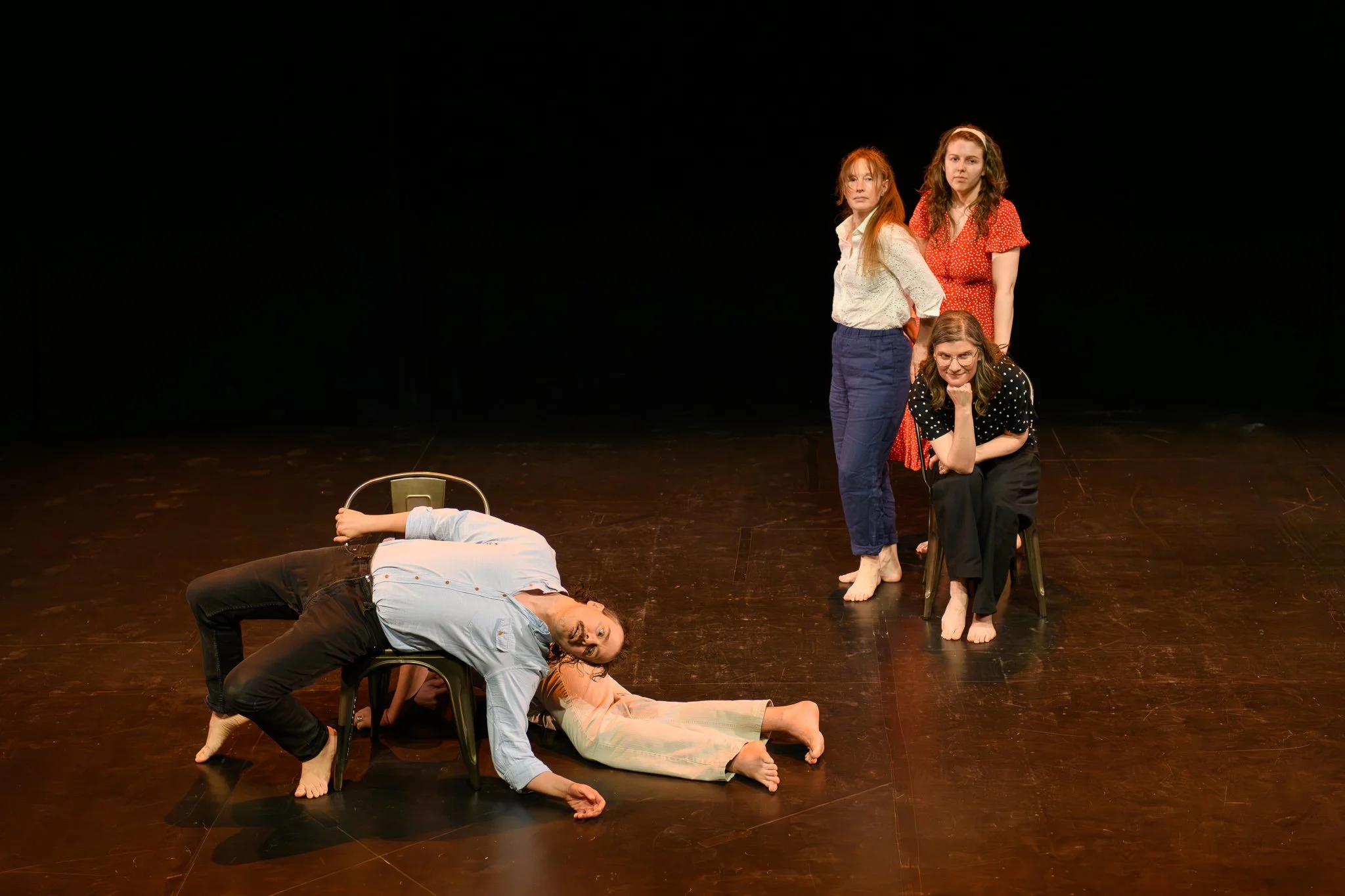
Nothing Good Gets Away: A Reflection on Practice
Because I’ve been working with these performers for years there is a shorthand between us. The piece came together in two and a half hours.
What I’m recognizing now is that is because of practice.
Trusting that the work you’ve done doesn’t disappear. It accumulates and sharpens. It reveals itself when you need it.
Nothing good gets away.
photo credit: Scott Humber
Groundwork Dance Festival, a collaboration between Untellable Movement Theatre and Cameo, led by myself and Andrea Duff, just wrapped up.
As part of the performance series, I chose to share my Responsive Ensemble Framework (REF), a formalization of a way of working that has been evolving over nearly 20 years. The title of the piece was “Nothing Good Gets Away”, taken from Steinbeck’s letter to his son.
This past year, I’ve been focused on articulating my practice. Naming it and clarifying it. Understanding what it actually is, and so it felt right to share REF.
Just this morning, I went looking for a video reference and came across a piece from 14 years ago.
I recognized it immediately. That’s a piece based on handshakes. Handshakes are the cornerstone of REF.
Nothing good gets away.
Needs Must
For me, ensemble building has always been a practice grounded in necessity.
Dance takes time and money. Much of my career has required me to work within the constraints of short rehearsal periods, limited funding, and shifting conditions.
So I learned how to build quickly. I learned how to establish immediate trust and shared vocabulary.
Nothing Good Gets Away for Groundwork
For Nothing Good Gets Away, we began with REF’s standard warm ups (handshakes included) and moved to Steinbeck’s text.
And then I asked three questions:
Where does this resonate in your body?
What do you know to be true intellectually?
Where do you feel resistance, something you push against?
These became our points of departure.
The group worked within a shared task, but when resonance, intellect, or resistance surfaced, the movement shifted.
Because I’ve been working with these performers for years there is a shorthand between us. The piece came together in two and a half hours.
What I’m recognizing now is that is because of practice.
Trusting that the work you’ve done doesn’t disappear. It accumulates and sharpens. It reveals itself when you need it.
Nothing good gets away.
Nova Scotia Arts Funding Cuts: A Warning Shot for the Arts in Newfoundland and Labrador
Recently, the Nova Scotia government introduced devastating cuts to arts and culture in their provincial budget. For those of us working in the sector, this is a red flag.
Recently, the Nova Scotia government introduced devastating cuts to arts and culture in their provincial budget. For those of us working in the sector, this is a red flag.
Moments like this rarely stay contained within one province. Other governments, particularly in the Atlantic region, are watching closely to see how the public responds. Nova Scotia is the canary in the coal mine. If cuts like these are met with little resistance, they can quickly become a model for policy elsewhere.
Decisions like these reveal a fundamental misunderstanding of the role culture plays in public life. The arts are treated as decorative, nice to have when times are good, but expendable when budgets tighten. In truth, culture is the primary way that society develops the human capacity that shapes its future.
Culture shapes how we learn, how we empathize, how we imagine possibilities, and how we understand ourselves as communities.
Don’t believe me? Consider the culture of the United States at present.
We, in Newfoundland and Labrador, need to pay attention and proactively fight for arts and culture.
The Economic Argument
If we want to go with the lowest hanging fruit we should begin with the argument governments most often claim to prioritize: the economy.
Across Canada, arts and culture contribute more than $130 billion to the national economy and support over one million jobs. Cultural activity drives tourism, fills hotels and restaurants. Festivals, performances, film and television production, music, and visual art all ripple outward into the broader economy, supporting surrounding industries and small businesses.
In practical terms, culture circulates money through communities. When local people are hired those people spend money locally. When production and events bring people here, those people spend money locally.
And yet, when budgets tighten, arts funding is often treated as expendable.
That disconnect reveals how narrowly culture is understood in policy conversations.
But as I said, the economic case, is to me, the lowest hanging fruit. The economic argument just scratches the surface of what the arts actually contribute to a society.
Human Capacity and Transferable Skills
One of the hats I wear is as a dance studio owner and teacher. Each week, hundreds of people come through our studio doors. The majority of them will never become professional dancers. And even those who pursue dance professionally will go on to have many chapters in their lives. They will become teachers, entrepreneurs, administrators, scientists, parents, and community leaders. Dance will be one page in a much larger story.
Yet, what happens in the studio matters anyway.
Students learn discipline. They learn teamwork. They meet challenges that feel impossible and discover that persistence changes what they are capable of. They build confidence through repetition and effort.
They cultivate and practice resilience, self-awareness, and the ability to collaborate with others. These are essential transferable skills.
Arts education is not primarily about producing artists. It is about developing capable humans. That kind of human capacity is invaluable.
Identity, Empathy, and Community
The arts create shared experiences. They bring people into the same room to encounter stories, ideas, and perspectives beyond their own. That process deepens empathy and strengthens social connection.
In a place like Newfoundland and Labrador, culture carries something even deeper.
Our music, stories, theatre, dance, and visual art hold the memory of who we were and who we are becoming. They pass language, humour, grief, and resilience from one generation to the next. Culture is one of the ways a place recognizes itself.
Without cultural investment we lose part of the mechanism through which communities understand themselves. And it raises a larger question: what makes people choose to stay in a place, to live, work, raise families, and contribute to their community, if not a shared sense of culture and belonging?
On Impact Measurement
One of the reasons the arts are often misunderstood in policy conversations is that their impact can be difficult to measure.
Much of the impact of arts and culture is difficult to quantify.
Arts advocates are working to develop better ways to measure and demonstrate the value of cultural activity. Economic data helps. Attendance numbers help. Surveys and social impact research help.
But those tools only capture part of the story.
Most of us carry a lived example of the arts shaping our lives. A performance that shifted our perspective. A teacher who opened a door we didn’t know existed. A piece of music that helped us understand something about ourselves or someone else.
These moments rarely appear in economic reports, but they are real. They shape how we think, how we empathize, and how we move through the world.
Renewable Resources
And this brings us back to the conversation about resources.
Oil and gas are non-renewable. They will eventually run out.
What remains are people.
The long-term resource of any place is its human capacity: creativity, curiosity, empathy, and the ability to imagine new possibilities.
The arts cultivate that capacity.
We have only begun to understand what that potential looks like. Arts engagement can strengthen education systems, support youth belonging, contribute to preventative mental health, and revitalize communities.
The question is not whether the arts deserve a place in public policy.
The question is how seriously we are prepared to fight for it.
Advocate for the Arts in Newfoundland and Labrador
If the arts matter to you, there are simple ways to help ensure they remain part of our public life:
Write to your MHA.
Contact the Minister responsible for Arts and Culture, Minister Andrea Barbour. Let the department know that cultural investment matters to citizens.
Attend and support local arts events.
Share your positive experiences of the arts publicly. Social media posts, or conversations in your community help keep arts and culture part of the public dialogue.
Ask questions during elections. When candidates knock on your door, ask what role they believe arts and culture should play in the future of the province.
What If There’s Nothing to Get? A Guide to Watching Dance
What feels magical to me about dance is that it is not prescriptive. Dance does not demand a single interpretation. It does not require you to follow a plot or decode a message in order to participate fully. Instead, it invites the audience into authorship.
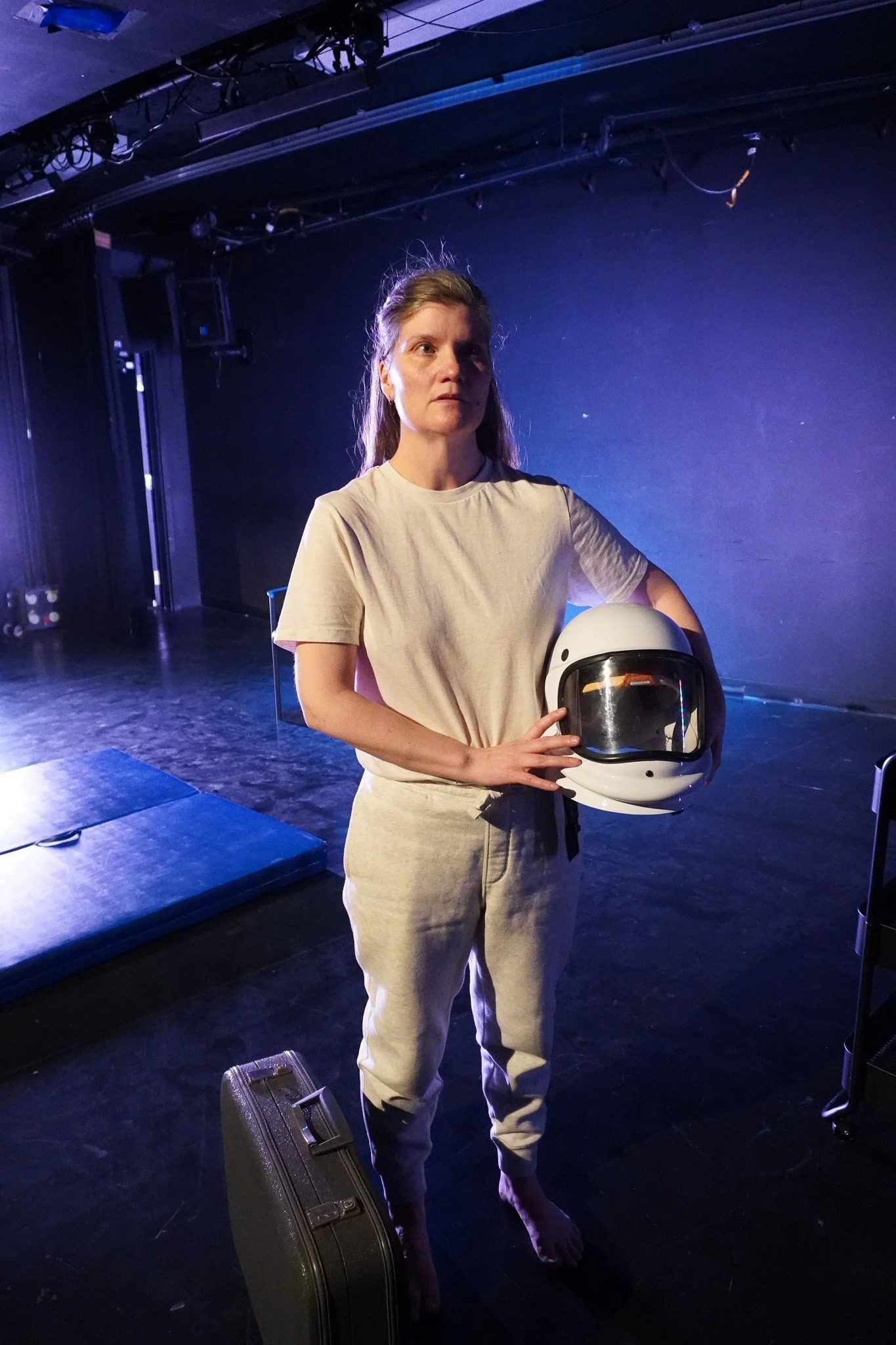
The Station Workshop Performance, February 1, 2026
Created by Watching the Detectives (Philip Goodridge and Jaimie Tait), directed by Lynn Panting, Part of Untellable Movement Theatre’s Incubator Program.
Last evening, we held an invited viewing for the workshop production of The Station through Untellable Movement Theatre’s Incubator program. Before the performance began, I stood up to offer thanks and a bit of context for the evening.
A conversation about why dance, why now has been a through line of my work for many years, and it felt present in the room last night as well. The audience was a mix of people, some deeply familiar with dance, others not at all, spanning ages, disciplines, and lived experiences. I found myself wanting to offer something simple but important before we began: permission.
People often tell me they feel intimidated by dance. I hear versions of the same question again and again:
What if I don’t get it?
What if I miss the point?
What if I don’t understand what’s happening?
So instead of offering an explanation of the work, I offered this:
You get what you get from it.
Whatever you find is what is meant for you.
What feels magical to me about dance is that it is not prescriptive. Dance does not demand a single interpretation. It does not require you to follow a plot or decode a message in order to participate fully. Instead, it invites the audience into authorship.
In watching dance, you are not being tested, you are being invited.
You are allowed to feel before you understand. You are allowed to be confused, moved, bored, delighted, unsettled, or unexpectedly emotional. You are allowed to connect the work to your own memories, questions, or sensations, even if those connections were never consciously intended by the maker. That is not a failure of understanding; that is the exchange.
Dance asks something different of us than many other forms. It asks us to listen with the body. It asks us to sit with ambiguity and trust that meaning can be felt, even when it can’t be easily articulated.
Last night, I wanted the audience to know that there was no wrong way to watch The Station. There was no singular takeaway they were meant to leave with. The work would meet each person where they were, and each experience would be valid.
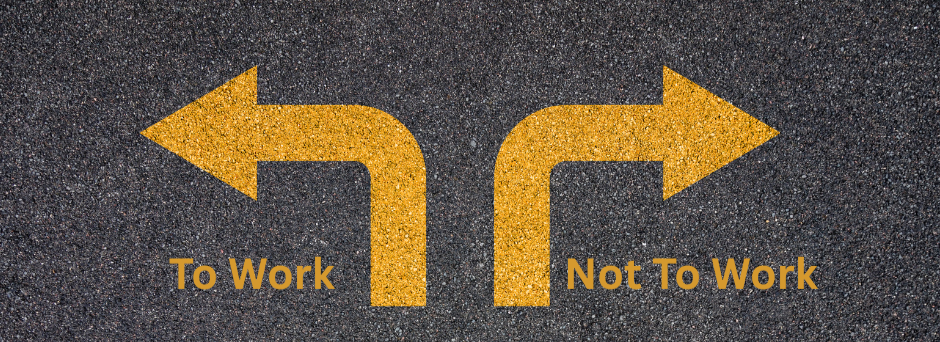
To Work or Not To Work, That is the Question.
Many of us take the work. We waive fees. We accept sliding scale. We underpay ourselves so others can be paid. We do it because the work matters. Because we believe in access. Because we believe in community. Because we don’t want to be the reason a project doesn’t happen.
And in isolation, those choices can feel generous.
But at scale, they become structural.
What do you do when the choice is to work for free, or not work at all?
It’s the reality many artists and arts workers are navigating right now and we are not really talking about it.
Inflation is real.
Funding has been reduced or frozen.
We are in a recession.
And yet, expectations haven’t shrunk. Seasons are still being planned. Programs are still being announced. Deliverables remain the same, even as resources contract.
No one wants to shrink. No one wants to feel like a failure. Artists don’t want to stop making work, myself included. Funders don’t want to fund less “impact”. So instead of contraction being addressed , it gets absorbed by artists and arts workers.
For many of us, art is not simply a job, it is a calling.The impulse to create does not disappear just because funding does.
And that’s where things get complicated. Because when art is something you would do anyway, paid or not, the line between choice and coercion becomes very thin.
When the options are work for free or don’t work at all, is that really a choice?
Many of us take the work. We waive fees. We accept sliding scale. We underpay ourselves so others can be paid. We do it because the work matters. Because we believe in access. Because we believe in community. Because we don’t want to be the reason a project doesn’t happen.
And in isolation, those choices can feel generous.
But at scale, they become structural.
Unpaid and underpaid labour is quietly filling the gap left by shrinking resources. The result is an industry that appears to be thriving, while the people inside it are increasingly exhausted, financially strained, and stretched past sustainability.
I would like to name the reality that many artists are subsidizing the arts with their own lives.
With their time.
With their health.
With work they are more than qualified to be paid fairly for, work that would be paid fairly in almost any other sector.
And yet, because art is a calling, because dedication is normalized, this labour becomes invisible.
We need to be able to talk about this tension without shame: the truth that many artists will continue to make work even when conditions are untenable and that this very devotion is being relied upon, whether intentionally or not, to keep the system running.
I would love more transparency from organizations about their struggles and how they are managing to maintain their output.
I would love for funders to acknowledge that current funding structures contribute to an arts ecosystem that rewards financial privilege.
I offer that we have to talk openly about scale, compensation, and contraction. That we recognize that shrinking budgets cannot keep being absorbed by invisible labour.
In general we should talk more about what is really going on.

On Taking a Note
Actor, Bradley Whitford, talks about the three stages of taking a note:
“F**k you.”
“I’m Sh*t”
“Okay.”
And nothing has ever resonated more deeply.
Over time I’ve built systems and practices that help me move through the first two stages faster so I can land in “okay” and do the work.
I’d thought I’d share.
I hate receiving a note.
I hate being told what to do.
I might just have a general issue with authority, but that is for therapy, not this blog, so I digress.
Actor, Bradley Whitford, talks about the three stages of taking a note:
“F**k you.”
“I’m Sh*t”
“Okay.”
And nothing has ever resonated more deeply.
Over time I’ve built systems and practices that help me move through the first two stages faster so I can land in “okay” and do the work.
I’d thought I’d share.
Do the Prep Work, So the Note Doesn’t Feel Like a Personal Failure
When I’ve done my homework/prepwork, when I know I’ve brought my full self to the room, a note doesn’t threaten my sense of competency.
Prep work for me includes:
grounding myself before rehearsal
warming up my body and voice
eating properly
understanding the material (I know that some people can, but I cannot wing it)
knowing my choices and why I made them
reviewing content from the previous rehearsal
being prepared in general
Work Only With People You Trust
I am extremely intentional about who I collaborate with.
I avoid directors who use rehearsal to perform authority.
I avoid “leaders” who haven’t done the personal work required to direct other humans.
I choose collaborators who show:
clarity
care
respect
aligned values
emotional maturity
This matters because taking a note requires vulnerability.
You cannot be open in a room where you don’t feel safe.
When I know a director is working from generosity I can hear the note for what it is: an invitation to help the piece grow.
Recognize the First Two Emotional Stages… and Don’t Act From Them
One thing that I have learned is that my first instinct is my worst instinct.
I need time to steep.
Land in “Okay,” Where Collaboration Can Actually Begin
Stage 3 “okay” is where the work actually happens.
“Okay” is an active choice to trust the process, trust the relationship, and trust myself.
Taking a note will probably never feel easy for me. But it has become possible because I’ve built systems to support me and honour my professionalism.
This is what I try to remember:
A note is about the work.
And the quicker I can navigate the emotional stages and land in okay, the more spacious, collaborative, and joyful the process becomes.
A Look Back Before Looking Ahead: 2025 in Celebration
One of my resolutions in 2025 was to celebrate my wins. I struggle with that, preferring to move swiftly to the next project: to get to work. So here it goes.
I love setting intentions.
I love taking time to be mindful, to revise, to blue-sky, to zoom out and look at the big picture.
When you’re in the middle of things, it can be hard to see momentum. It can feel like you’re stuck. I find that there’s real clarity in pausing to look back at the year behind me.
Also, one of my resolutions in 2025 was to celebrate my wins. I struggle with that, preferring to move swiftly to the next project: to get to work. So here it goes.
A note:
Even though one of my core values is staying in my own lane, I’ll be the first to admit that comparison still sneaks in. If reading this is not helpful for you right now, or makes you feel some type of way, close the window. I’ll catch you on the next one!
Cheers to you and the year ahead.
Separating Identities, Strengthening Practice
One of the biggest shifts this year was formally separating my professional practice from my dance school. For a long time, those two worlds ran in tandem. They informed each other, but they also blurred together. In an effort to clarify my identities and to give people a clearer window into my work as a director, movement director, choreographer, and intimacy professional, I created a new Instagram account and this blog, Choreographing Connection.
That step felt both practical and personal.
In 2024, I was diagnosed with a text processing disorder, and the recommended tools and supports have genuinely changed my life. For the first time, getting my thoughts onto the page felt possible rather than exhausting. Creating Choreographing Connection has been a joy. It’s become a place where I can think out loud, reflect on process, and articulate values that have long lived in my body but not always in my words.
Deepening the Work: Ensemble Building
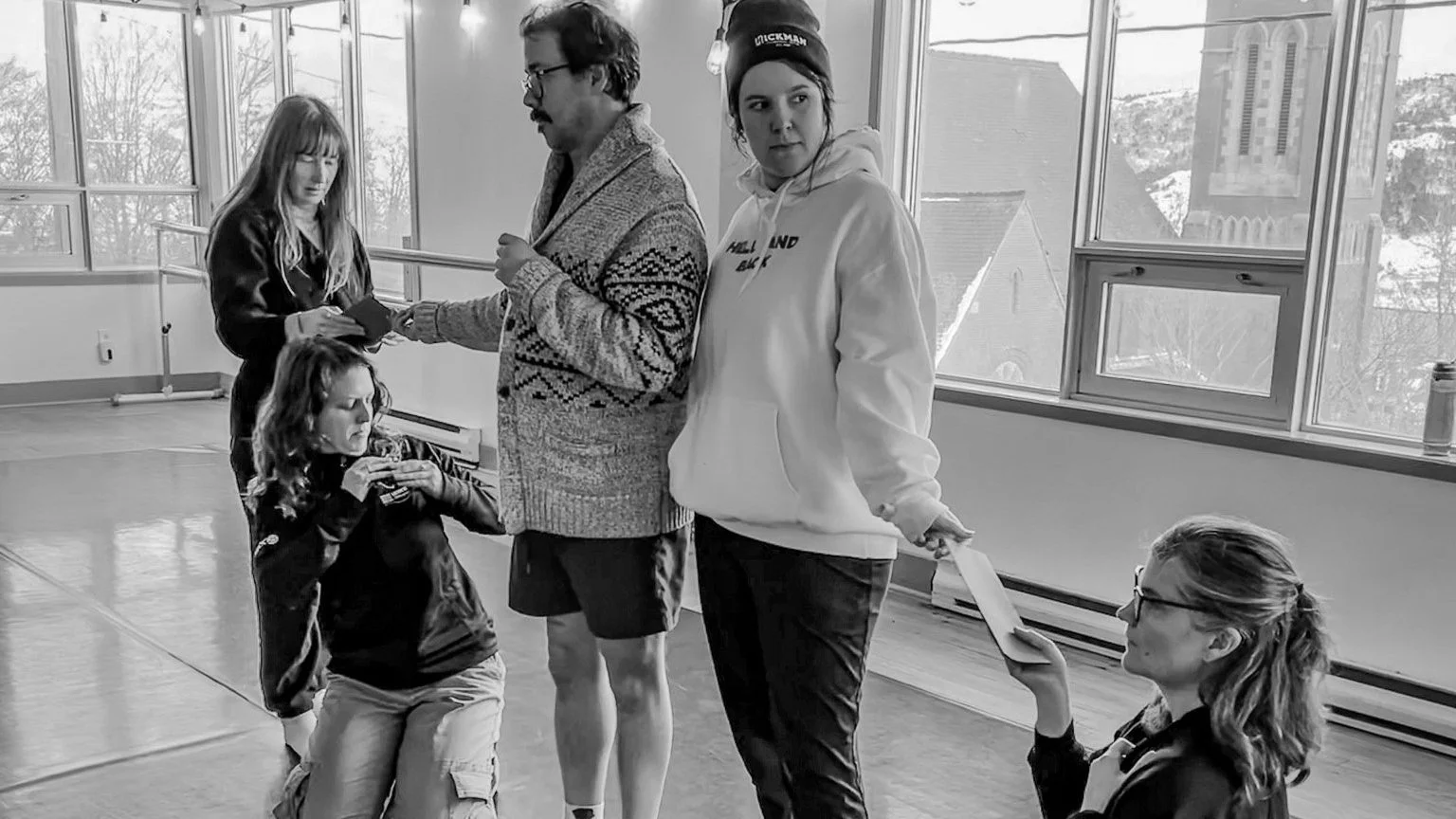
With support from ArtsNL, I was also able to take a meaningful deep dive into my ensemble-building practice: Responsive Ensemble Framework (working title). This work allowed me to slow down and formally examine the systems I use in rehearsal: how rooms are set up, how trust is built, and how to build worlds unique to the folks in the room.
Through workshops, “writing”, and reflection, I began articulating what has often been intuitive. That process has been incredibly affirming. It reminded me that the way we work matters just as much as what we make.
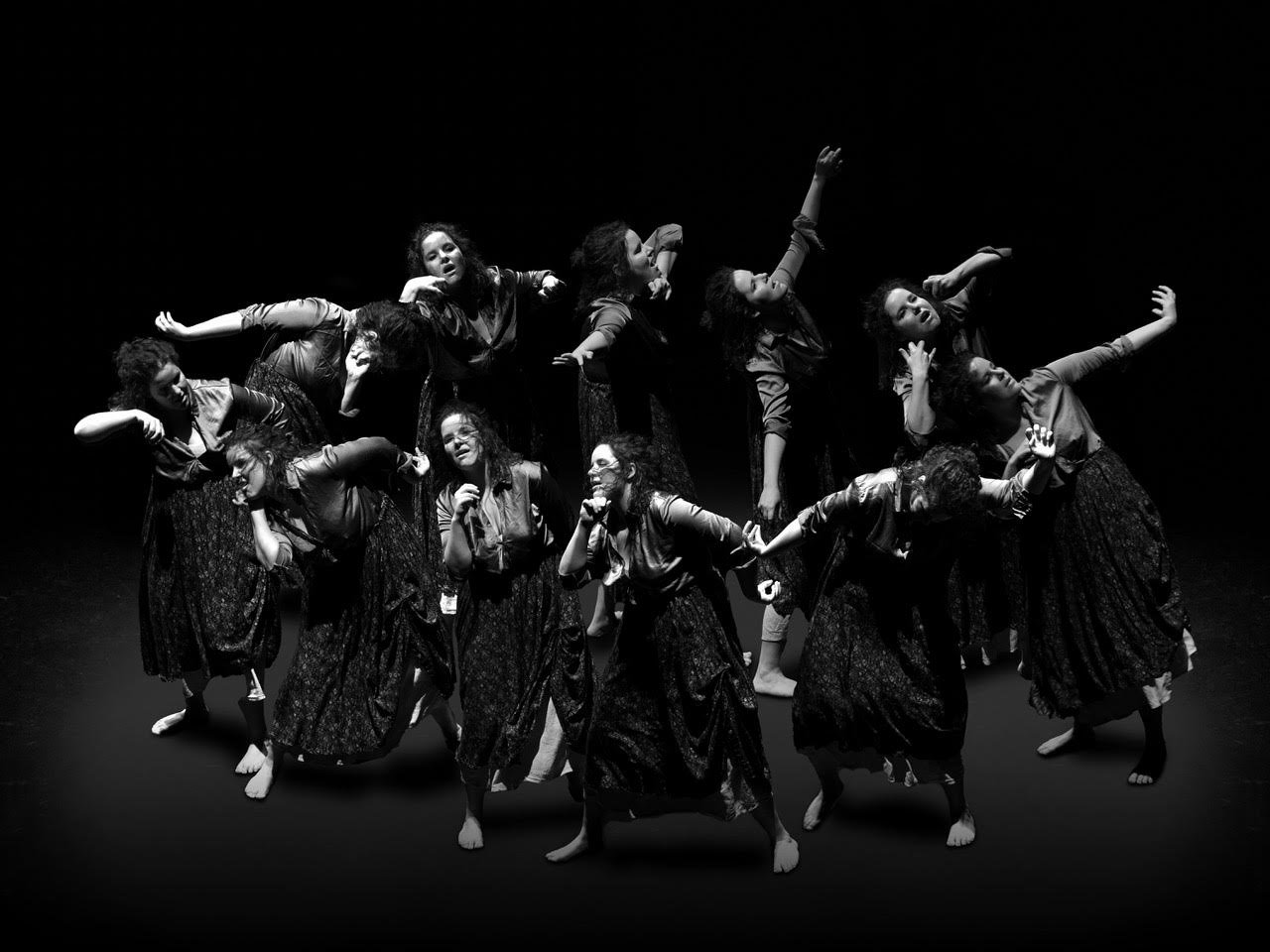
Projects That Shaped the Year
This year also brought some deeply impactful creative projects.
I worked as movement director and intimacy coordinator on There’s Nothing You Can Do by Cole Haley, produced by Resource Centre for the Arts Theatre Company. This was one of the most challenging pieces I’ve worked on, demanding high levels of movement literacy, stamina, and rigorous attention to safety. It pushed everyone involved, myself included. I’m incredibly proud of that work and grateful for the trust and commitment of such an extraordinary cast.
My biggest love of the year, though, was Love’s Labour’s Lost. Returning to a play I’d worked on before, this time leading a large ensemble through classic text, was a gift. Much of my directing work has been in original creation, so stepping fully into Shakespeare with a clear vision for how I wanted the room to function felt both new and deeply aligned. It was also scary. Who am I to direct Shakespeare, especially when my relationship to text is challenging? In the end, it more than worked out. What a joyful, generous, and talented group of artists. I had an absolute blast this summer.
I also said yes to:
New performance opportunities outside of my regular collaborators.
Dipping my toe into the film world as an intimacy coordinator for Netflix, where I learned so much and gained a deeper respect for the nuances of on-set dynamics.
Continuing the work of Ladies Who Lunch with our ninth Three Tales of Terror and a remount of SpookyChristmasTown.
Development of Mayflies VR produced by Untellable Movement Theatre.
Beginning development with Phil Goodridge and Jaimie Tait on The Station through Untellable’s Incubator program.
Debuting my short film The Dress which travelled to festivals, and screened at the Festival of New Dance.
Completing the Intimacy Professionals Accelerator Program though IDC.
Fostering LPD and creating a studio that feels like that one open class in Centre Stage where everyone dances to Higher Ground.
Ending the Year Grateful
When I step back and look at 2025, what I see most clearly is alignment:
More intentional rooms.
More trust in how I work and why.
So before racing ahead into what’s next, I’m letting myself stand here for a moment.
Cheers to 2025.
Here’s to 2026.
Embracing Winter Solstice
As the winter solstice brings its quietest and darkest day, I am taking the opportunity to pause and be very intentional about how I move forward.
As the winter solstice brings its quietest and darkest day, I am taking the opportunity to pause and be very intentional about how I move forward.
This time of year often comes with the hustle of "New Year, new me" resolutions, but this year, I’m feeling a little softer. Instead of racing into January, I’m choosing to meet the year with a slower, more intentional pace.
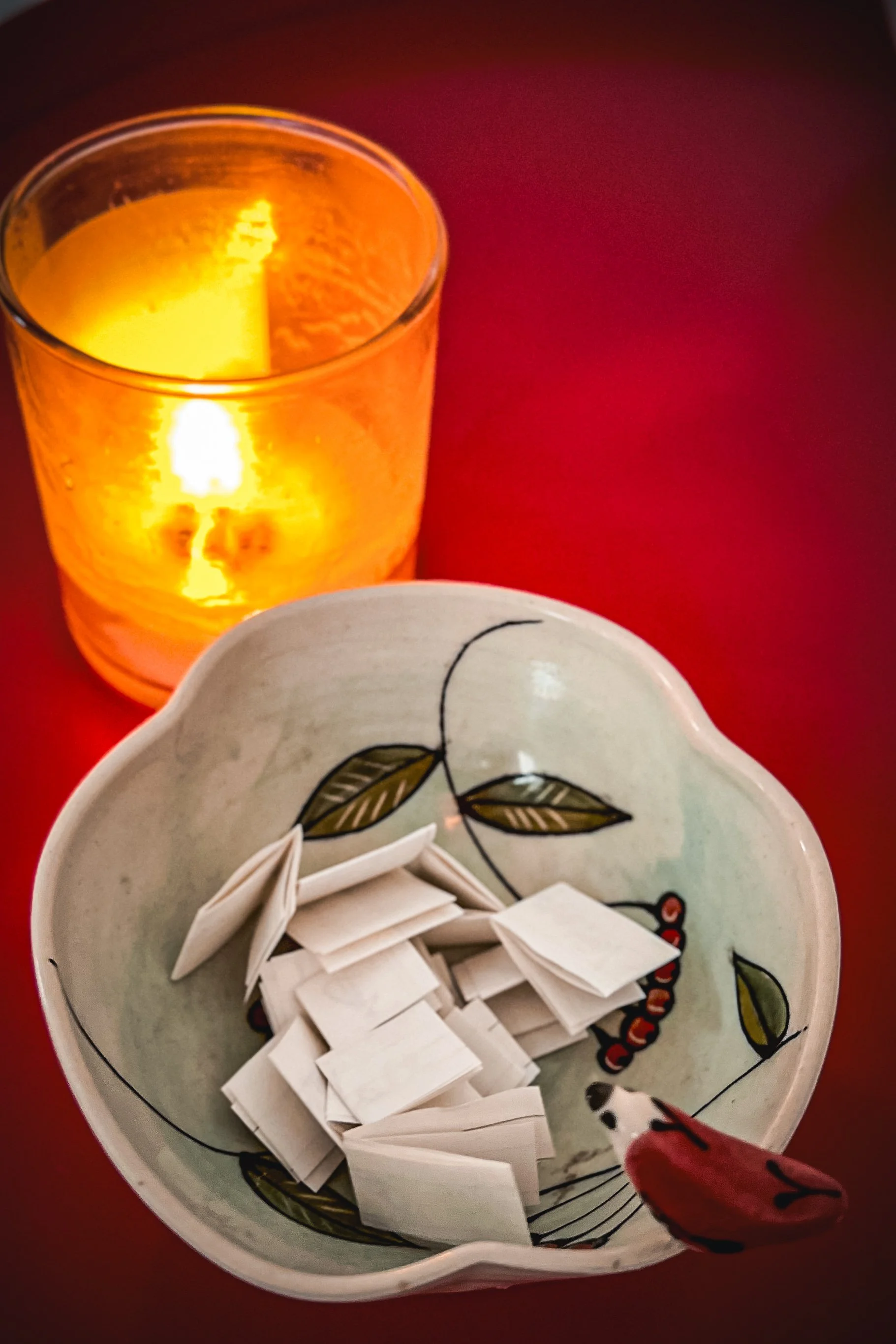
For the first time, I am engaging in a Yule ritual called 13 Wishes. The ritual begins by crafting thirteen intentions or attainable wishes for the year ahead. Starting on the winter solstice, one wish is burned each day, releasing it slowly as the light returns. The final wish, kept unburned, is the one we are asked to carry ourselves.
What I love about this practice is that it resists urgency. It is a reminder that not everything needs to be decided or achieved all at once.
If this resonates with you this might be an invitation to move forward with intention rather than pressure, allowing your work and your life to unfold as the days begin to grow longer.
I’m setting these intentions for myself both personally and in my work, and here are a few thoughts that you might adopt in your own professional life.
Intentions for Work:
Clarity Over Urgency: Take the time to understand what matters to you and what aligns with your values can lead to more meaningful and focused work.
Intentional Connection: Building relationships with thought, care, and boundaries leads to richer, more fulfilling work and stronger collaborations.
Process Is Productive: Time spent listening, refining, and allowing ideas to evolve is real work.
Care Is Not a Delay: Moving with care is not slowing things down. It is what makes the work sustainable.
Here’s to moving forward with a softer focus as the days grow brighter.
Happy holidays.
On Giving a Good Note
A generous, productive rehearsal room depends on clear and direct communication. Giving a note is not an opportunity to perform authority. Giving a note is a responsibility.
Many of us were raised in rehearsal rooms where sarcasm, passive-aggressive (and plain old aggressive) comments were the norm.
Where title power felt the need to “break us” in order to “make us.”
Where dressing down of the entire cast was a regular occurrence.
I’ve been in many rooms where we had to pause rehearsal to endure tantrums from the “leaders” present.
But none of that actually helped the work. And it definitely didn’t help the people making it.
Some folks have held on to bad habits from the generation before without considering whether these behaviours and methods actually yield positive results.
I propose that we could be more thoughtful about how we approach leadership. I’ll also offer that you can love and respect a mentor while recognizing that their way of working is harmful and that you can and should do better.
A generous, productive rehearsal room depends on clear and direct communication. Giving a note is not an opportunity to perform authority. Giving a note is a responsibility.
Here are some thoughts on giving notes with clarity and respect.
Know The Work Inside Out
Before you step into rehearsal, you need to know your piece intimately.
Notes fall apart when leaders are fuzzy on what they want. Ambiguity has its place in early discovery, but once you’re in the note-giving phase, the room depends on you for clarity.
A director who says, “Try something… anything!” and then immediately follows with “No, not like that,” is the worst.
Artists take risks when they know the boundaries of the room. They grow when those boundaries feel intentional.
Artists give you their best when they feel safe from arbitrary rejection. So be prepared to discuss the work at a high level.
And if you use experimentation, discovery, or devising as part of your process, knock off the notes. It’s not the time. Offer observations instead.
Match Expectations with Reality
Before you give a single note, check your expectations.
You cast these artists. You know what they bring. You understand their strengths, their limitations, and the places where they can grow.
Notes should live inside a performer’s actual toolkit and not an imaginary potential version of them.
Can you challenge people?
Of course.
That’s the work. Growth is part of the job for everyone.
Growth happens when expectations are realistic and rooted in the truth of who is in the room.
A note that asks someone to work from their strengths is motivating.
A note that asks someone to work beyond their abilities is shaming.
Remove the Performance of Authority
Stop performing power. You either have it or you don’t.
Sarcasm, passive aggression, and takedowns are performances of authority. They have no connection to real leadership. They create fear, diminish trust, and often paralyze the very artists you need to be brave.
People do not do their best work when they are humiliated.
Imagine?!
They do their best work when they are respected, prepared, and supported.
Be Clear. Be Direct. Say What You Mean.
A good note is specific. It names the thing you want and asks for it plainly.
“Pick up the pace in that transition.”
“Land that line with more weight.”
“Slow down this section ”.
“Shift your focus to actor B for that reveal.”
No sarcasm. No coded language.
If you find yourself giving the same note over and over again, that’s evidence that you are not communicating effectively.
That is on you, not the performer.
When the note doesn’t land, change the note. Your job is to be understood.
Communication Is the Job
More than anything else, directing is communication.
A good note communicates: I believe you can do this. I believe in the work we’re making together. Here is how we get there.
A bad note says: You’re failing. Prove yourself.
When we give good notes we create rooms where people feel capable, safe, and proud of the work they’re doing.
We also make better art.
Exit Strategies: How to Leave a Scene, a Process, or a Creative Partnership with Integrity
Exits are an inevitable part of creative work, but they don’t have to be messy. Whether leaving a scene, a rehearsal, or an entire project, having an intentional exit strategy protects both your well-being and your professional relationships.
We often focus on beginnings in creative spaces, the excitement of a new project, the first day of rehearsals. Endings are just as important and having a clear exit strategy ensures a smooth transition for everyone involved.
Exits should be intentional and respectful. Knowing how to exit with integrity makes a difference.
Why Exit Strategies Matter
They Provide Closure
They Protect Well-Being
They Maintain Professionalism
They Prevent Burnout
Exiting a Scene
When working on emotionally charged material, actors need a way to separate themselves from their characters and return to a neutral state. Without a clear exit, intense emotions can linger, leading to emotional exhaustion or blurred boundaries.
In Practice:
Tapping In and Tapping Out: This is a simple but effective ritual that signals when an actor is entering and leaving the world of the character. Before beginning the scene, each performer physically “taps in” (this can be a hand tap on their own chest, a clap, or touching an object). When the scene is over, they physically “tap out” to acknowledge that they are stepping away from the emotions of the performance and returning to themselves. This helps create a clear psychological boundary between character and self. More on that here.
Shake It Off: After a heavy scene, encourage performers to literally shake off the tension. This physical reset signals to the body and brain that the work is done.
Three Breaths Technique: Before leaving the scene, actors take three deep breaths together. The first breath releases the character’s emotions, the second brings awareness back to the body, and the third grounds them in the present moment.
Closing a Rehearsal
A strong rehearsal process includes clear bookends. Rushing out of a rehearsal without a transition can leave performers feeling disconnected and unsettled.
In Practice:
Tapping In and Tapping Out
Circle Up: a brief moment to close out the day and acknowledge one another. This might include a one-word summary of how everyone is feeling, a group stretch, or a collective breath. My personal way on ending a class or reheasal come from my dance background and is often a collective reach up and down followed by a thank you.
Stepping Away from a Project or Collaboration
Not every artistic relationship lasts forever. Sometimes you need to step away from a project for personal, professional, or creative reasons. How you exit determines the impression you leave behind.
In Practice:
Pass the Torch: If you’re leaving mid-project, offer a resource for whoever is stepping in. Providing notes, documents, or a transition meeting ensures continuity and demonstrates professionalism.
Write a Gracious Exit Letter: When leaving a long-term role or collaboration, a short, appreciative message can go a long way. This approach keeps doors open for future collaboration.
Set a Clear Last Day and Get Out ASAP: Ambiguity around departure dates can lead to confusion or resentment. So can outstaying your decision to leave. Setting a firm and swift exit date and making it clear what you will and won’t be responsible for after that date helps maintain clarity and respect for all involved.
Navigating an Uncomfortable or Unsafe Situation
Unfortunately, not all exits happen on good terms. Sometimes you need to remove yourself from a situation quickly and decisively.
Here it may be important to look into your contract and/or consult with HR. Please note however, that HR is there to protect the organization and not the individual.
If you are looking for an ally you personal network is best.
In Practice:
Professional Pivot: Direct the conversation toward a clear exit. This keeps things neutral and avoids unnecessary confrontation.
“I appreciate the opportunity, but I realize this project isn’t the right fit for me. I need to step away, and I wish you all the best moving forward.”
Support Check-In: Before making a tough exit, talk to a trusted colleague or mentor. A second opinion can help clarify whether stepping away is the best choice and provide moral support in navigating the transition.
No-Explanation Boundary: If a situation is unsafe or toxic, you do not owe anyone a detailed reason for your departure. A firm, simple statement like “I’m unable to continue with this project” is enough. If necessary, loop in an advocate to ensure a smoother transition.
Exits are an inevitable part of creative work, but they don’t have to be messy. Having an intentional exit strategy protects both your well-being and your professional relationships.
Recognition, Reciprocity, and the Work of Arts Education
The health of our arts ecosystem depends on ongoing, intentional investment in teaching and mentorship. If we want a vibrant future for the arts, we must nourish the people doing this work today.
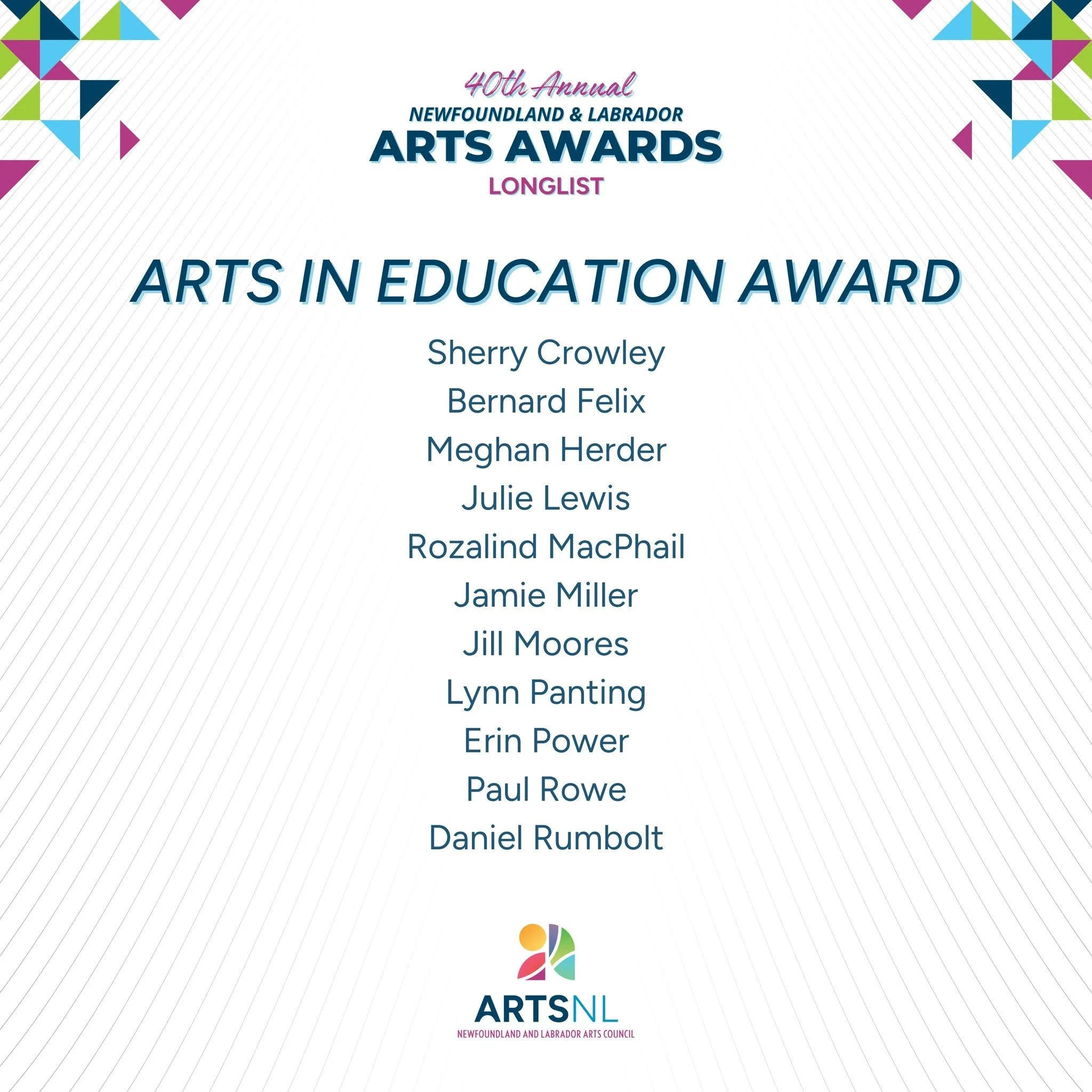
I’m honoured to share that I have been long-listed for ArtsNL’s Arts Educator of the Year Award. While recognition is not the reason any of us choose this profession, moments like this create an opportunity to reflect on the ecosystem that makes it possible.
Across Newfoundland and Labrador, arts educators are quietly doing the daily labour of building confidence, shaping creative literacy, and nurturing the next generation of artists, collaborators, leaders, and community members. I want to extend my genuine congratulations to everyone on this year’s long list. It is a privilege to stand alongside colleagues whose practices are thoughtful, rigorous, and deeply rooted in care.
Every day, I witness the ways arts education strengthens individuals and communities: how it teaches young people to collaborate, to lead with empathy, to listen, to respond, to imagine boldly, and to take up space with integrity. The arts shape how people understand themselves and the world around them. That impact is structural, cultural, and profoundly human.
This recognition also prompts a larger conversation about visibility. Much of the work of teaching happens out of public view. The planning, the mentorship, the emotional labour, the navigation of boundaries, the creation of safer spaces, the stewardship of emerging voices. These practices are not often celebrated, yet they form the backbone of a sustainable arts sector.
When we talk about strengthening our cultural ecology, we are also talking about supporting the educators who make that ecology possible. Strong arts education is a form of cultural infrastructure. It feeds our stages, our festivals, our creative industries, and our communities. It ensures that the next generation not only has the skills to create work, but also the capacity to collaborate, innovate, question, and contribute meaningfully to the public good.
I’m grateful to ArtsNL for recognizing the essential role of arts educators, and grateful for the opportunity to be in conversation with peers whose practices push our community forward. Recognition, in this sense, becomes not just a personal milestone but a moment to reaffirm our shared commitment: to thoughtful pedagogy, to creative rigor, to equity, to experimentation, and to the ongoing work of building responsive, human-first spaces for artists of all ages.
To my fellow nominees: thank you for the work you do. Your impact travels farther than you know. Our sector is made stronger by your presence.
A Call to Action: Supporting the Future of Arts Education
If this long listing underscores anything for me, it’s how deeply our sector relies on educators and how we need collective action to support them.
Here are a few ways individuals, organizations, and institutions can strengthen arts education in Newfoundland and Labrador and beyond:
1. Advocate for sustained funding.
Write to your MHA, school board, or municipal leadership about the importance of arts education. Public investment matters, especially in a shifting political landscape.
2. Champion arts educators publicly.
Share the work of educators in your networks. Celebrate their milestones. Visibility helps shift narratives and funding priorities.
3. Create paid opportunities for artists to teach.
Workshops, residencies, mentorship programs, and youth initiatives all benefit from professional facilitation.
4. Amplify access.
Support organizations that commit to reducing barriers for young people and emerging artists.
5. Build partnerships.
Arts education is strongest when schools, artists, community groups, and cultural institutions work together.
The health of our arts ecosystem depends on ongoing, intentional investment in teaching and mentorship. If we want a vibrant future for the arts, we must nourish the people doing this work today.

On Scarcity and the Arts
Scarcity tells us there isn’t enough to go around. It convinces us that someone else’s success means less for us. It tempts us to tighten our grip and protect what we’ve built, often at the expense of community.
The political landscape has shifted, and that shift is palpable.
Make no mistake: economic and cultural contraction is reshaping the arts at an alarming rate.
Funding pools are smaller. Costs are higher. Everyone is tired, and the group chat has gone quiet.
In times like these, it is tempting to retreat to one’s own corner and resource guard. It is a scary time for artists and arts organizations, and as a result, it’s easy to adopt a scarcity mindset.
Scarcity tells us there isn’t enough to go around. It convinces us that someone else’s success means less for us. It tempts us to tighten our grip and protect what we’ve built, often at the expense of community.
It’s a very human response, but I would argue that it ultimately doesn’t serve us.
Scarcity mindset keeps us small. It isolates us. It erodes trust. When we operate from fear, we stop sharing ideas, spaces, and opportunities. We stop imagining new ways forward.
So what is the alternative?
Community.
Listen, I am a second-generation artist. I am not ignorant to the impacts of a downturn. The financial repercussions of COVID nearly did me in, and I am only now starting to recover. I am not suggesting that we Pollyanna our way through. I am suggesting that we start recognizing and fostering the idea that the arts are an ecosystem.
Art cannot be made in isolation. Art invites. Art reflects.
Somewhere along the way (perhaps around the same time we adopted the term “arts industry”) we started treating the arts like a hierarchy instead of an interconnected ecosystem.
In an ecosystem, there is reciprocity. Diversity of scale, approach, and audience strengthens the whole. Small, mid-size, and large organizations each play essential roles, feeding one another through shared audiences, mentorship, and experience.
An industrial/hierarchical model, on the other hand, rewards bigness. It prizes scale and revenue over relationship. But the truth is, not everyone can (or should) be big. A top-heavy system is inherently unsustainable.
If we only reward the most seasoned, the highest earning, the most recognizable, where will our next generation of artists come from? How will they find the footholds they need to grow?
Further where does that leave newcomers, independent artists, and those from marginalized communities?
When success is defined by scale, we risk flattening the very diversity that makes our sector resilient.
In truth, size and budget do not necessarily correlate to impact. I’m sure we can all think of an example or two of a big-budget endeavour that didn’t yield good art. And vice versa, I can think of plenty of small and mighty projects that did.
Big, small, and everything in between is necessary.
So what do we do?
Resist scarcity.
Communicate. Keep the channels open. Share what you or your organization is facing
Share knowledge, space, and tools, even when we feel stretched.
Partner.
Trust that generosity can coexist with ambition.
Remember that our survival relies on the survival of others.
We can still advocate for systemic change, for better funding models and sustainability. Isn’t it best that we do that together?
There is room for all.