Responsive Ensemble Framework (REF)
Ensemble Building by Lynn Panting
Ensemble Building
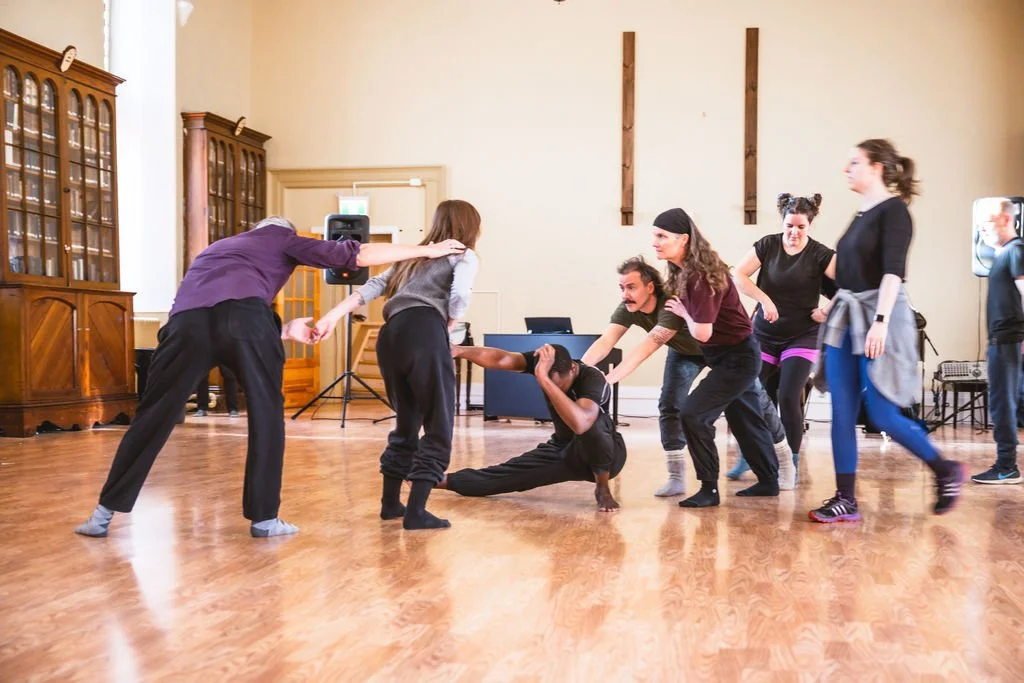
Ensemble building is the practice of transforming a group of individuals into a connected, responsive whole.
Ensemble building takes time and requires intentional work: repeatable exercises and rituals to cultivate trust and shared vocabulary.
Each ensemble is unique. It is this group of people, in this room, at this moment in time. No two ensembles are ever the same. That is the magic of it: the specific mix of personalities, histories, and imaginations becomes the foundation of the work. Ensemble building doesn’t try to flatten differences; it weaves them together.
This practice encourages the development of a shared physical and artistic language, strengthening the clarity and cohesion of the project. It ensures that rehearsal is not only more efficient, but also more joyful, more connected, and ultimately more alive.
What This Approach Offers
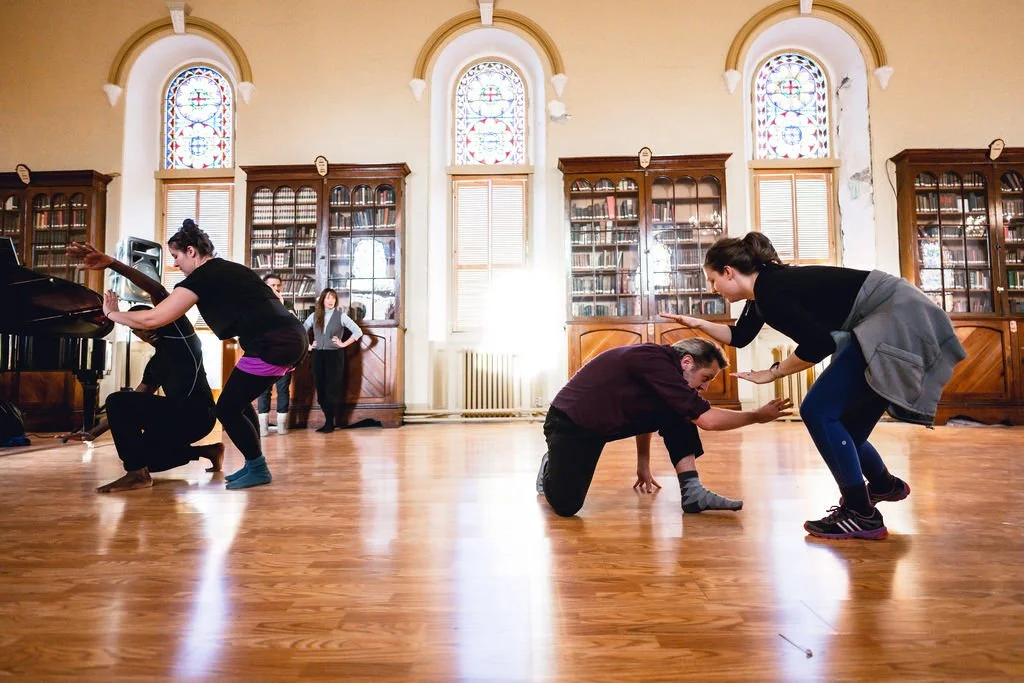
This framework balances structure and spontaneity. Half of the process is anchored in familiar, repeatable exercises; the other half is responsive, shifting to meet the energy, needs, and dynamics of the ensemble in the room.
Because it’s rooted in people, the process can adapt to any cast or project. What emerges is a company of artists that are deeply attuned to one another, capable of holding the world of the show together.
Core Philosophy
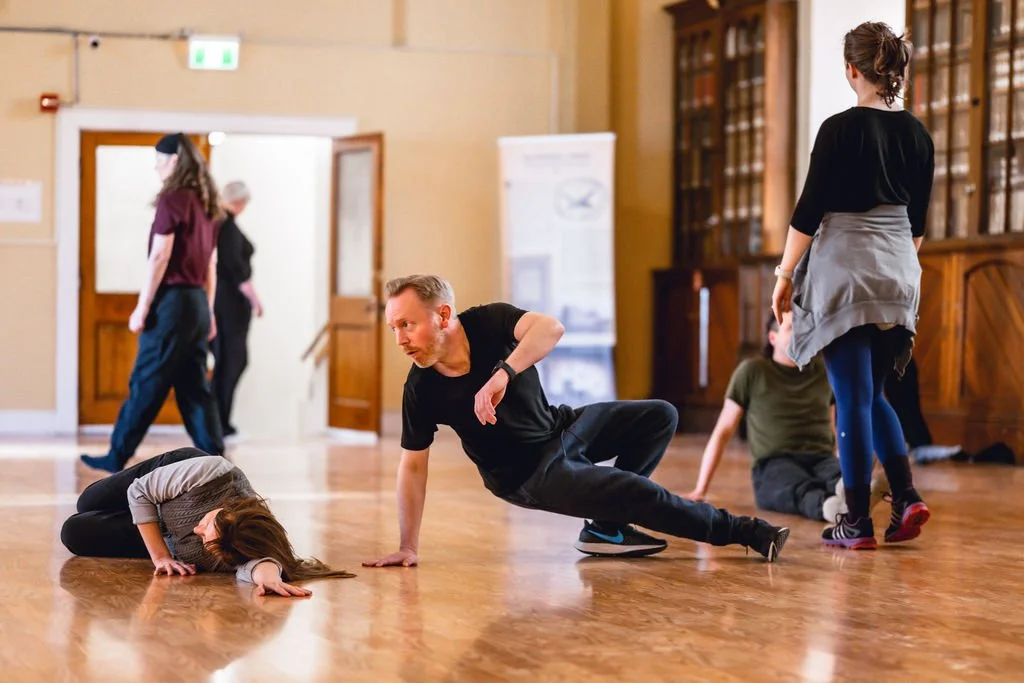
Everyone in the room is a creator. Ensemble building honours this by weaving together three interlocking threads:
Embodiment – how bodies move, inhabit space, and shape environment.
Connection – the relational field: the bonds, tensions, and histories that play out between people.
Resonance – the themes, images, and emotional tone that pull everything into a cohesive whole.
Any one of these can be the entry point, but all three are essential. Together, they ensure the ensemble is not only responsive but alive with possibility.
How It Grows
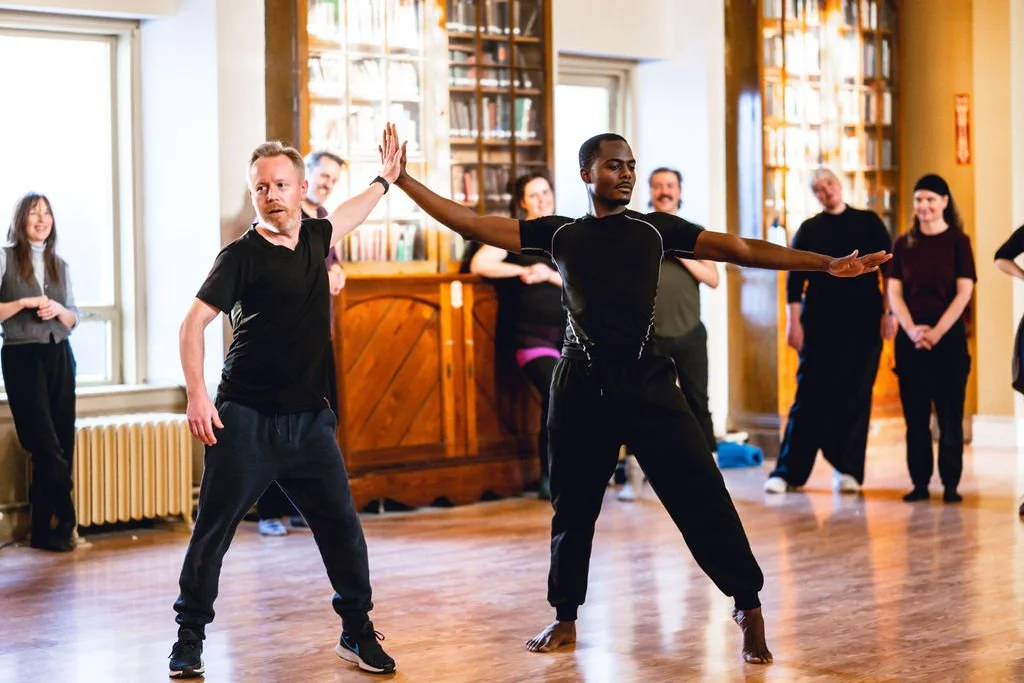
The framework unfolds in stages:
Trust & Connection
Ground the room through awareness: warm-ups, sensory exercises, and practices that slow down the listening. Create rhythm and attunement.
Shared Vocabulary
Explore a chosen movement framework, or build a new one, and let it become common ground for the ensemble.
Applied Ensemble Work
Deepen awareness and responsiveness through structured exercises: working with shape, rhythm, proximity, energy, and texture.
Project-Specific Integration
Once the ensemble is connected and fluent in a shared language, shift into work driven by the needs of the piece: story, space, and themes. Movement becomes staging, motifs emerge, and key moments gain clarity.
Ensemble Building Exercises
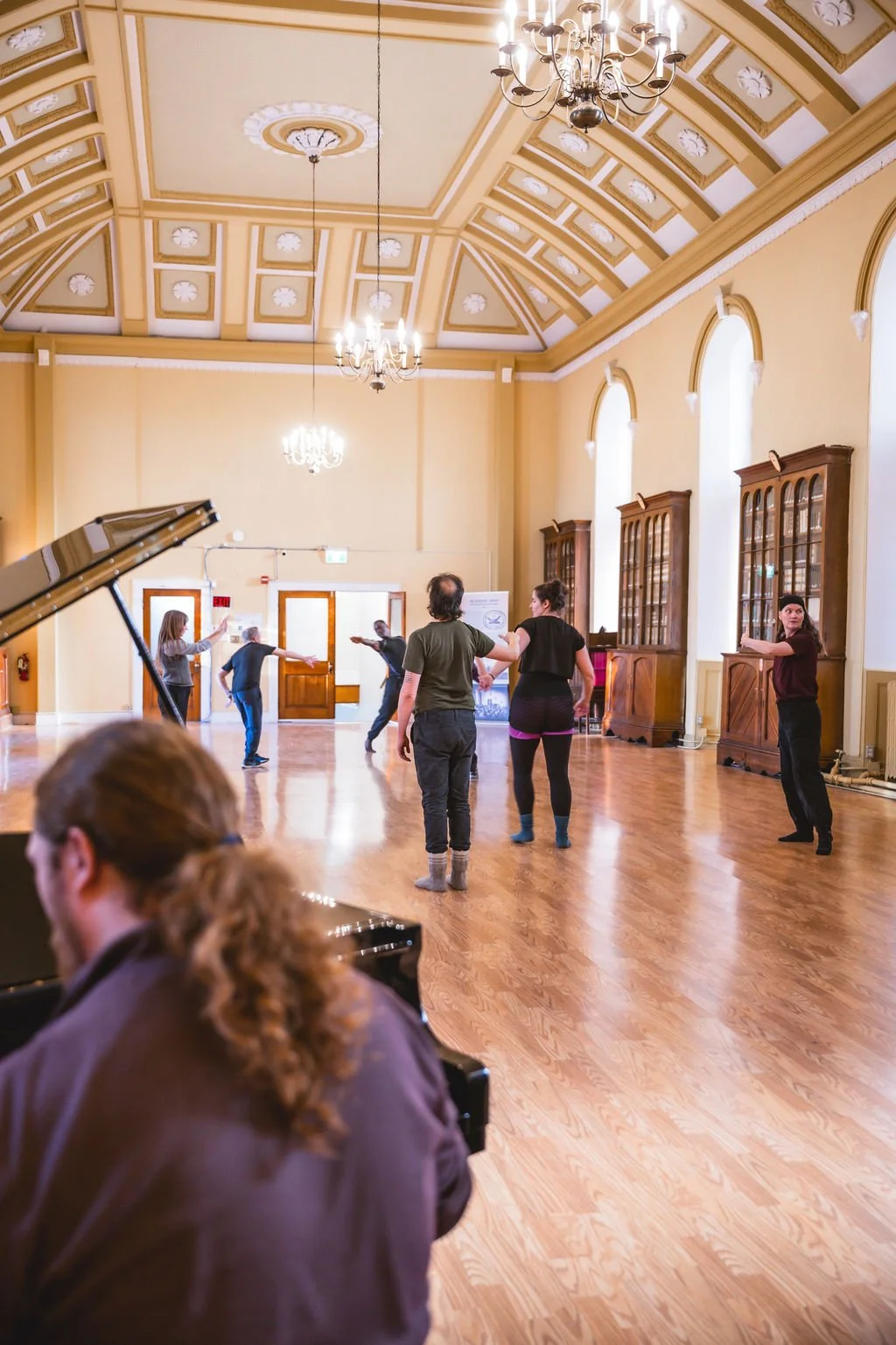
Ensemble-building exercises cultivate trust, spatial awareness, and collective creativity, allowing performers to develop a shared physical language that strengthens their connection and deepens storytelling through movement.
-
Objective:
This exercise develops ensemble awareness, spatial sensitivity, and the ability to respond dynamically to the group. It builds trust, connection, and the foundation for movement-based storytelling through simple pedestrian action.
Instructions:
Each participant enters the space one at a time, engaging with the environment at their own pace.
They may choose to stand, sit, lie down, walk, or pause.
Movements should remain pedestrian and natural, with no need for theatricality or exaggeration.
As the exercise progresses, participants focus on spatial relationships—how they exist in the space alone and in relation to others.
They begin to notice distance, proximity, and how their choices influence the energy of the room.
-
Objective:
Develop collective movement and group cohesion.
Instructions:
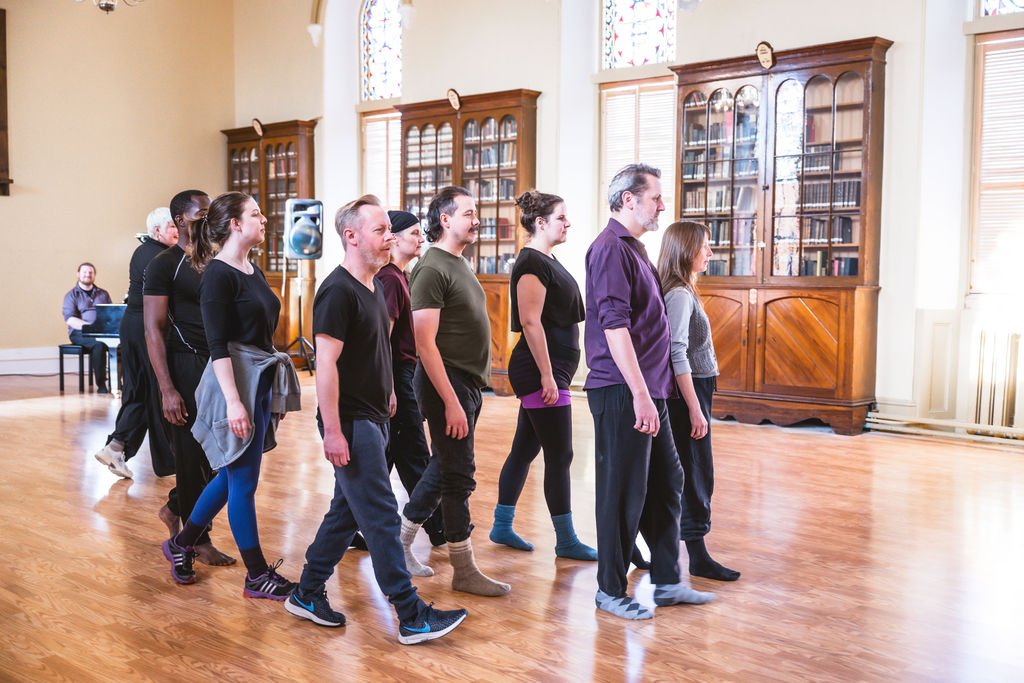
Have the ensemble stand in a loose formation, all facing the same direction.
The person at the front becomes the leader, initiating movements (e.g., walking patterns, arm gestures, or changes in tempo).
The rest of the group follows the leader, mimicking their movements as precisely as possible.
After a short time, someone else naturally assumes the leadership role by stepping forward or changing direction. The group shifts to follow the new leader.
Encourage seamless transitions and a sense of "reading" the group's energy.
-
Objective:
This exercise sharpens spatial awareness, deepens partner connection, and encourages dynamic movement exploration. Dancers learn to navigate the negative space around their partner with precision, intention, and heightened sensitivity to proximity.Instructions:
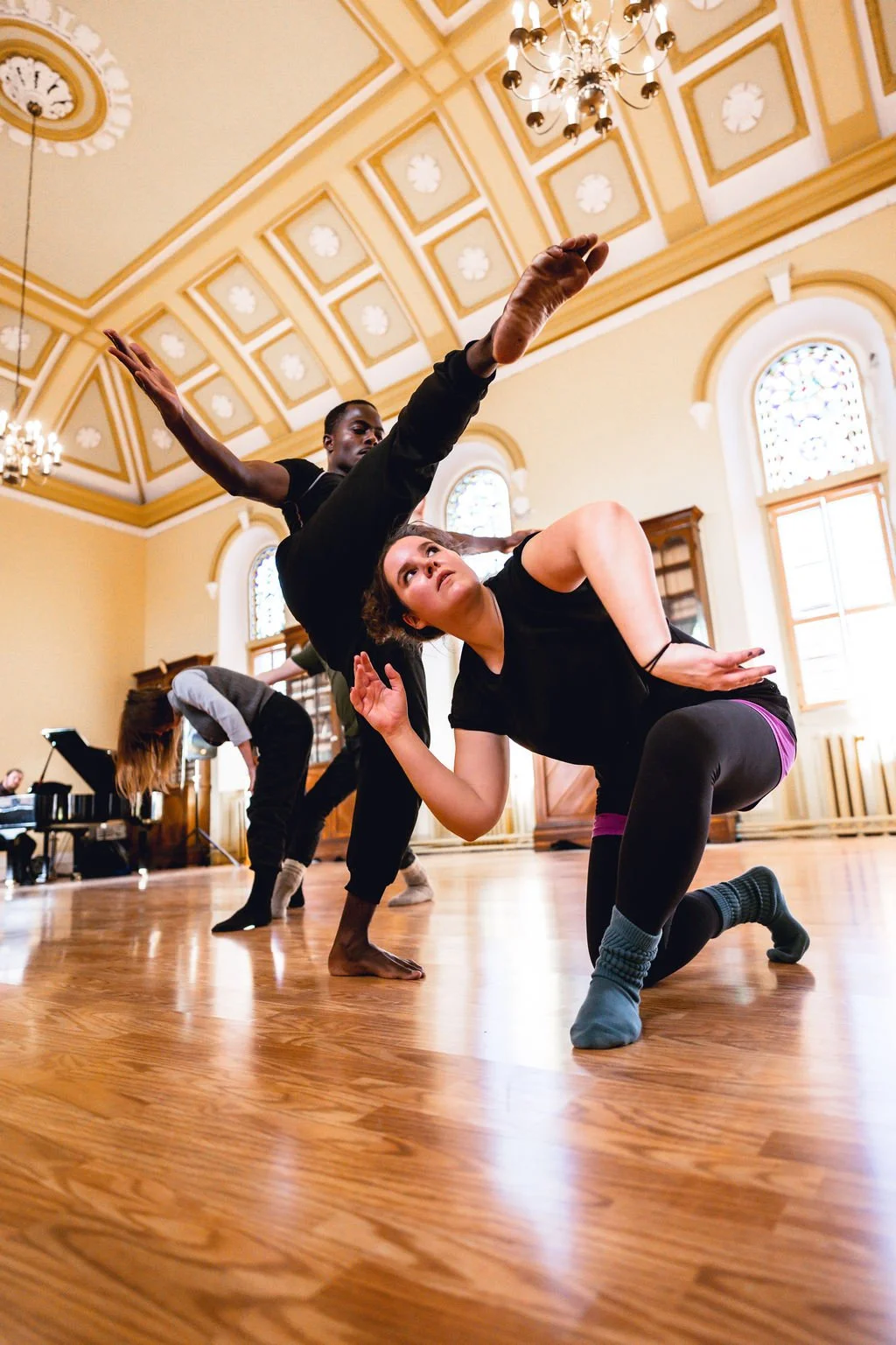
Dancers are paired and given the task of traveling through the space together while exploring the negative space around each other’s bodies.
The goal is to get as close as possible without making physical contact. This requires constant adjustment, control, and attunement to subtle shifts in their partner’s movement.
Movements can be slow and sustained or sharp and reactive, depending on the desired energy of the exercise.
Partners should remain in a continuous state of awareness, responding to each other’s choices in real time.
Encourage exploration of different levels (floor work, mid-level, standing), tempos, and pathways to challenge coordination and adaptability.iption
-
Objective:
This exercise develops ensemble awareness, spatial relationships, and physical storytelling by constructing and deconstructing collective shapes. It encourages creativity, connection, and responsiveness while fostering a shared movement language.Instructions:
One participant enters the space and forms a strong, distinct shape with their body—the "foundation" of the monument.
One by one, additional participants enter, each physically adding to or responding to the existing shape in a connected and intentional way.
The group continues building until all participants are involved, forming a cohesive, sculptural monument.
Once the monument is complete, the group allows the structure to melt and dissolve, gradually shifting out of their positions in an organic and fluid way.
The process is repeated in another part of the room, with participants exploring new shapes and connections.
-
Objective:
This exercise fosters ensemble awareness, spatial relationships, and creative physical storytelling by building a collective shape through sequential movement. It encourages responsiveness, collaboration, and non-verbal communication among participants.
Instructions:
One person begins by entering the space and striking a distinct shape with their body. This could be dynamic, abstract, or character-driven, depending on the goal of the exercise.
The next person joins by positioning themselves in front of the previous person, making a physical connection (direct or spatial).
Each subsequent participant continues the process, always positioning themselves at the front of the formation and maintaining a relationship to the growing shape.
Once a participant reaches the front, they are ‘frozen’ in place and can no longer move from their spot.
The exercise continues until all participants have joined, creating a final, unified ensemble structure. -
Objective:
This exercise creates a shared movement vocabulary, useful for developing a collective backstory, deepening ensemble connection, and fostering improvisational skills. Through structured movement exchange, participants build a physical dialogue that strengthens spatial awareness, memory, and responsiveness.Instructions
Participants work in pairs or small groups. They take turns contributing one movement at a time to create a contact-based sequence, or "handshake."
The first person initiates with a simple gesture.
The second person responds with a new movement that connects to or follows from the first.
This pattern continues in a set order, with each participant adding a movement until a full handshake sequence is built.
Once the sequence is established, participants repeat it several times to solidify the rhythm, flow, and execution.
Why This Works
Clear Progression
Moves from relationship-building → vocabulary setting → application → production-specific creation.
Adaptable
Can borrow from existing movement languages or create an original vocabulary tailored to a specific production.
Scaffolded
Ensures each stage builds upon the last, reinforcing ensemble cohesion while leaving space for creative discovery.
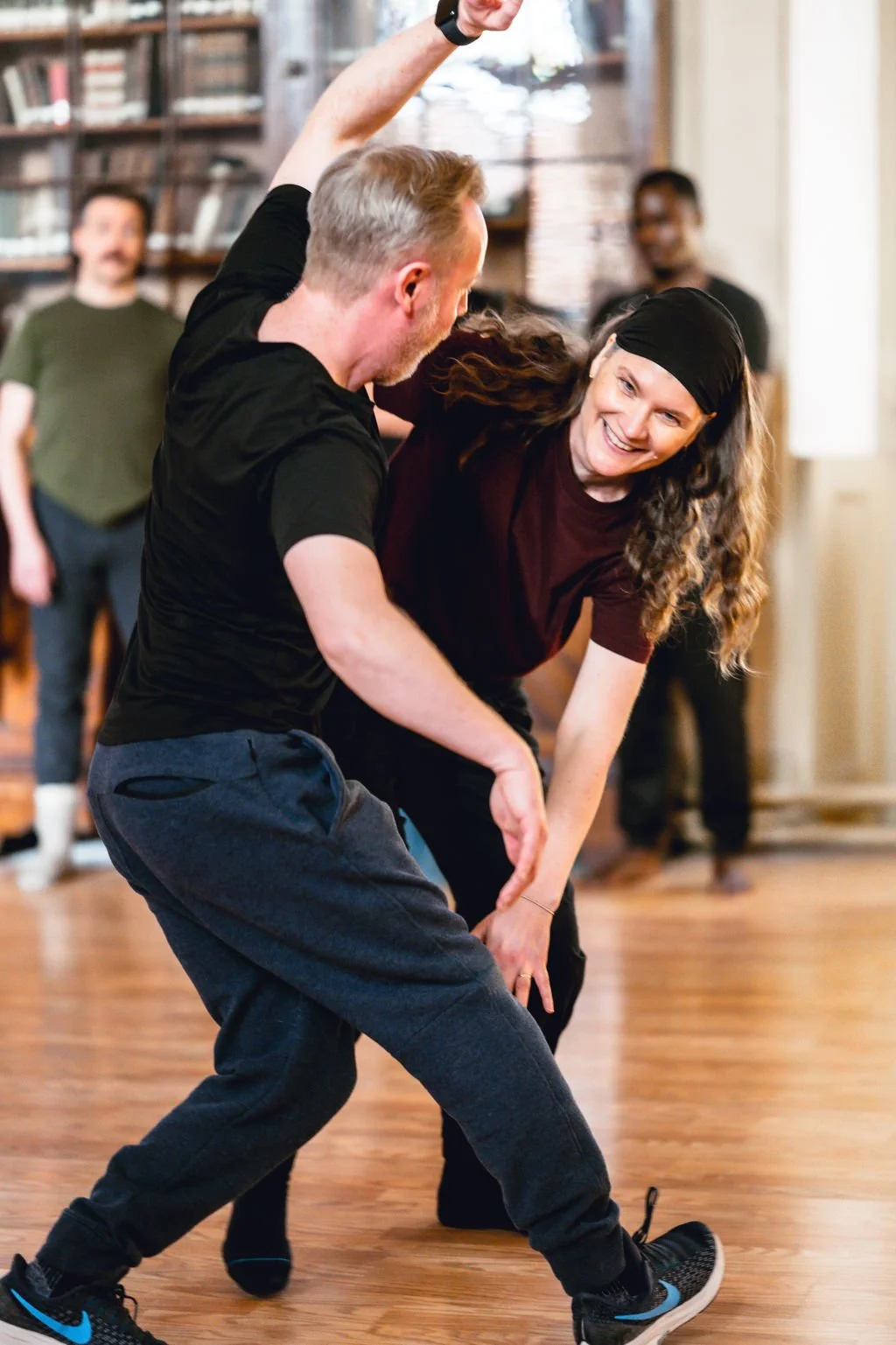
Foundations of Trust & Connection
Relationship Building & Group Awareness
Purpose: Establish trust, rhythm, and intuitive connection among ensemble members before introducing structured vocabulary.
1. Warm-Up & Sensory Awareness
Stand, Sit, Lie
Flocking
In the Space that Isn’t
These exercises encourage organic decision-making and awareness of how individuals move in relation to one another. They help ensemble members attune to personalities, movement styles, and spatial instincts.
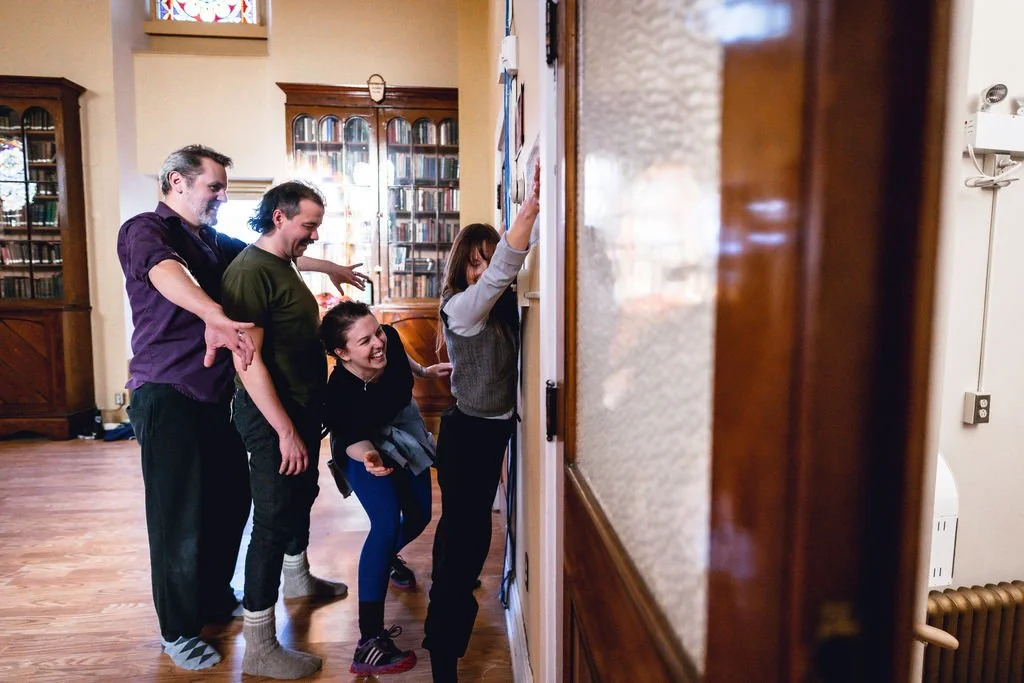
Establishing a Shared Movement Vocabulary
Purpose: Introduce a consistent framework that will serve as the foundation for all movement exploration in rehearsals.
Choose a Movement Language
Existing Techniques:
Laban Efforts
Viewpoints
Modes of Movement
Original Vocabulary:
A custom movement system developed for the production, reflecting its themes and stylistic needs. This could be inspired by the text, setting, or emotional tone
Introduce Your Chosen Framework in Group Exercises
Introduce simple movement prompts based on the chosen framework.
Allow space for experimentation and interpretation before moving into structured exercises.
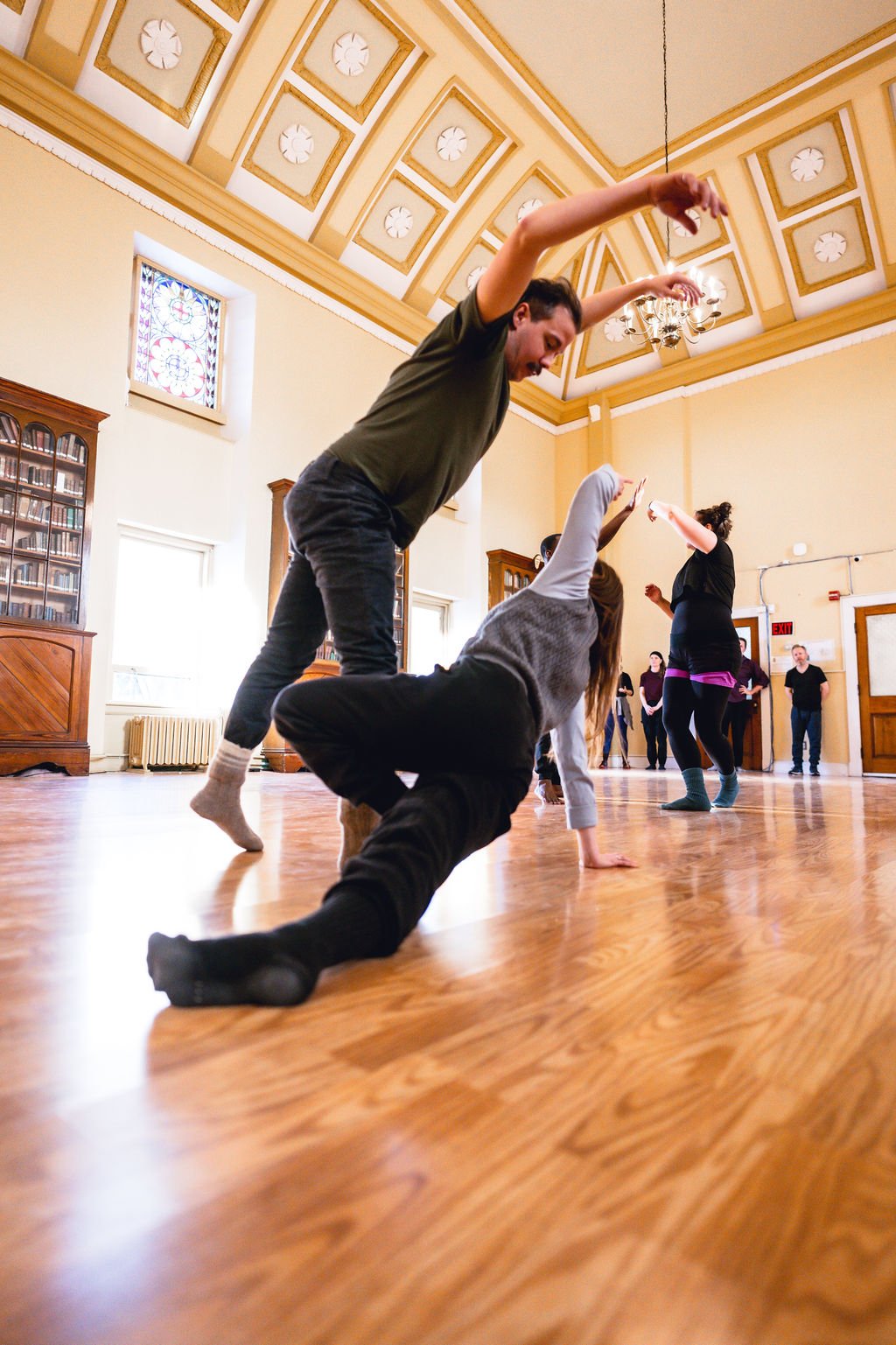
Advanced Ensemble Exercises with Applied Vocabulary
Purpose: Deepen ensemble connection while reinforcing and refining the shared movement language.
Ritualized & Repeatable Ensemble Exercises
Handshakes – Now informed by the vocabulary, shifting intention based on gesture quality.
Leap Frog Exercise – Experimenting with weight, proximity, and rhythm within the established movement framework.
Monument Building– Exercises that explore levels, pacing, and movement restrictions to define power structures and dynamics within the ensemble.
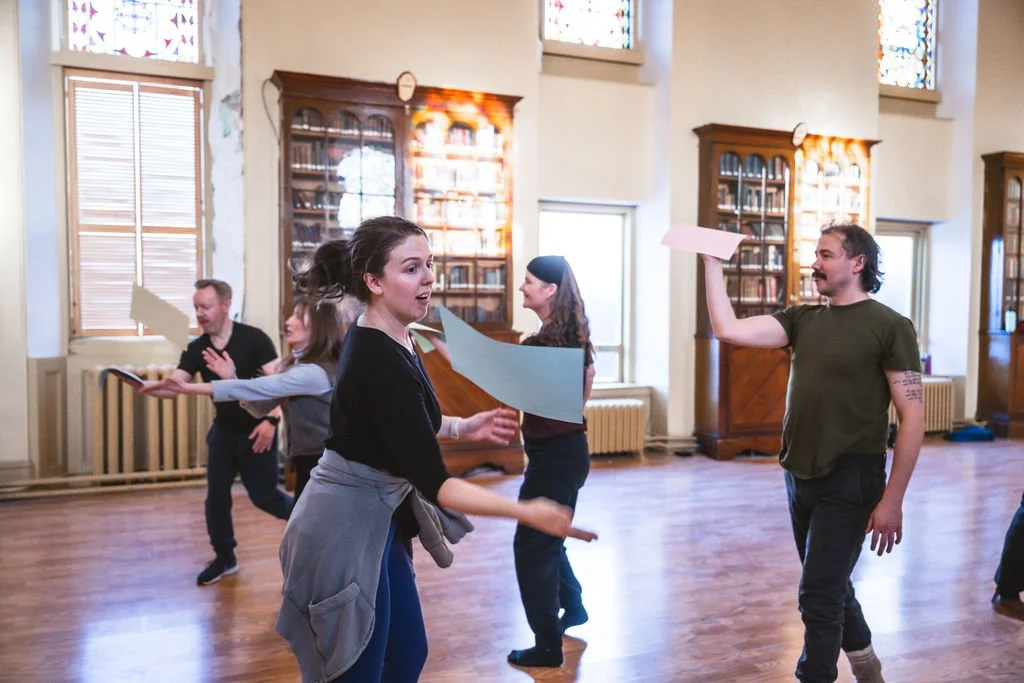
Production-Specific Exploration
Purpose: Develop original ensemble work that directly supports the themes, narrative, and movement style of the production.
Generate Specialized Exercises Based on the Project
Integrate Ensemble Movement into Staging
Transition from freeform exploration to structured application in scene work.
Identify repeating motifs or signature movement phrases for key moments.
Using Music to Support Ensemble Work
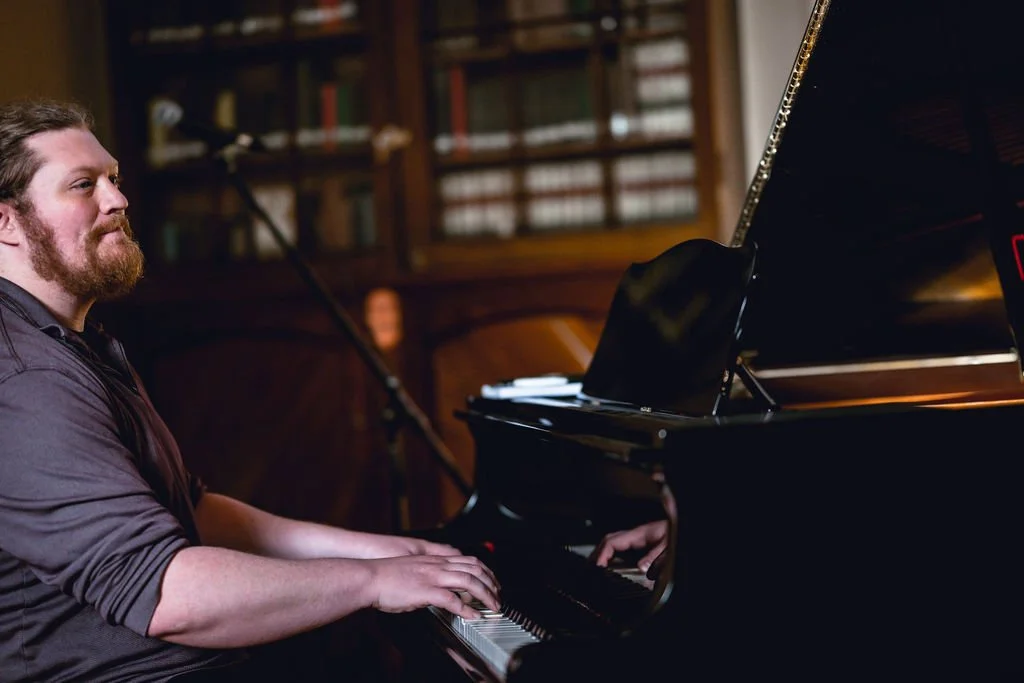
Music is the midwife of movement. It helps performers drop into their bodies, ease tension, and access creative flow. Thoughtful use of music can enhance ensemble cohesion, emotional tone, and movement quality.
Curating Playlists for Your Project
Neutral Playlist:
A go-to collection of instrumental or ambient tracks that provide a soft, non-intrusive background for general warm-ups and exercises.
Helps create a comfortable, open atmosphere without influencing movement choices too strongly.
Thematic Playlists:
Tailored selections that lean into the tone, themes, or world of the project.
Consider period music, cultural influences, or atmospheric sounds that support character exploration and spatial awareness.
Energetic Playlists:
High-energy tracks for breaking tension, loosening up, or resetting the ensemble between exercises.
Great for moments when performers need to shake off overthinking.
How to Use Music Effectively
Use as an Entry Point
Start rehearsals or exercises with music to create an instant mood and atmosphere.
Let It Be a Guide, Not a Constraint
Music should support movement, not dictate it. Encourage performers to interpret freely rather than hit the beat.
Adjust Based on the Ensemble's Needs
If a session feels stuck or tense, a music shift can provide an emotional or physical reset.
Breath and Rhythm in Exercises, Transitions, and Movement Scores
Breath and rhythm serve as foundational elements in REF practice, shaping movement quality, supporting transitions, and creating a cohesive structure for exercises and movement scores. Integrating breath and rhythm intentionally enhances fluidity, presence, and dynamic range in performance.
Breath as a Supportive and Expressive Tool
Breath is both a physiological necessity and a performative tool. By tuning into breath, performers can deepen their connection to movement, allowing for greater ease and efficiency. In REF practice, breath is used in several ways:
Supporting Core Engagement: Coordinating breath with movement aids in stabilizing the body. Exhaling on exertion (such as during weight shifts or lifts) supports control, while inhaling expands movement possibilities.
Emphasizing Dynamics: Breath influences the texture and tone of movement. A sharp exhale can punctuate an accent, while a sustained breath supports continuous flow.
Cueing Transitions: Changes in breath signal shifts in dynamics, spatial intention, and energy states. Conscious breathing between movements helps smooth transitions and maintain internal rhythm.
Expanding Emotional Resonance: Breath deepens the expressivity of movement, guiding intention and presence. Breath manipulation (such as holding, sighing, or accelerating) creates tension, release, and dramatic impact.
Rhythm as a Structural and Sensory Guide
Rhythm provides a framework for movement, offering structure, variation, and unpredictability. In REF practice, rhythm functions as both an external and internal guide:
Internal Rhythms: The natural cadence of breath, heartbeat, and proprioceptive timing shape personal phrasing. Awareness of these rhythms allows performers to move with intuitive pacing and responsiveness.
External Rhythms: Working with musical, verbal, or spatial rhythms enhances coordination and group synchronization. Establishing rhythmic anchors (such as pulses, repetitions, or metered steps) creates cohesion in ensemble work.
Disrupting Patterns: Playing with irregular rhythms (syncopation, polyrhythms, or silence) challenges habitual movement patterns, inviting adaptability and deep listening.
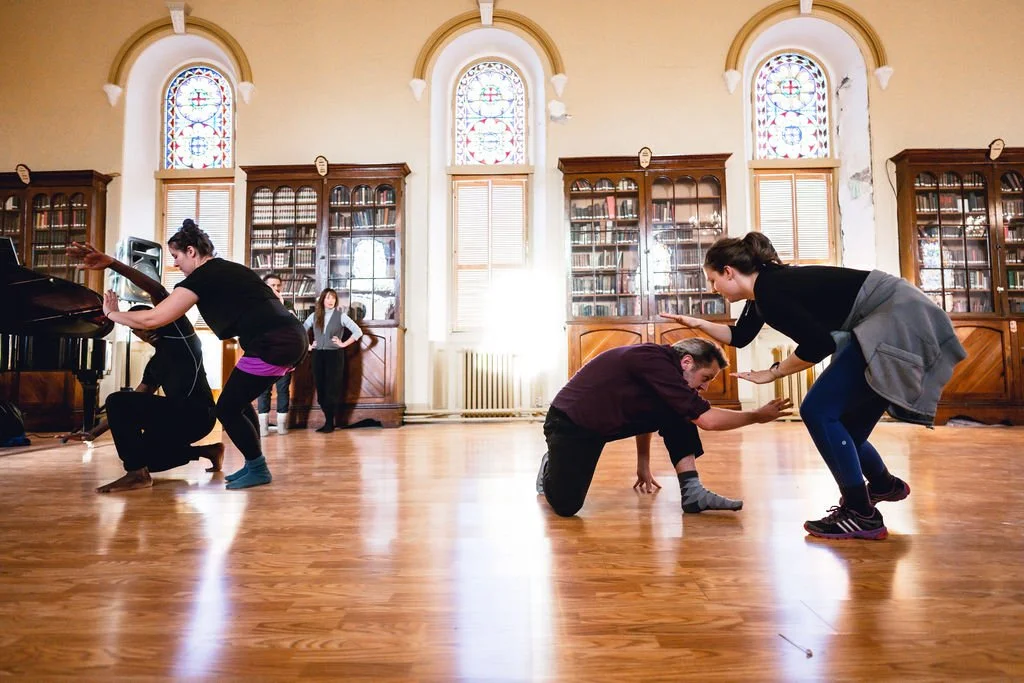
A concise introduction to Lynn Panting’s approach to ensemble building.
This two-page resource outlines the core philosophy behind a responsive, movement-based ensemble practice. Rooted in the belief that everyone in the room is a creator, the framework weaves together embodiment, connection, and resonance to build cohesive, dynamic performance work.
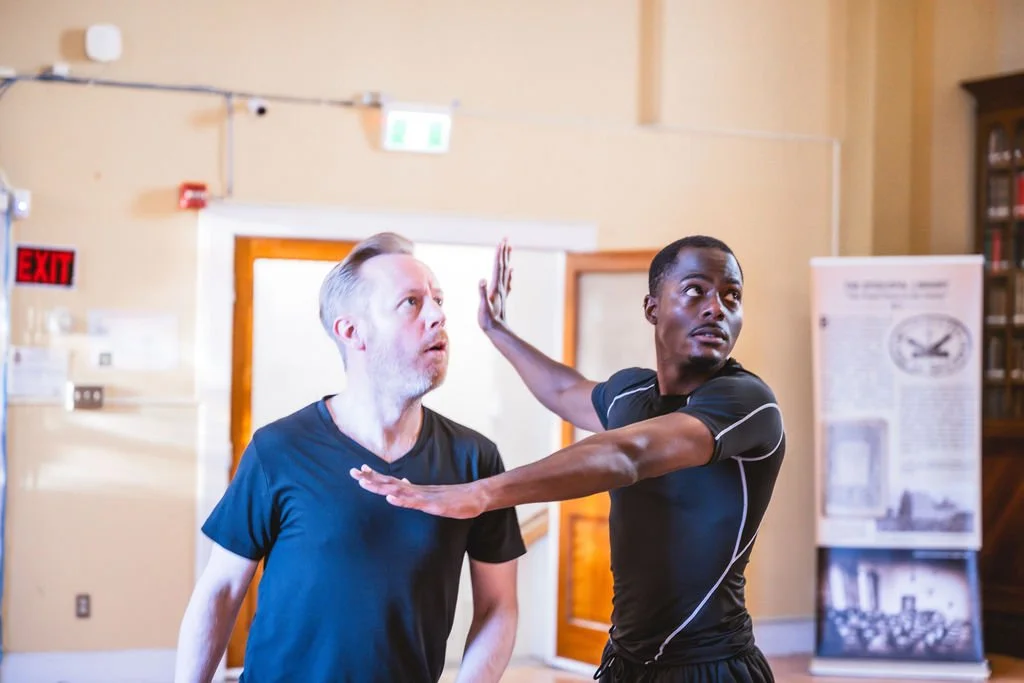
This free download introduces three foundational physical tools: proximity, focus, and mirroringand shows how they shape relationship, status, tension, and storytelling in performance. Designed for immediate use in rehearsal, it offers simple prompts and structured exercises that translate directly to the room.