Recognition, Reciprocity, and the Work of Arts Education
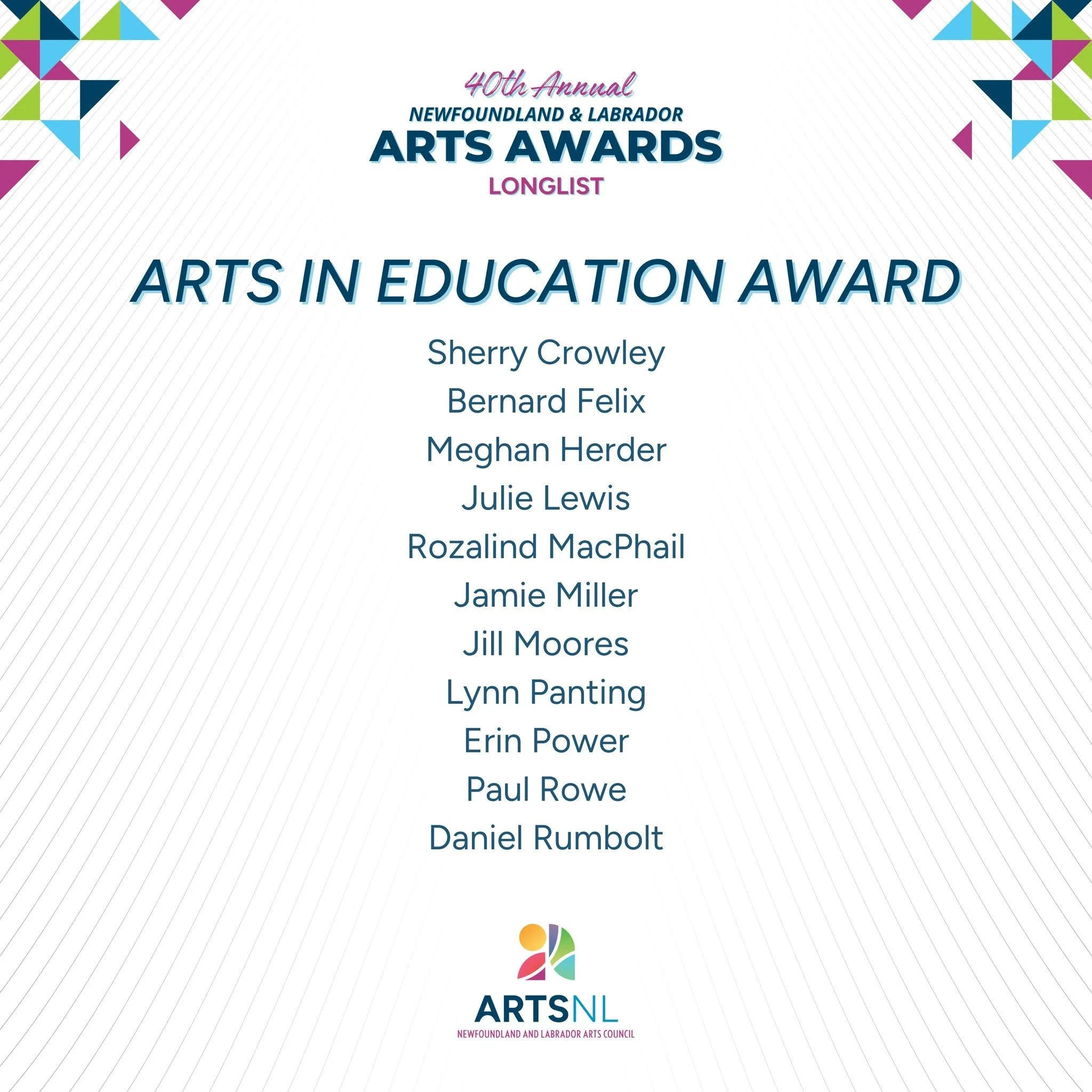
I’m honoured to share that I have been long-listed for ArtsNL’s Arts Educator of the Year Award. While recognition is not the reason any of us choose this profession, moments like this create an opportunity to reflect on the ecosystem that makes it possible.
Across Newfoundland and Labrador, arts educators are quietly doing the daily labour of building confidence, shaping creative literacy, and nurturing the next generation of artists, collaborators, leaders, and community members. I want to extend my genuine congratulations to everyone on this year’s long list. It is a privilege to stand alongside colleagues whose practices are thoughtful, rigorous, and deeply rooted in care.
Every day, I witness the ways arts education strengthens individuals and communities: how it teaches young people to collaborate, to lead with empathy, to listen, to respond, to imagine boldly, and to take up space with integrity. The arts shape how people understand themselves and the world around them. That impact is structural, cultural, and profoundly human.
This recognition also prompts a larger conversation about visibility. Much of the work of teaching happens out of public view. The planning, the mentorship, the emotional labour, the navigation of boundaries, the creation of safer spaces, the stewardship of emerging voices. These practices are not often celebrated, yet they form the backbone of a sustainable arts sector.
When we talk about strengthening our cultural ecology, we are also talking about supporting the educators who make that ecology possible. Strong arts education is a form of cultural infrastructure. It feeds our stages, our festivals, our creative industries, and our communities. It ensures that the next generation not only has the skills to create work, but also the capacity to collaborate, innovate, question, and contribute meaningfully to the public good.
I’m grateful to ArtsNL for recognizing the essential role of arts educators, and grateful for the opportunity to be in conversation with peers whose practices push our community forward. Recognition, in this sense, becomes not just a personal milestone but a moment to reaffirm our shared commitment: to thoughtful pedagogy, to creative rigor, to equity, to experimentation, and to the ongoing work of building responsive, human-first spaces for artists of all ages.
To my fellow nominees: thank you for the work you do. Your impact travels farther than you know. Our sector is made stronger by your presence.
A Call to Action: Supporting the Future of Arts Education
If this long listing underscores anything for me, it’s how deeply our sector relies on educators and how we need collective action to support them.
Here are a few ways individuals, organizations, and institutions can strengthen arts education in Newfoundland and Labrador and beyond:
1. Advocate for sustained funding.
Write to your MHA, school board, or municipal leadership about the importance of arts education. Public investment matters, especially in a shifting political landscape.
2. Champion arts educators publicly.
Share the work of educators in your networks. Celebrate their milestones. Visibility helps shift narratives and funding priorities.
3. Create paid opportunities for artists to teach.
Workshops, residencies, mentorship programs, and youth initiatives all benefit from professional facilitation.
4. Amplify access.
Support organizations that commit to reducing barriers for young people and emerging artists.
5. Build partnerships.
Arts education is strongest when schools, artists, community groups, and cultural institutions work together.
The health of our arts ecosystem depends on ongoing, intentional investment in teaching and mentorship. If we want a vibrant future for the arts, we must nourish the people doing this work today.