Dress Code at Lynn Panting Dance
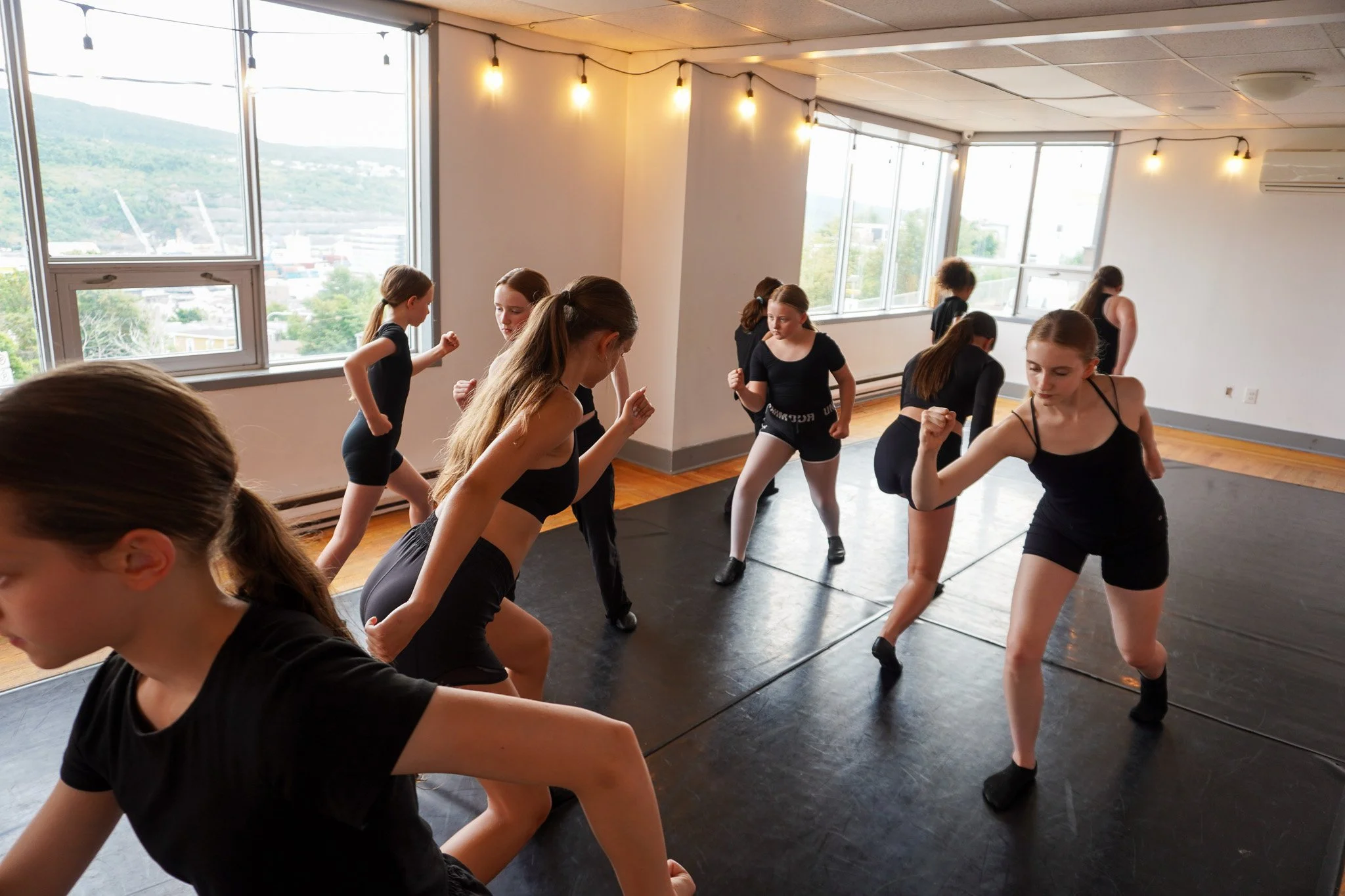
We are mindful that every dancer comes into the studio with different needs. Because of this, our dress code is intentionally relaxed and designed to be accessible for all students.
That said, there is also something important about ritual and etiquette in dance. Class is a special time, an opportunity to express yourself fully, but that expression should primarily come through your movement, not your clothing.
What you wear to class should feel distinct from everyday clothes, a small ritual that signals to your body and mind that you are stepping into a dance space.
The Purpose of Dress Code
Our goal is not uniformity, but clarity. Clothing in dance serves both the dancer and the teacher:
It supports focus on movement.
It allows for clean lines and visibility of the big joints (shoulders, elbows, hips, knees, ankles), which helps teachers give feedback and prevent injury.
It creates a sense of shared etiquette, where everyone enters the room prepared to move.
Guidelines
While personal style and comfort are always respected, we ask that students follow these simple guidelines:
Choose clothing that is simple and clean in design: bodysuits and tights, leggings, tanks and shorts.
Avoid logos, words, or images that can distract.
Wear clothes that allow your joints to be visible and your movement to be clear.
Hair must be brushed and pulled neatly off the face. Buns are required for ballet class.
No distracting jewelry.
Style-appropriate footwear is required for safety and technique.
LPD merch is encouraged.
Level 1 and Up
Beginning at Level 1, dancers are expected to have a standard base wardrobe:
Girls: Black leotard, black shorts, and a nude bodysuit.
Gender-neutral and gents option: Black t-shirt, black shorts, and nude/neutral shorts and tank.
These items are not a mandatory uniform for every class, but may be required at different times throughout the year, particularly for rehearsals, showcases, and recital.
The nude layer is especially important for consent and modesty during performances.
Context Matters
We encourage all dancers to wear what feels most comfortable for them in the studio. For some, on some days that may be a full sweatsuit. For others, it may mean a sports bra and shorts. Both are welcome.
That said, context is important. What feels appropriate in the dance studio is not always appropriate outside of it. Part of dance training, especially for children growing up in the art form, is learning this distinction and understanding that studio clothing serves a specific purpose and belongs to the dance environment.