
Responsibility and Care in the Rehearsal Room
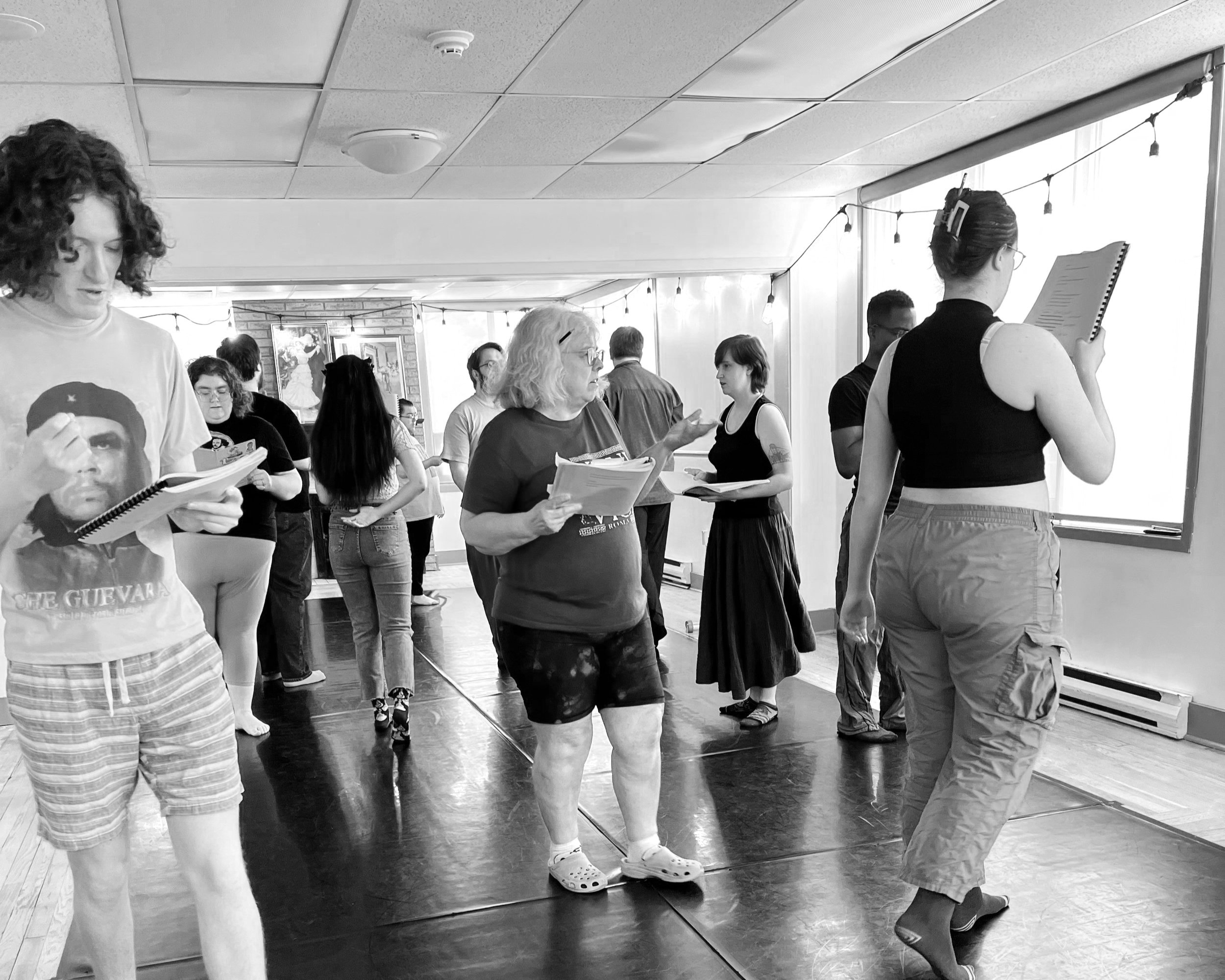
In Rehearsal for Loves Labour’s Lost, SBTS, 2025
My practice takes me from the classroom to community theatre to large-scale professional productions. I work on projects with zero budgets and on shows with full production teams and funding behind them. Regardless of the scale, one thing remains true: how we show up in the rehearsal room matters.
This particular blog is written with emerging artists and community theatre members in mind, but it’s a good reminder for all of us.
Responsibility to the Room
Not everyone arrives to community and semi-professional theatre with formal arts training. In fact, it’s often what makes this work so rich, bringing together people from all backgrounds and interests, driven by curiosity, commitment, and a love of performance.
But no matter your experience, there’s one thing we all share: a responsibility to the room. To the work. And to each other.
Theatre is built on collaboration, and collaboration runs on care. That care looks like consistency, communication, and preparation. It also looks like knowing the difference between what belongs in the room and what doesn’t.
Between Rehearsals: Your Work Doesn’t Stop at the Door
The rehearsal process isn’t just what happens in the room, it’s what happens because of what you bring into the room. That means doing the work outside of rehearsal hours, especially when time is tight and ensembles are learning at different paces.
Here’s how to show care between rehearsals:
Rehearse on your own.
Go over lines, blocking, choreography, or vocal warmups. Watch rehearsal footage. Get things into your body. Being “off-book” is more than memorizing, it’s about making space for real connection in the room.
Strategies for Line Learning:
Break your lines into thought units.
Record cues and responses and run them during walks or chores.
Speak your lines while doing a repetitive task: train your brain and body together.
Ask questions early.
If you’re unclear about something, ask before the next rehearsal. Don’t wait until you’re back in the space. That puts time pressure on your director and slows down the room.
Take care of yourself outside of rehearsal.
If I’ve said it once, I’ve said it 100 times: Theatre is not therapy. It can be therapeutic, yes, but it’s not a substitute for professional support. Take responsibility for your mental, emotional, and physical well-being before you walk in the door. It’s one of the most generous things you can do for the collective.
If You Need to Miss a Rehearsal: What Happens Next
Sometimes life pulls you away. An emergency, a scheduling conflict, an unexpected illness. But how you handle that absence matters.
Let the team know early and clearly.
Don’t ghost. Don’t wait until an hour before. Tell the director and stage manager with as much notice as possible. Respect the fact that your absence will have ripple effects and added labour.
Own the catch-up process.
Ask for notes. Watch recordings. Schedule time with a peer to run material. Don’t expect the director or SM to redo the work for you.
Stay present in spirit, even when absent in body.
When you’re out, the work still moves forward. Keep yourself in the loop so you can reenter seamlessly. Staying in communication shows your care.
Navigating Transparency Without Derailing the Room
Rehearsals can be emotional. Vulnerability is part of the work. But it’s important to remember that the rehearsal room is a shared space, not a place to offload or process personal crises in real-time.
Be transparent, but don’t take the air out of the room.
Let the director or SM know if you're having a tough day. Then focus on what you can contribute. Maybe you listen more. Maybe you adjust your energy. Maybe you take a break if needed.
Being part of an ensemble means being accountable for your presence and for your impact. That includes how your energy supports (or disrupts) the room.
Care is a Practice
Responsibility isn’t about perfection, it’s about consistency. It’s about recognizing that when you join a show, you're not just performing. You're becoming part of a temporary community that needs your care to function.
Show up prepared. Communicate clearly. Contribute with generosity.