Choreographing Connection
Choreographing Connection is Lynn Panting’s professional practice blog, offering reflections on her artistic work and the arts sector at large. Through her lens as a director, choreographer, and intimacy professional, she shares think pieces, resources, strategies, and insights that speak to the evolving landscape of the performing arts.
Director’s Diary: Loves Labour’s Lost Building the World with a Soundtrack
A good playlist becomes a unifying thread that ties the world together before we’ve even entered the room.
For me, music is a shortcut to world building. It can capture tone, texture, and emotional stakes in ways that words alone often can’t. It helps me tap into atmosphere, relationships, and vibe. It’s also one of the fastest ways to start building a shared language with my collaborators.
A good playlist becomes a unifying thread that ties the world together before we’ve even entered the room.
Sometimes I’ll play a track to open rehearsal and drop us into the atmosphere. Sometimes we’ll use the music to find rhythm or gesture or help develop a movement vocabulary. It’s not about dancing to the music—it’s about letting the sound shape how we move through the world of the play.
The Sound of Love’s Labour’s Lost
For Love’s Labour’s Lost, two songs arrived almost instantly, like bookends:
“Poets” – The Tragically Hip
“Rivers and Roads” – The Head and the Heart
“Poets” is instantly recognizable (nostalgic, energetic, cheeky). It’s raw and clever, buzzing with bravado. It perfectly locates us and sets the tone for Team Navarre.
“Rivers and Roads” is the alternative to Shakespeare’s “banger” “The Owl and the Cuckoo” which ends the play. It’s a song about distance, about the ache of growing apart even when you mean to stay together. It’s at once melancholy and anthemic and has big sing along energy.
Other songs include:
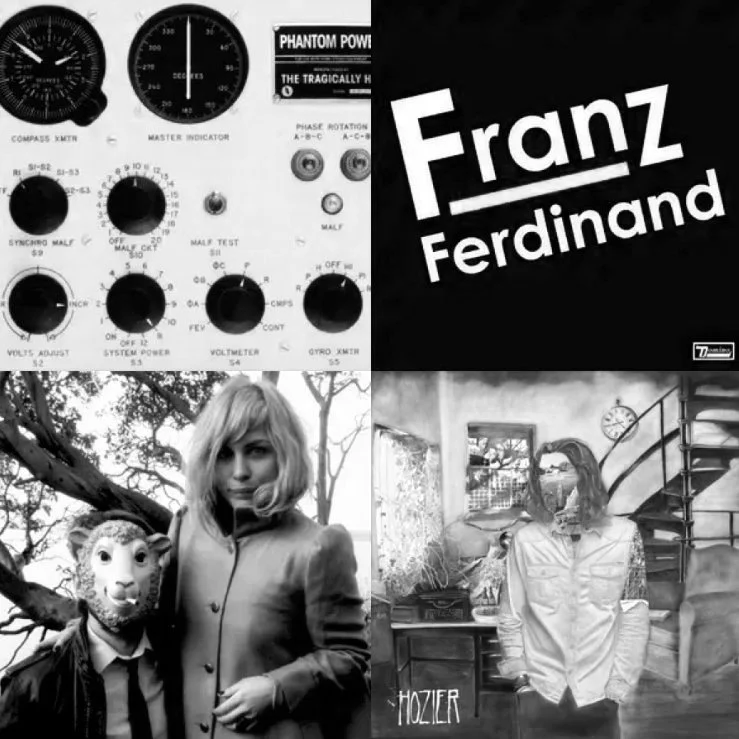
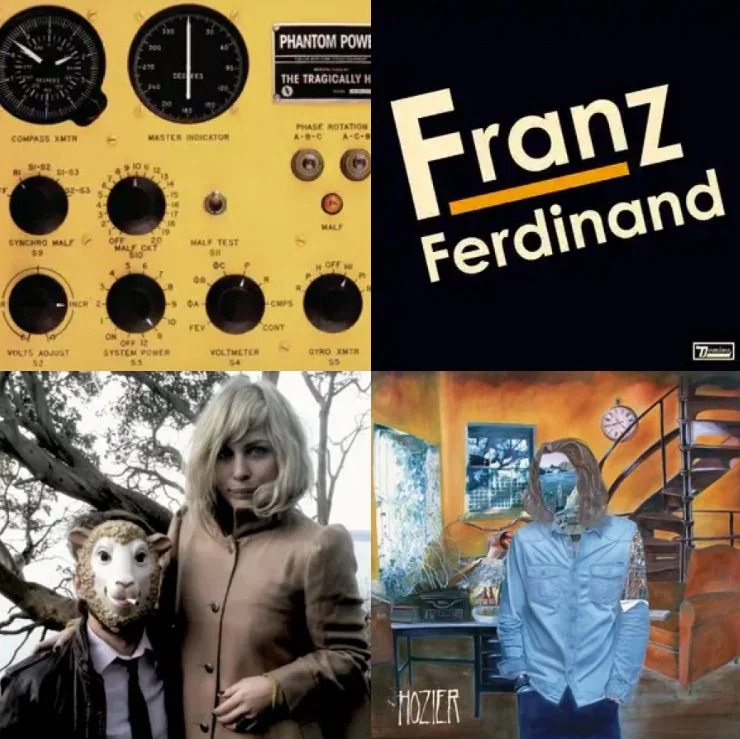
“Take Me Out” – Franz Ferdinand, a classic party tune with swagger.
Jackie and Wilson” – Hozier, a sweet declaration of love with an R&B feel.
Mystical Magical” – Benson Boone, all candy floss, optimism, and falling in love.
The playlist isn’t static. It evolves with the show. Sometimes a song I added on a whim becomes essential. Other times, a track falls away once we’re in the room. That’s part of the magic. The music shifts as we discover more about the world we’re building.
Check out our full Spotify playlist to hear more of the music behind the world of Love’s Labour’s Lost:
Love’s Labour’s Lost – Playlist on Spotify
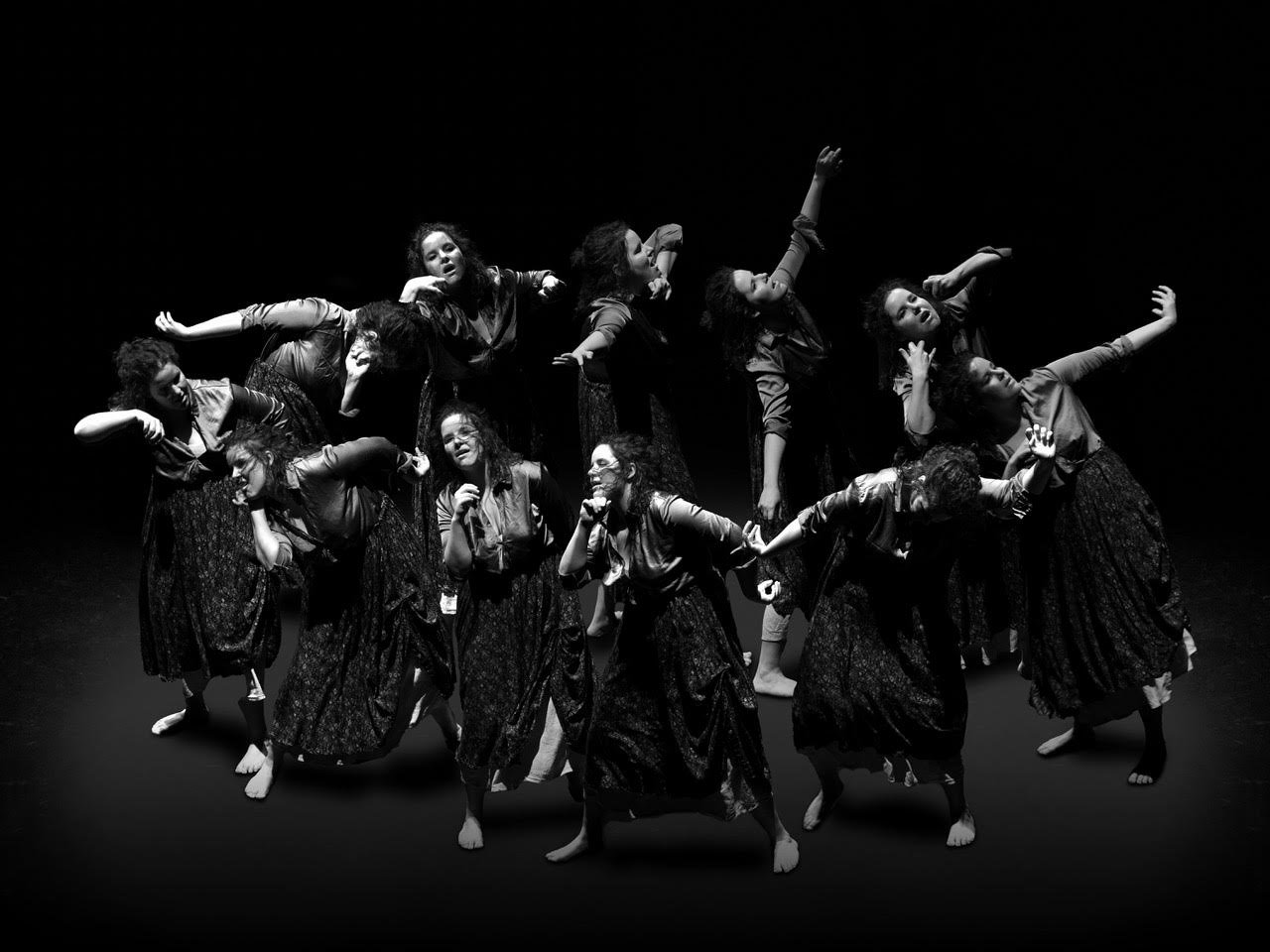
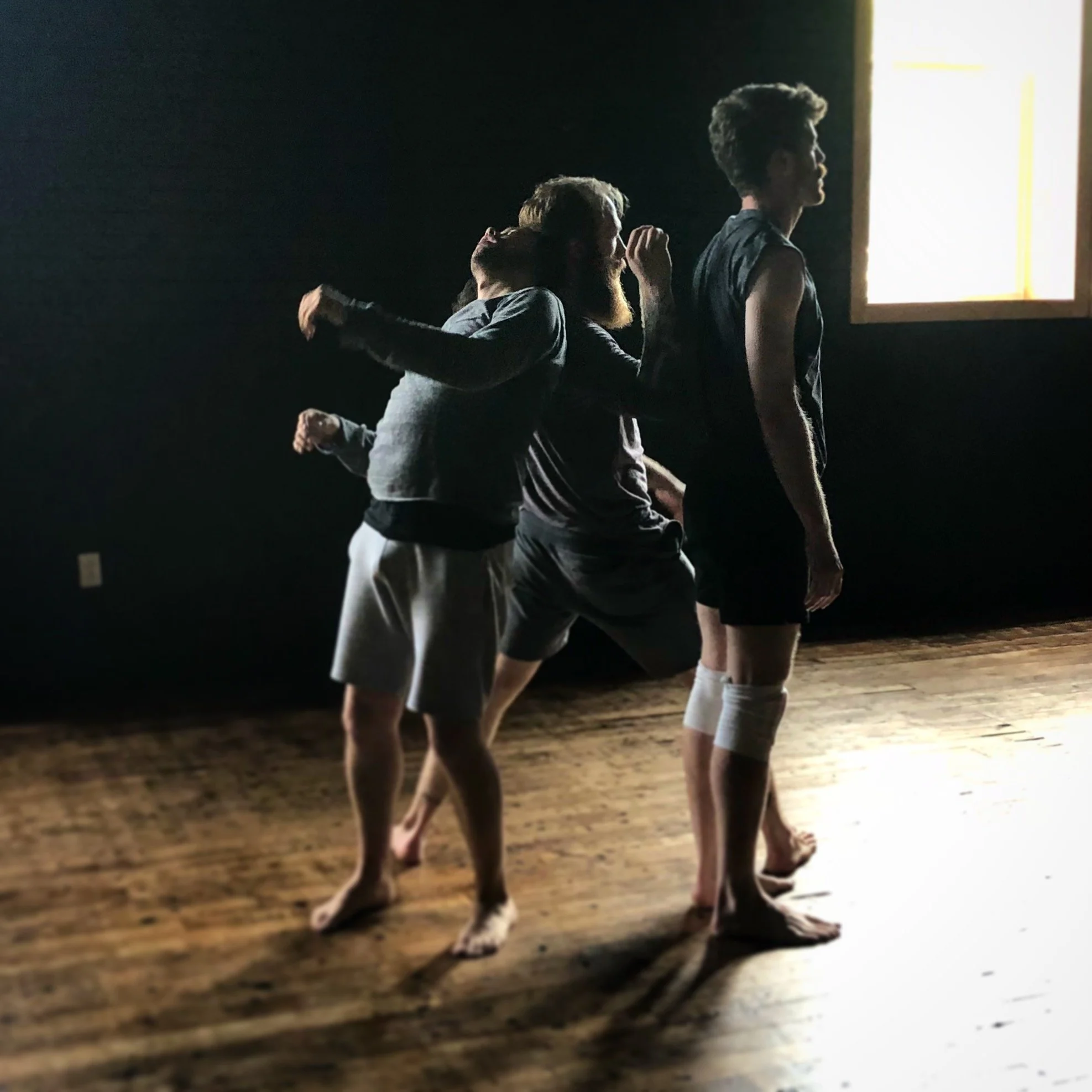
Building the Movement Design for There’s Nothing You Can Do
One of the central questions we faced was: how can the actors “dance themselves to death” without actually harming themselves in the process?
There’s Nothing You Can Do, RCA Theatre Company, 2025
Movement Direction, Choreography, Intimacy Direction by Lynn Panting
photo by Marie Dionne Photography
Working on this piece was a rare and rich experience.
I first encountered the play, by the fabulous Cole Hayley, during its debut at the National Theatre School of Canada and was later invited to participate in a movement dramaturgy workshop during its second development phase. That early involvement allowed me to explore the practicalities of the work before committing to any formal movement design.
One of the central questions we faced was: how can the actors “dance themselves to death” without actually harming themselves in the process?
Before rehearsals officially began, we held a four-day movement workshop with the full cast. This time was essential. It allowed us to establish a shared vocabulary, experiment with tools and tactics, and build the kind of ensemble trust that supports deep physical storytelling and builds stamina. The goal was to create a process that felt authentic, responsive, and sustainable.
The Design Toolbox
The movement design I landed on is not a single style or aesthetic. It’s a collection of tools the actors can draw on, adjust, and reinterpret to suit their character’s arc and moment-to-moment needs.
Core Principles of Variation: Scale (big/small), tempo (fast/slow), level (high/low), and pathway (curved/straight) help shift energy and tone without words.
Laban Technique: Using oppositional pairs (bound/free, heavy/light direct/indirect) provided a physical lens for emotional choices.
Intensity Scale (0–10): Allowed actors to safely gauge and modulate how much they’re putting into each moment.
Locomotor Vocabulary: Shared movements like crawling, rolling, spiraling, and jumping helped break habitual patterns and create physical contrast.
Kinetic Layering of Symptoms: I used the technical language that described the physical symptoms of illness, trauma, substance use and substance withdrawal as an additional layer. Rather than labelling internal states with emotional language (e.g., “anxiety” or “fear”), actors are encouraged to use the technical, observable language of the body such as pacing, fidgeting, trembling, shallow breathing, or sudden stillness.
This technique, focusing on what the body does, rather than how the the character was feeling, removed unnecessary emotional weight.
Shared Dance Vocabulary: A collection of physical motifs we all know, but that each performer expresses differently. The result is cohesion without sameness.
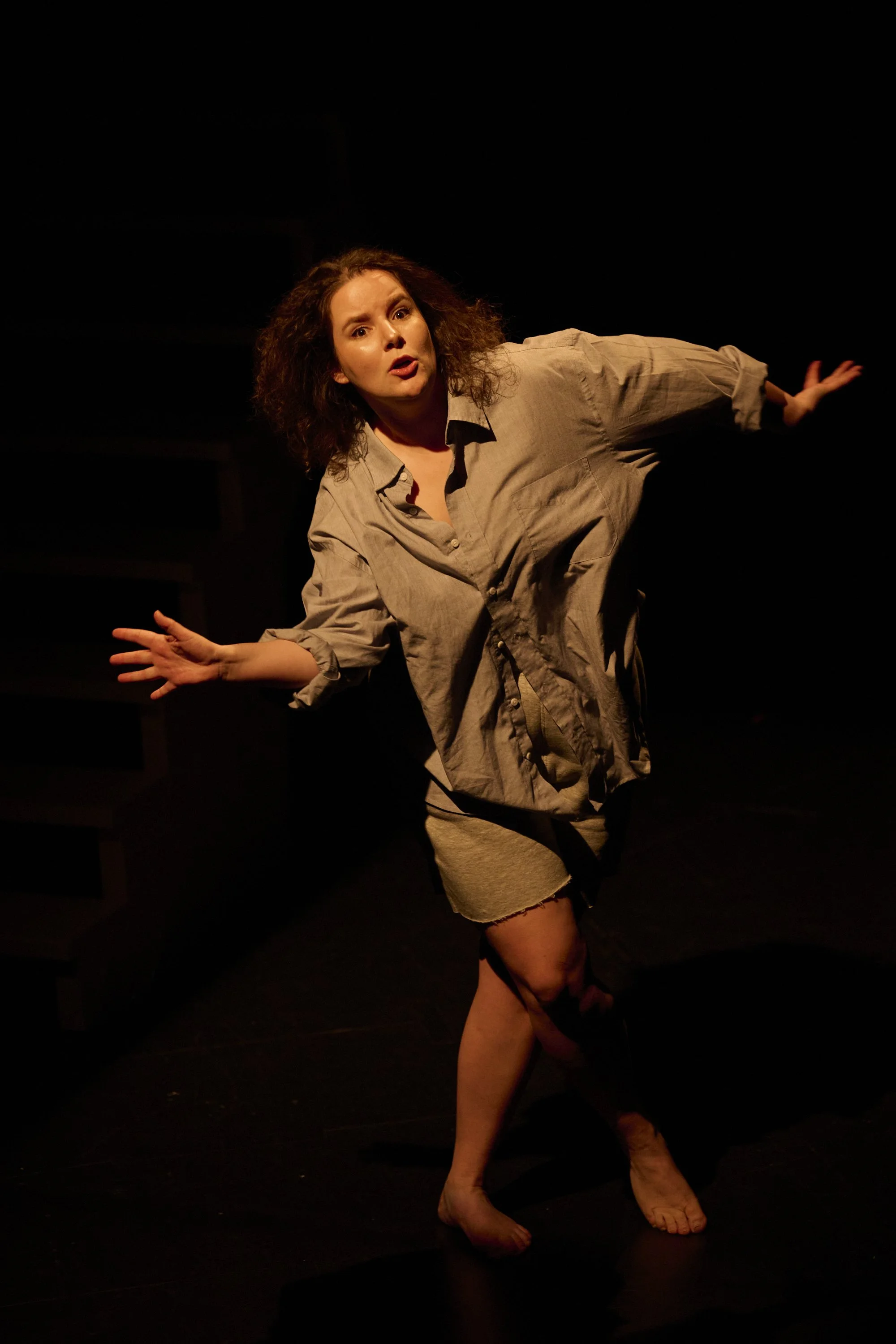
photo by Marie Dionne Photography
Miriam
Miriam is a unique character: the only one whose full movement journey we witness from beginning to end, and then back again.
I was incredibly fortunate to work with actor Nora Barker, whose work and precision brought the role to life in unexpected and layered ways.
Miriam’s physical journey begins as a slight vibration. The script specifies that these gestures gradually grow into recognizable dance moves: (flossing/jazz hands) allowing Nora to lean into the humour of the moment while maintaining its eerie undercurrent.
As the movement builds and Miriam speaks less, her body begins to do the talking. She interacts with the set and the other characters in ways that reflect, comment on, and mimic the world around her.
Her body becomes both mirror and critic, revealing an internal landscape that words can’t access.
Eventually, Miriam foreshadows the tragedy that looms over Act 1. Her resulting solo is a complex blend of resistance and surrender, ecstasy and pain. It was a challenging balance to strike, one that required both control and abandon, and I was lucky to have Nora as a collaborator throughout that process.
When Miriam returns at the end of Act 2, it was clear to me that her vocabulary had to evolve. Miriam couldn’t repeat what had come before. The character has been altered, something irreversible has happened. Her movement remains constant, but it’s no longer rooted in contemporary language. It now belongs to something more ancient.
We drew from the iconography of ancient statues and Greek mythology to develop a new vocabulary: poses, cycles, and gestures that speak to myth, legacy, and ritual.
This movement is still kinetic, still present, but it exists on a deeper frequency: something more ancestral, almost divine. It becomes a kind of embodied mythmaking that starkly contrasts the rest of the ensemble, who haven’t been infected with dance fever for as long.
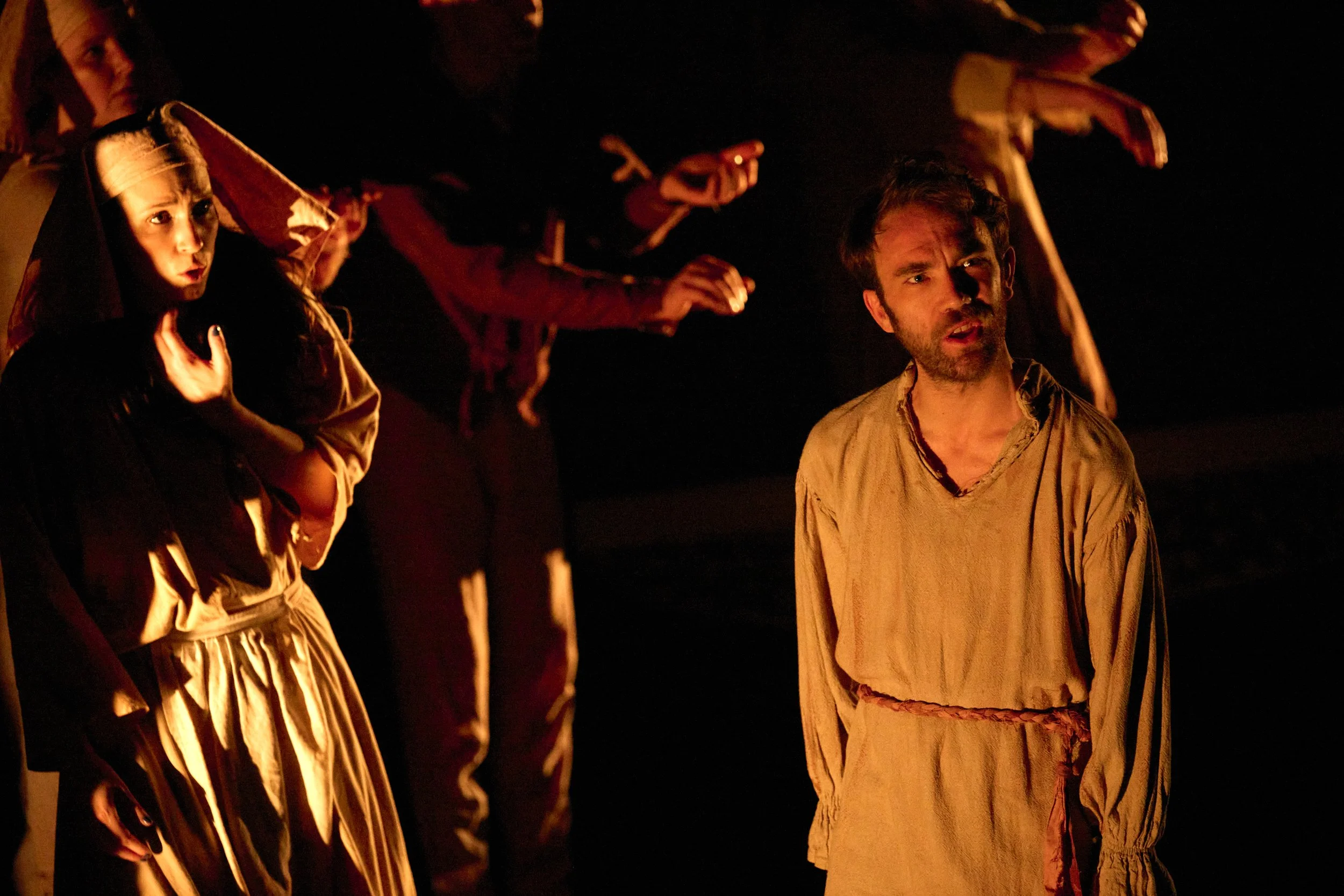
photo by Marie Dionne Photography
Act 3: Moving Together While Apart
One of the most exciting and difficult parts of the show is Act 3, when each character becomes visually and emotionally isolated. They stop sharing space, storylines, and in some cases, even time. But the ensemble never stops moving together.
I created a detailed movement score for each line of text that draws attention to the speaker and allows the others to rest.
While one actor speaks the others would take that time to transition to their next movement, thus giving the impression that the body drives the text.
Even when disconnected, the performers remain in tune, building the kind of support structure that allows for deep risk onstage.
Final Thoughts
Dance is magic. At its core, this movement design is about connection: connection to one another, to the body, to the audience, to the heart of the text.

Director’s Diary: Love’s Labour’s Lost
This is just the beginning of my directorial journey with Love’s Labour’s Lost. Over the coming months, I’ll be sharing my process, from research and rehearsals to the final performances. I’m excited to document the discoveries, challenges, and triumphs along the way.

A Lifelong Relationship with Shakespeare by the Sea
My journey with Shakespeare by the Sea began as an audience member, watching Shakespeare’s The Tempest come to life in Logy Bay.
As I grew, so did my connection to the company. I transitioned from spectator to assistant stage manager, performer and choreographer: working on productions that deepened my understanding of classical theatre and community building. The company has always been a place of camaraderie, where artists come together to create something larger than themselves. I am proud to be part of that legacy and to step into a new role under the excellent leadership of artistic director of Sharon King Campbell.
Returning to Love’s Labour’s Lost
This year, I have the privilege of directing Love’s Labour’s Lost, a play that holds a special place in my heart. In 2010, I performed in Shakespeare by the Sea’s production of the show, an experience that solidified lasting friendships and key professional relationships. That production was full of joy, scripted (and unscripted) sailors, and unfortunate rain storms, the kind of show that reminds you why you do outdoor theatre in the first place.
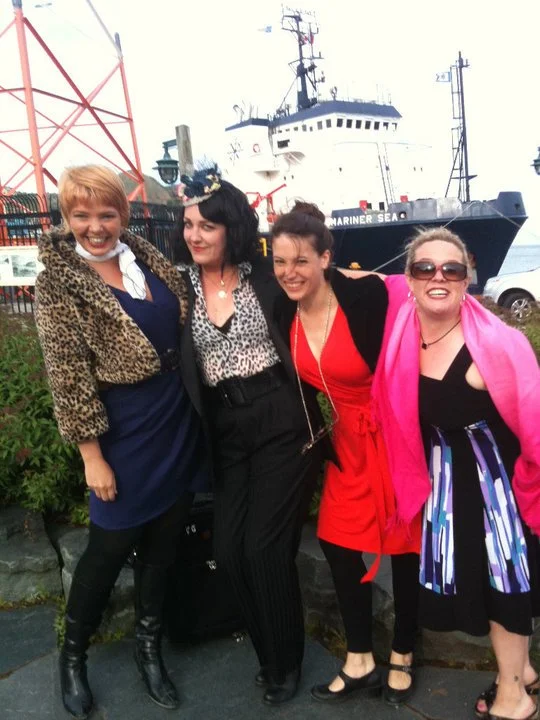
Maria, Rosaline, Katherine, The Princess, Loves Labour’s Lost, 2010, SBTS
Stay tuned for more behind-the-scenes insights as we bring Love’s Labour’s Lost to life!