Pointe Work
Pointe work is an aspect of classical ballet technique where a dancer supports their full body weight on fully extended feet in pointe shoes.
In order to do pointe work dancers must demonstrate excellent ballet technique, strength, discipline, maturity, and a knowledge of one’s body.
In a recreational dance school setting pointe work should be challenge, but it should not be painful.
Some students take to pointe work with ease, other struggle. Some do not have the natural facility, foot structure, and/ or ankle strength to “go on pointe” safely. Therefore pointe shoes are recommended on a case by case basis.
Basic Pre-Pointe Exercises
I am ready for pointe shoes. Now what?
Pointe Shoe Fitting
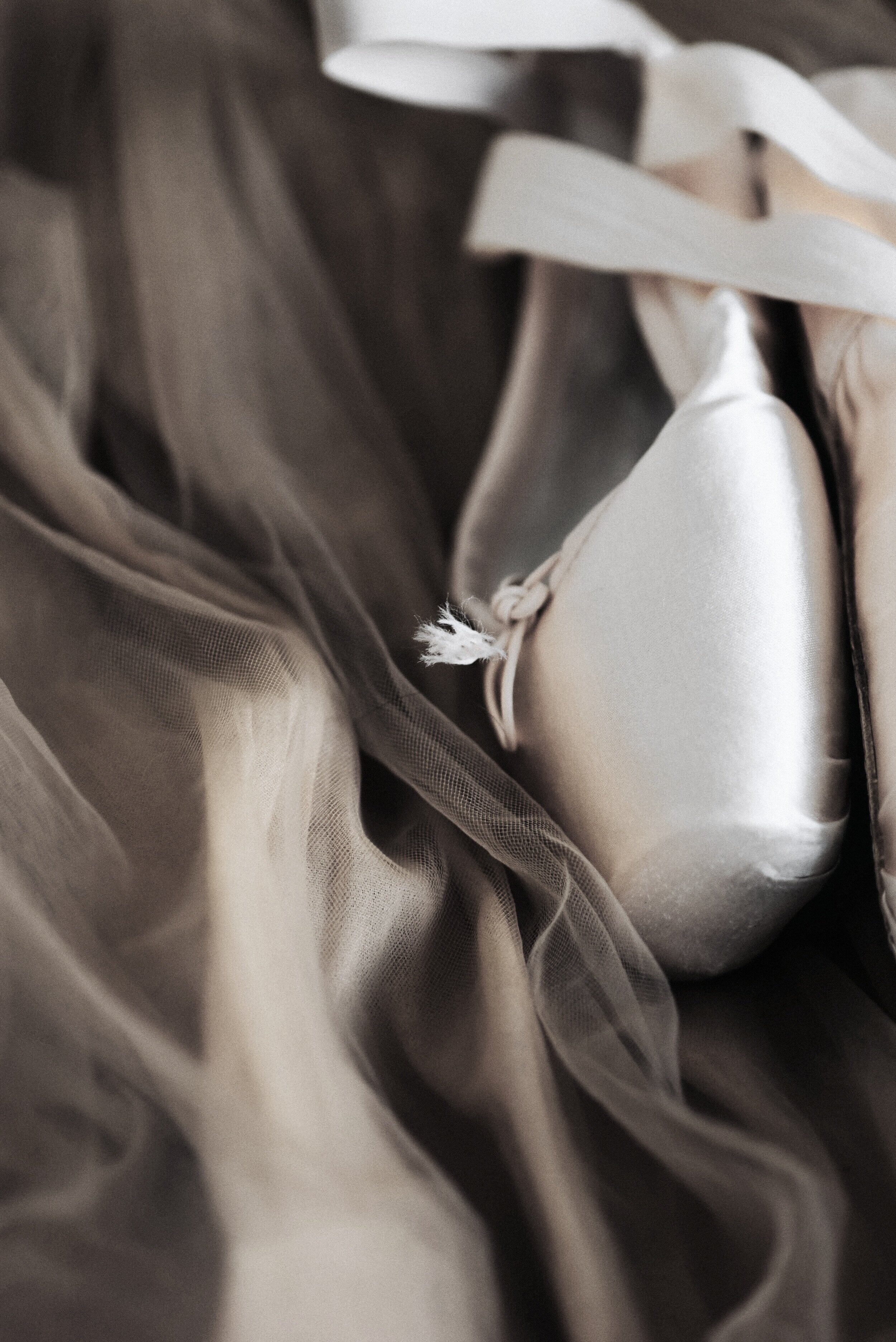
Make an appointment for a point shoe fitting. There are two establishments that fit shoes locally. It may take several pairs to find the best brand and fit for you. You will also have to purchase toe tape, padding, elastics, ribbon, and some will require toe spacers*. Make sure that your teacher approves the fit of your shoes before sewing your elastics and ribbon. If you require toe spacers* make sure you wear them during your fitting.
Sew on Ribbons & Elastics
Many dancers use elastics as well as ribbons for support. There are a variety of ways to approach this, Miss Lynn is happy to recommend some instructional videos.
Some dancers sew the elastics near the ribbons, others sew them at the back of the heel. For additional support, dancers can use two pieces of elastic per shoe, crisscrossing them over their instep. The last method is recommended for beginners.
Tying Pointe Shoe Ribbons
With your foot flat on the floor, grasp the inside ribbon and wrap it over your foot and around the back of your ankle. Continue wrapping the ribbon around to the front of your ankle and back around again, stopping at the inside of your ankle.
Wrap the outer ribbon over your foot and around the back of your ankle, bringing it around to the front to meet the first ribbon at the inside of the ankle, just between the bone and the Achilles tendon; the knot will go here, never directly on the tendon.
Tie the ribbons securely in a double knot and tuck in the knot and loose ends. The knot should be invisible. If it makes a bulge when you tuck it in, trim the ribbons.
Pointe Shoe Kit
Dancers should prepare a "pointe kit" to keep in their dance bag:
bandaids
toe tape
scissors
needle and thread
clear nail polish
nail clippers
toe spacers (if required)
lambswool and/or ouch pouches (for padding)
No Unsupervised Practice
Pointe work requires specific conditions. For the safety of students they are asked to refrain from practicing pointe work at home and outside of the studio.
*Toe Spacers
If you have a gap between any of your toes your toes are likely to push together in the confines of your pointe shoes. This can force your joints out of alignment leading to some discomfort and potentially bunions. A toe spacer is a piece of medicated gel moulded to fit perfectly between the toes, holding your joints in alignment and prevent any of these issues.
The most common spacing issue is between the big toe and the second toe (the piggy that went to market and the one that stayed home).