
How to Support Your Dance Training Outside the Studio
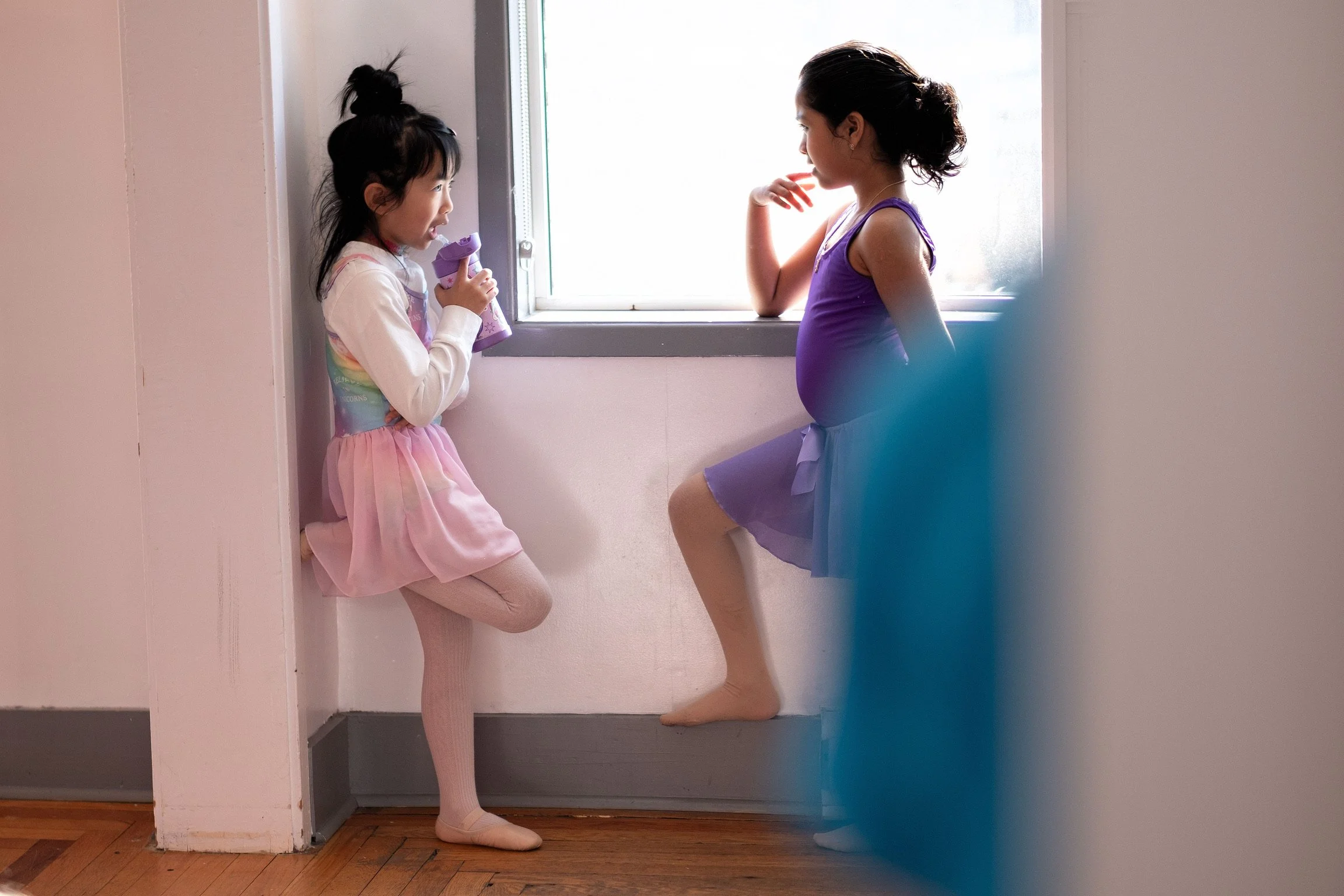
photo credit: Chris Hibbs
We talk a lot about showing up with commitment and care. Growth happens in class, but it’s supported by what dancers do between classes. A few small habits can deepen technique and build confidence.
Here are some simple, sustainable ways to support your dance training outside the studio.
Mini Conditioning Sessions
You don’t need a gym or special equipment. A short, consistent routine can make a major difference in strength and stability.
Try:
Core activation: dead bugs, planks, Pilates single leg stretch
Glute strength: bridges, clamshells, band walks
Feet and ankles: doming, theraband pointing, relevés
Spinal mobility: cat/cow, rib isolations
These exercises help create clean lines, better control, and more grounded movement.
Gentle Mobility on Rest Days
Mobility exercises keep the joints healthy and your movement fluid.
Try:
Hip circles
Hamstring flossing
Shoulder and upper-back mobility
Five minutes can leave your body feeling open and ready to work.
Walk, Move, Breathe
Some of the most supportive cross-training is also the simplest.
Go for a walk to build stamina
Do a posture reset during the day
Practice steady breathing (long exhales, box breathing)
These habits help regulate the nervous system, reduce anxiety, and support endurance in class.
Mental Rehearsal
You don’t always need space to practise. Visualizing yourself dancing a piece builds the same neural pathways as physically doing it.
Mark It
Tiny, low-impact run-throughs reinforce memory without fatigue.
Listen to Your Music
Understanding the musical structure makes the choreography feel more natural and intuitive, especially in faster pieces.
Write It Down
Not everyone learns the same way. Some dancers absorb movement better when they see it written or drawn.
Support Your Body: Sleep, Hydration, Fuel
Technique grows on a well-rested, well-fed, well-hydrated body.
Choreography memory also strengthens during sleep.