
Choreographing Connection
Choreographing Connection is Lynn Panting’s professional practice blog, offering reflections on her artistic work and the arts sector at large. Through her lens as a director, choreographer, and intimacy professional, she shares think pieces, resources, strategies, and insights that speak to the evolving landscape of the performing arts.
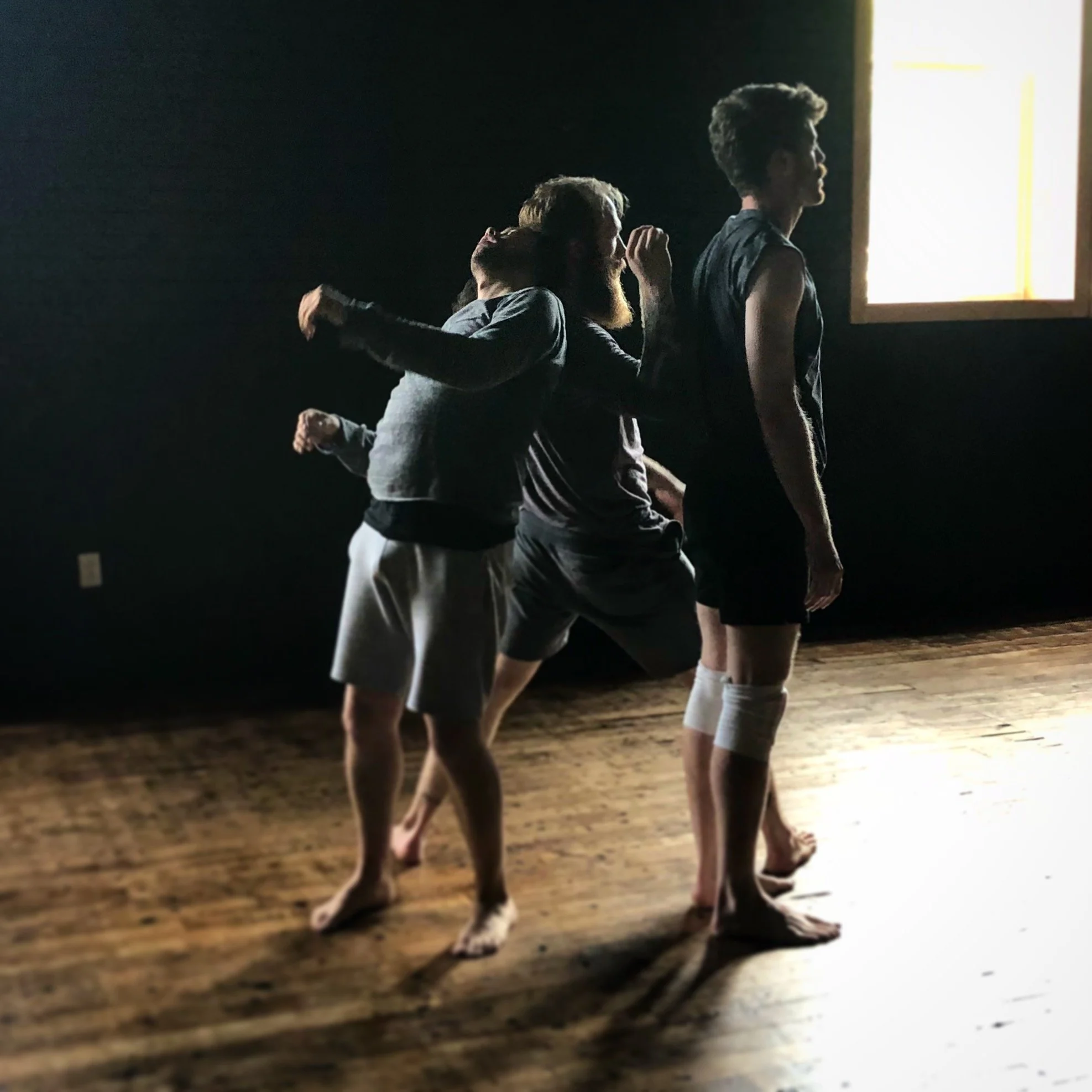

Choreographing Chemistry: Building Connection on Stage
Choreographing chemistry is about creating an environment where performers feel safe, connected, and empowered to take creative risks. By combining exercises, thoughtful movement direction, and a focus on ensemble alignment, you can help performers forge authentic connections that resonate with audiences.
Reading of Puppy Teeth by Owen Carter, Untellable Movement Theatre, 2024
Movement Dramaturgy: Lynn Panting
On stage, chemistry is magic. It's the spark that transforms a performance from ordinary to unforgettable. Whether it’s the tender connection between lovers, the camaraderie of close friends, or the fiery tension of rivals, authentic chemistry brings relationships to life. For directors and choreographers, fostering these connections is both an art and a science, often rooted in movement and physicality.
Here are practical tips to help performers build trust and connection, ensuring the relationships they portray feel genuine and compelling.
Be Transparent and Set Clear Expectations
Authentic chemistry thrives in an environment where performers know what to expect and feel fully informed about the creative process. Transparency builds trust, reduces anxiety, and allows performers to focus on their work without second-guessing their boundaries or roles.
Outline Goals Early: Share your vision for the scene or performance upfront. Explain the tone, emotional arc, and movement goals so performers understand the bigger picture.
Define Roles and Responsibilities: Clearly outline what is expected from everyone in the room.
Create a Consent-Driven Environment: Establish a clear process for gaining consent and ensure performers know they can revisit or revoke their consent at any time. Encourage open communication about comfort levels and any concerns.
Create a System for Feedback: Ensure that performers have a system to express if they feel comfortable with the direction the scene is taking. This allows for adjustments before discomfort arises.
Be Specific in Direction: Avoid vague instructions like “act more romantic” or “look angrier.” Instead, guide performers with concrete actions, such as “reach for their hand as though you’re unsure if they’ll accept” or “step away, then turn sharply to face them with tension in your shoulders.”
By setting expectations and maintaining transparency, you foster a rehearsal space where performers feel respected, valued, and supported. This foundation not only enhances the chemistry on stage but also ensures a more positive and collaborative creative process for everyone involved.
Trust-Building Exercises
Chemistry begins with trust. Performers must feel safe and comfortable with one another before they can authentically connect. Incorporate trust-building activities into your rehearsal process:
Mirror Exercises: Partners face each other and mirror each other’s movements. This builds focus, awareness, and non-verbal communication.
Contact Improvisation: Encourage performers to explore weight-sharing and gentle physical contact to build trust and understanding of each other’s boundaries.
Eye Contact Drills: Have performers sit across from each other and hold eye contact for extended periods. This may feel awkward at first but can create a profound sense of connection.
Use Movement to Define Relationships
Movement tells a story of its own. The way performers interact physically says as much about their relationship as their dialogue.
Proximity and Space: How close or far apart are the performers? Lovers might gravitate towards each other, while rivals might instinctively maintain distance.
Touch and Tension: A gentle touch on the arm can convey affection, while a hesitant or abrupt movement can suggest discomfort or conflict. Experiment with varying levels of tension in movement to define the relationship.
Rhythm and Energy: Partners who move in sync may appear united, while mismatched rhythms can convey discord or unease.
Align Physicality with Emotional Intent
Chemistry feels real when the physical and emotional align. Help performers connect their movements to their characters’ motivations and feelings.
Embody the Emotion: Encourage performers to explore how their character’s emotions affect their physicality. A confident character might have strong, grounded movements, while a nervous one might fidget or avoid eye contact.
Identify the Stakes: Discuss what each character wants in the scene and how that desire influences their movement.
Layer the Subtext: Teach performers to use subtle gestures and physical cues to communicate what their character isn’t saying out loud.
Prioritize Ensemble Connection
While individual relationships are important, a strong ensemble creates a cohesive, believable world.
Group Warm-Ups: Begin rehearsals with whole-cast warm-ups to foster a sense of unity and shared purpose.
Group Dynamics: Experiment with group movement, such as everyone walking in unison to build ensemble chemistry.
Shared Storytelling: Encourage cast members to view their relationships as part of a larger story, emphasizing the importance of every connection on stage.
Reflect and Adjust
Chemistry is a dynamic process that evolves over time. Encourage performers to reflect on their interactions and adjust as needed.
Feedback Sessions: Create a safe space for performers to share what’s working and what feels awkward.
Revisit Scenes: Chemistry can deepen with repeated exploration. Revisit key scenes to allow performers to refine their movements and relationships.
Celebrate Progress: Acknowledge and celebrate moments of authentic connection.
Choreographing chemistry is about creating an environment where performers feel safe, connected, and empowered to take creative risks. By combining exercises, thoughtful movement direction, and a focus on ensemble alignment, you can help performers forge authentic connections that resonate with audiences.
On stage, chemistry isn’t just about what the audience sees — it’s about what the performers feel. And when performers truly connect, the story they tell becomes electric, unforgettable, and real.
Establishing Boundaries in Creative Spaces
Clear, well-communicated boundaries create an environment where artists feel empowered to take creative risks, knowing their limits and voices are respected.
Artistic environments thrive on creativity, collaboration, and expression, but none of these can truly flourish without a foundation of safety and respect.
Establishing boundaries in creative spaces is not only a professional necessity, it’s a profound act of care. Clear, well-communicated boundaries create an environment where artists feel empowered to take creative risks, knowing their limits and voices are respected.
Why Boundaries Matter in Creative Work
They Foster Safety and Trust
Boundaries ensure that everyone in a creative space feels physically, emotionally, and psychologically safe. Trust is the cornerstone of collaboration, and when participants know their limits will be honored, they are more willing to engage fully in the creative process.
They Encourage Authentic Expression
When individuals feel safe, they can focus on their craft without the fear of being judged, pushed too far, or misunderstood. Boundaries give artists the freedom to explore their potential within a framework that respects their individuality.
They Prevent Burnout
Creative spaces often involve long hours, high emotional stakes, and intense collaboration. Boundaries help manage workload, expectations, and emotional energy, reducing the risk of burnout for everyone involved.
They Strengthen Collaboration
A team that understands and respects each other’s boundaries is better equipped to work together effectively. Open communication about needs and limits allows for smoother interactions and fewer conflicts.
Types of Boundaries in Creative Spaces
Physical Boundaries
Clear guidelines around physical contact are essential, especially in performance arts where touch is often required. Always seek consent before choreographing intimate or physical scenes, and check in regularly to ensure comfort.
Consider personal space in rehearsal or studio environments. Some individuals may need more physical space to feel comfortable and productive.
Emotional Boundaries
Respect the emotional well-being of participants. If a scene or project involves intense themes, create an opt-in culture where individuals can choose their level of involvement.
Encourage performers to share how they’re feeling and be willing to adapt if someone is struggling with the material.
Time Boundaries
Respect participants’ time by setting clear schedules and sticking to them. Avoid excessive overtime or last-minute changes unless absolutely necessary.
Build breaks into rehearsals or creative sessions to allow for rest and recharge.
Professional Boundaries
Define roles and responsibilities upfront to avoid confusion or overstepping. For example, make sure everyone knows who is responsible for feedback, decision-making, or managing conflicts.
Ensure that feedback is constructive and focused on the work, not personal attributes.
How to Establish Boundaries in Creative Spaces
Start with Open Communication
Begin every project with a clear conversation about expectations, goals, and boundaries. Invite everyone to share their needs and make it clear that their input is valued.
Create a Code of Conduct
Develop a written code of conduct or ground rules that outline the standards of behaviour and line of communication for the group. Share this document at the start of the project, and revisit it as needed.
Use Consent-Based Practices
Always prioritize consent, especially in projects involving physical touch, vulnerability, or sensitive themes. Encourage participants to voice their boundaries and remind them they can adjust their consent at any time.
Create a System for Feedback
Establish a system and line of communication to identify and address any issues before they escalate.
Model Boundary-Setting
As a leader or facilitator, set an example by respecting your own boundaries. Whether it’s maintaining a work-life balance or addressing concerns with kindness and clarity, your actions set the tone for the group.
Navigating Boundary Challenges
Even with clear boundaries, challenges may arise. Here’s how to handle them:
Address Issues Early
If someone oversteps a boundary, address it calmly and promptly to prevent misunderstandings or resentment.
Use Neutral Language
Frame boundary discussions as collaborative problem-solving rather than criticism.
Be Flexible
Boundaries may shift as a project evolves. Stay open to revisiting and adapting them based on the group’s needs.
The Benefits of a Boundary-Driven Creative Space
Deeper Collaboration
Teams with clear boundaries are more harmonious and productive, allowing for stronger and more meaningful creative output.
Increased Innovation: When individuals feel safe, they’re more willing to take risks and share bold ideas.
Stronger Relationships
Respecting boundaries builds trust, leading to lasting professional and personal connections.
Better Outcomes
A project is most successful when participants are fully engaged, comfortable, and able to focus on their craft without distractions or discomfort.
Boundaries are not barriers to creativity — they’re its foundation. By establishing clear, respectful boundaries, creative spaces become places where artists can thrive, explore, and connect.
When boundaries are treated as tools for collaboration, they allow everyone to contribute their best work, turning shared ideas into extraordinary art. In a world that often romanticizes the chaos of creativity, a well-boundaried process proves that the most innovative art comes from spaces where respect is prioritized above all else.

Movement as an Emotional Catalyst
In performance, movement acts as an emotional catalyst, bridging the gap between the performer and the audience. It communicates what dialogue cannot, often leaving a deeper, more visceral impact.
Kevin Woolridge, Pursuit Rehearsal, 2020
When words fail, movement steps in. The way we move carries a weight that transcends language. In performance, movement acts as an emotional catalyst, bridging the gap between the performer and the audience. It communicates what dialogue cannot, often leaving a deeper, more visceral impact.
The Universality of Emotional Movement
Before we learn to speak, we communicate through our bodies. A baby’s outstretched arms convey a need for comfort, while a toddler’s stomping feet display frustration. These instinctual movements remain with us throughout life, forming a universal language of emotions.
In the arts, this universal truth is amplified. A performer’s movement can evoke feelings of joy, sorrow, anger, or hope in ways that words alone cannot. Whether it’s the grace of a dancer’s leap, the tension in an actor’s clenched fists, or the vulnerability of a character collapsing to the ground, these physical expressions resonate on a deeply human level.
Movement and Empathy
One of the most profound effects of movement is its ability to generate empathy. When we watch someone move, we instinctively mirror their emotions in our own bodies. This phenomenon, known as mirror neuron activation, is why we cringe when we see someone fall or feel exhilarated when a performer executes a triumphant move.
In storytelling, movement can create a visceral connection between the audience and the characters. A dancer’s trembling hands might evoke fear or hesitation, while an actor’s slow, deliberate walk may convey grief. By engaging the audience’s emotions through physicality, performers draw viewers into the narrative, making them active participants in the story.
Movement as a Tool for Performers
For performers, movement is not just a way to express emotions but also a way to access them. Physicality can unlock emotions buried deep within, helping actors or dancers connect with their characters on a visceral level. A performer preparing for a scene of grief might start by embodying heaviness, moving slowly and deliberately to mirror the weight of sorrow.
This technique, often used in actor training and movement workshops, demonstrates the symbiotic relationship between emotion and movement. One feeds the other, creating a loop that amplifies both.
The Audience’s Role
The beauty of movement as an emotional catalyst is that it invites interpretation. Each audience member brings their own experiences and emotions, finding personal meaning in the performance. A single gesture might evoke nostalgia in one viewer, sadness in another, and hope in yet another.
This shared yet individual experience is what makes movement so profound. It connects us, even as it allows us to feel uniquely seen.

How Movement Shapes Storytelling
Movement is more than an accessory to storytelling, it is its own language, capable of conveying what words cannot.
The Mirror, Persistence Theatre, 2021
Movement Direction, Intimacy Direction: Lynn Panting
When we think of storytelling, we often focus on words: the dialogue in a play, the lyrics of a song, or the narration of a film. But storytelling doesn’t live solely in language. Movement carries its own narrative weight. In dance, theatre, and film, physicality is a powerful tool that deepens emotional resonance, reveals character, and creates unforgettable moments.
Movement as an Emotional Catalyst
Think of a dance performance where the movement itself conveys longing, joy, or despair. Without a single word, the story unfolds as the performers' bodies create shapes that echo the audience’s emotions. In theatre and film, physical gestures amplify the spoken word, grounding the story in an embodied reality. A trembling hand can betray a character’s fear, while a confident stride signals determination.
These moments of physical expression resonate because they connect to something primal in us, a shared understanding of how bodies communicate. Long before we spoke in words, we spoke in movement, and this universal language remains integral to storytelling.
Revealing Character Through Movement
The way a character moves says as much about them as their dialogue or costume. Is their posture rigid, signalling tension or formality? Do they glide with ease, suggesting confidence?
Movement directors collaborate with actors to shape these physical identities. Each gesture helps to paint a fuller picture of who the character is and how they navigate their world.
Dance, too, has long been a medium for storytelling, where physicality replaces dialogue entirely. A duet might tell the story of a love affair, the push-and-pull of the choreography echoing the complexities of the relationship. Solos often serve as monologues, revealing inner turmoil or transformation through motion.
Enhancing Narrative Structure
Movement doesn’t just support storytelling, it can define it. In film, the camera often focuses on the smallest physical details: a tear rolling down a cheek or the twitch of a finger. These choices anchor the audience in the moment, heightening tension or providing relief. In theatre, transitions can be wordless but filled with meaning, where actors' movements between scenes become part of the narrative fabric.
In dance, the structure of a piece is often entirely reliant on physicality. Movements ebb and flow like a symphony, creating a rhythm that mirrors the peaks and valleys of a story. Whether abstract or literal, dance uses the body to lead audiences on an emotional and narrative journey.
Movement in Ensemble Storytelling
One of the most striking ways movement shapes storytelling is through ensemble work. In both theatre and dance, groups of performers moving together or in contrast can create a visual representation of relationships, societal structures, or collective emotions. A chaotic, overlapping group scene can portray conflict or confusion, while synchronized movement might evoke unity or shared purpose.
The Power of Stillness
Sometimes, the absence of movement is the most powerful choice. A dancer pausing mid-routine draws the audience’s focus, creating a moment of tension or reflection. On stage or screen, a character’s stillness amidst chaos can speak volumes, underscoring their internal state or making a subtle but impactful statement.
The Intersection of Disciplines
What makes movement so versatile is its ability to transcend disciplines. A theatrical monologue gains depth when paired with purposeful gestures. A film scene becomes iconic when movement fills the frame with meaning. Dance combines movement and music to evoke emotions beyond what words alone can achieve.
By blending these elements, creators harness the full potential of movement to shape and enhance storytelling. Movement is more than an accessory to storytelling, it is its own language, capable of conveying what words cannot.

Movement and Intimacy Direction
With a commitment to inclusivity, safety, and innovation, my work empowers artists to explore their craft with confidence and authenticity.
Dylan Brentwood and Lynn Panting, Sidewalk Duets, 2013
As a professional movement and intimacy director, I specialize in creating safe, respectful, and meaningful connections on stage and screen. With expertise in choreography, ensemble-building, and storytelling through physicality, my work fosters trust, consent, and collaboration in every project.
This Blog will explore topics such as:
The Role of Intimacy Direction: Why it’s essential in modern performance.
Building Trust and Connection: Exercises for creating a cohesive cast.
Movement as Storytelling: How physicality shapes powerful narratives.
Boundaries in the Creative Process: Supporting performers in vulnerable moments.
With a commitment to inclusivity, safety, and innovation, my work empowers artists to explore their craft with confidence and authenticity.