
Dress the Part: Rethinking the Dance Dress Code
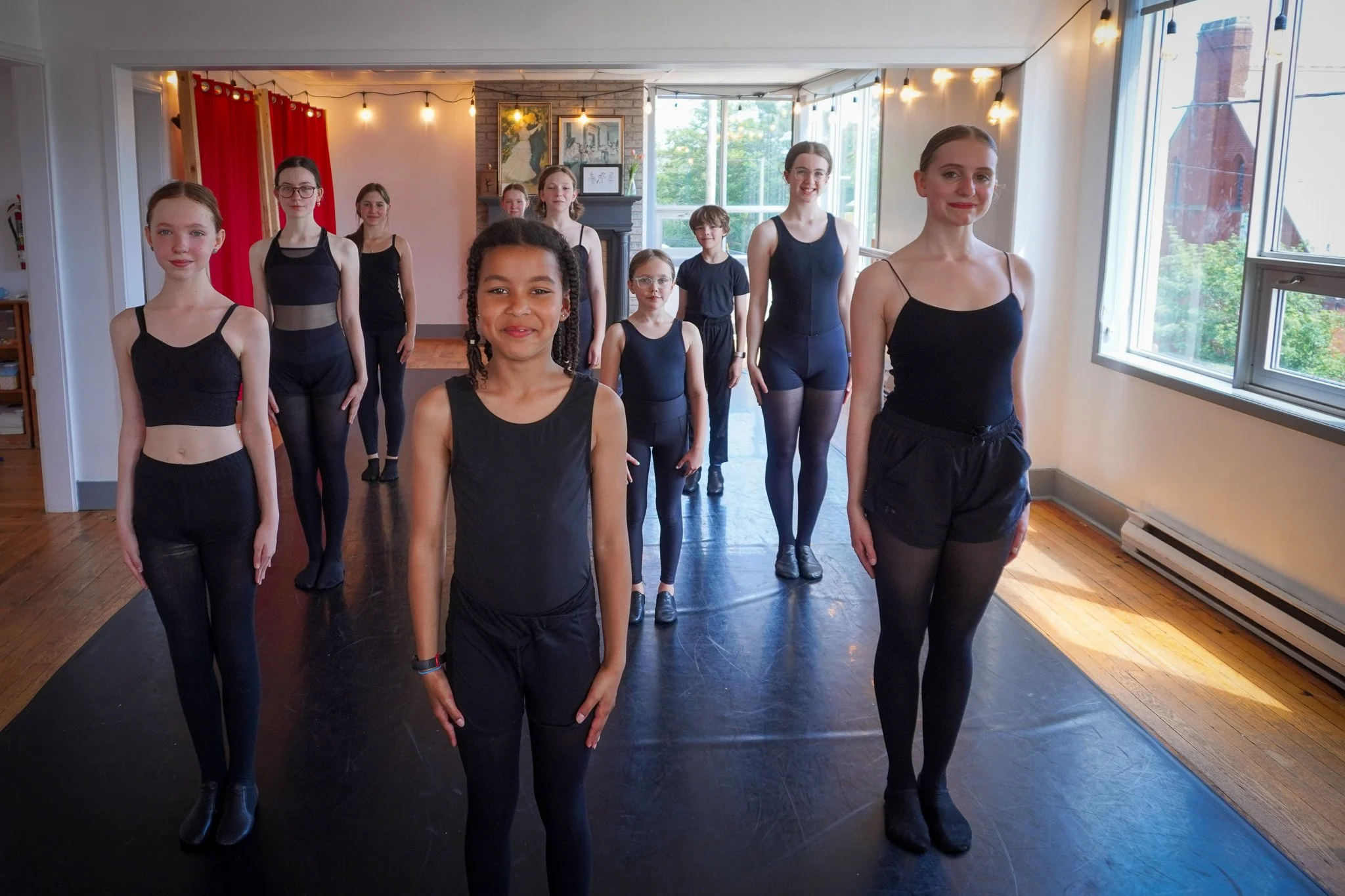
What we wear changes how we enter a space.
Putting on dance clothes is a small ritual that says: I'm here to dance now.
That's why we believe having clothes that are specifically for dance class matters. They don't need to be expensive or elaborate, but they should allow you to move freely, help your teacher see how you're using your body, and feel appropriate for the work we're doing together.
At LPD dressing the part doesn't mean everyone has to look the same.
What does "dancewear" mean?
For a long time, dance dress codes, particularly ballet dress codes, were very specific and very gendered. Girls wore one thing. Boys wore another. Sometimes particular levels were assigned particular colours.
There can be value in uniformity. A clean, simple silhouette makes it easier for teachers to see alignment and technique, and there's something lovely about a room of dancers who look ready to work together.
But we don't think achieving that requires every dancer to wear the same thing.
A dance outfit might be a bodysuit and tights. It might be a T-shirt and leggings. It might be a fitted top and dance pants. One of my favourite ballet-class looks is actually incredibly simple: a white T-shirt with longer black shorts.
We welcome colour and personal expression, and dancers should choose from our dress code in a way that feels comfortable and appropriate for them.
We're looking for something clean, functional and intentional that allows you to participate fully in class.
Comfort matters, too
Early in my teaching career, I taught a student with a sensory sensitivity who loved ballet but couldn't tolerate the feeling of ballet tights.
The dress code was becoming a reason they didn't want to dance.
That made me reconsider what a dress code was actually supposed to accomplish.
If the purpose of dancewear is to help a student participate in dance class, but the clothing itself becomes the thing preventing them from participating, we've lost the plot.
Dancers have different bodies, sensory needs, gender expressions and comfort levels. Our dress code needs enough flexibility to accommodate the actual people who walk through our doors.
Please note that, that flexibility doesn't mean that what you wear doesn't matter. It does.
Dress for the work
We want dancers to learn that how we prepare for something can change how we approach it.
Bring the right shoes. Pull our hair away from our faces. Choose simple clothing that lets us move. Arrive ready to participate.
These little rituals are part of learning how to take your practice seriously.
We also want our dancers to understand that professionalism doesn't require giving up individuality. You can express yourself while still dressing appropriately for the room you're entering and the work you're there to do.
And if you cannot manage it this week?
Come to class anyway.
Forgot your tights? Come to class.
The only clean dance shirt is the wrong colour? Come to class.
A sensory issue means the outfit described in the dress code simply isn't going to work today? Come to class.
We ask our families to make a good-faith effort to follow the dress code, and if something isn't working for your dancer, talk to us. We can almost always find a solution.
We're not interested in sending a child home because their outfit doesn't follow the dress code to the letter.
Being in class matters more.
Dress for the work. Express who you are. Come to class.