
Dress Code
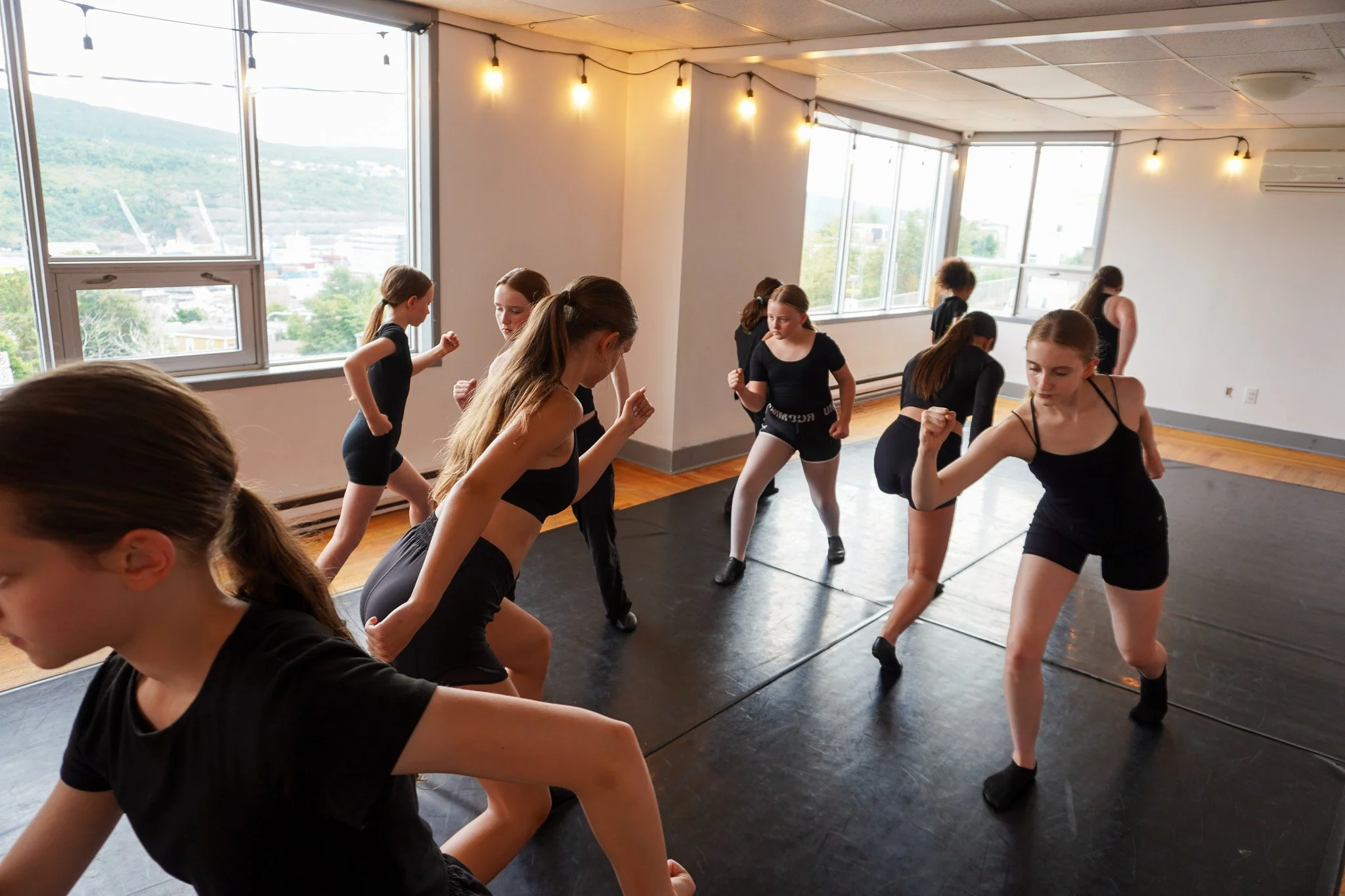
What we wear to dance class matters. Dancewear helps students shift into class mode and allows teachers to clearly see alignment and movement, particularly through the major joints: shoulders, hips, knees, and ankles.
At the same time, we know that dancers have different bodies, sensory needs, gender expressions, and ways of feeling comfortable. We would always rather have a student in class than sitting at home because their tights, hair, or clothing became a barrier to dancing.
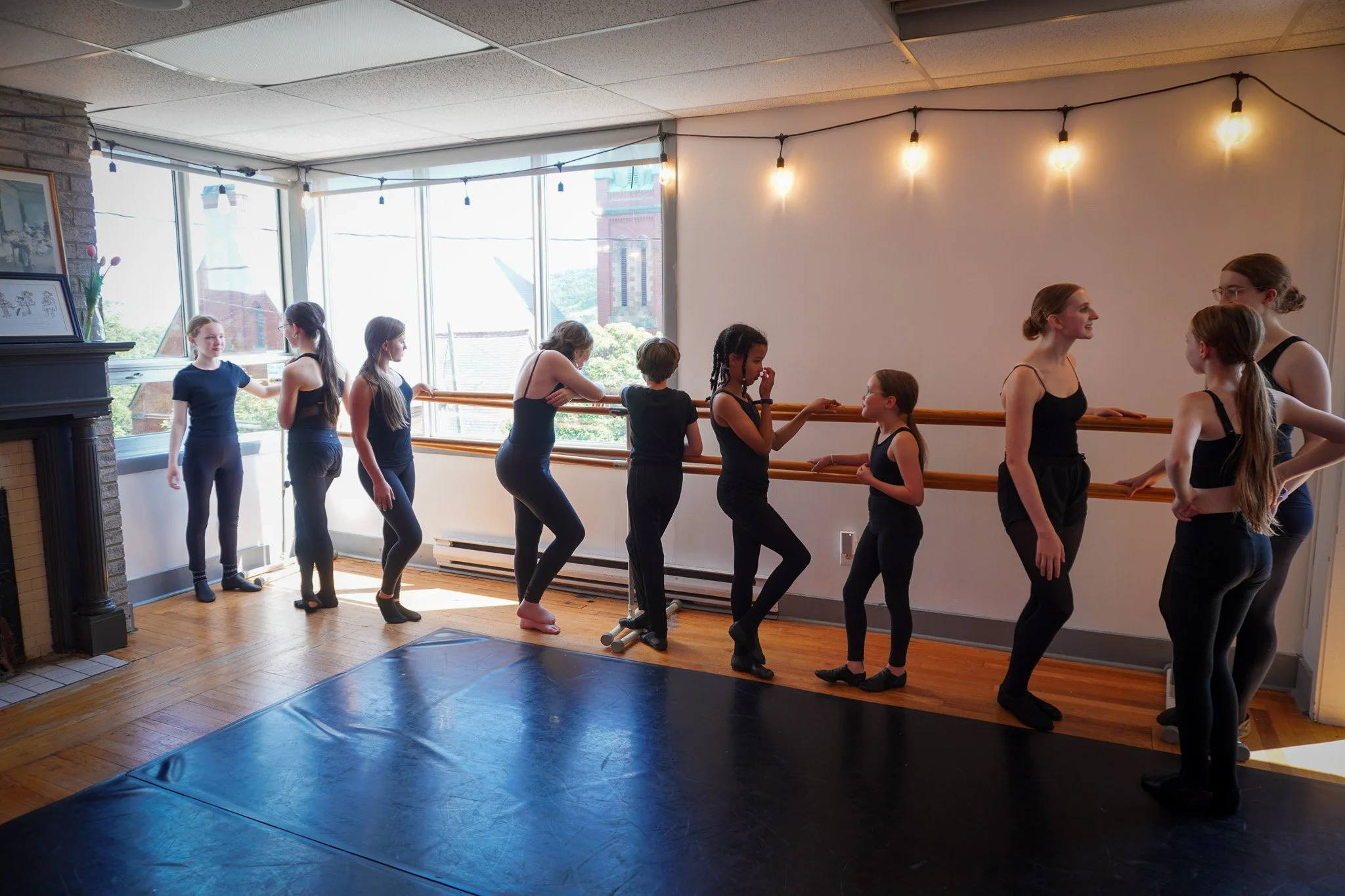
Our dress code therefore allows for choice and self-expression while maintaining a clean, class-ready aesthetic. A dance outfit might be a bodysuit and tights, or it might be a fitted T-shirt and leggings or shorts. Colour is welcome, although we love a simple or monochrome look because it helps keep the visual focus on movement and technique. A classic white T-shirt with longer black shorts is always a great option.
The important thing is that students have clothing specifically for dance class, rather than arriving in everyday streetwear.
Class Guidelines
Hair should be secured neatly away from the face. For ballet, a bun is preferred when possible, particularly for longer hair.
Dancewear should allow teachers to see the major joints: shoulders, hips, knees, and ankles.
Bodysuits, tights, fitted T-shirts, tank tops, leggings, fitted shorts, and similar dancewear are all welcome.
Oversized T-shirts, sweatshirts, and sweatpants are not appropriate for regular dance classes, with the exception of Hip Hop.
Clothing should be comfortable and not distracting to the dancer or their classmates.
Jewellery is not worn in class.
Street shoes are not permitted in the studios.
Students in Level 2+ require a simple black base layer for performances and rehearsals. This can include a leotard, tank top, leggings, and/or shorts.
For recital, students will require a skin-tone base layer appropriate to their costume. This might include tights, underwear, a bodysuit, bra, dance belt, or body tights.
If sensory needs, cost, gender expression, or anything else makes the dress code difficult for your dancer, please talk to us.

Wee Dance
bodysuit any style and in any solid colour
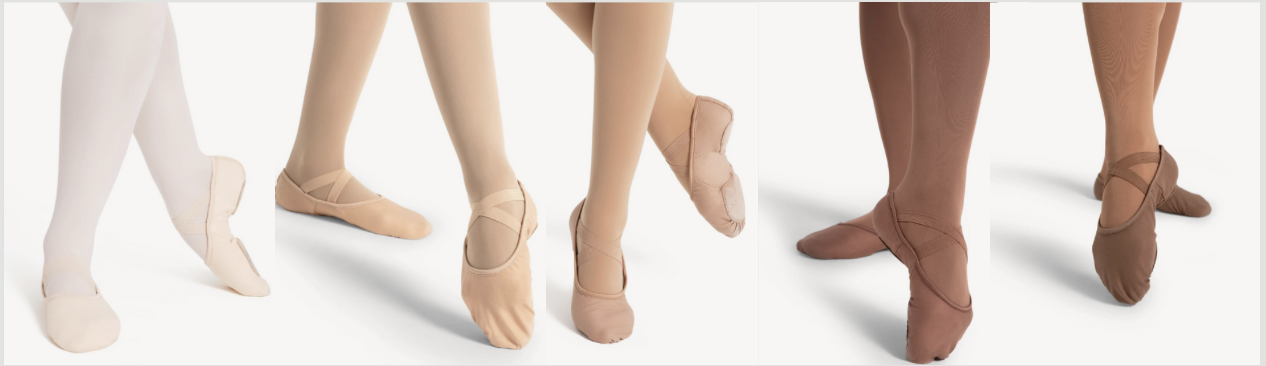
pink tights and pink ballet slippers with elastics or skin tone tights and skin tone ballet slippers with elastics
short ballet skirt in any solid colour (optional)
or
t-shirt in any solid colour
stretch pants or shorts
pink or skin tone ballet slippers
Ballet
bodysuit any style and in any solid colour
pink tights and pink ballet slippers with elastics or skin tone tights and skin tone ballet slippers with elastics
short ballet skirt in any solid colour (optional)
or
t-shirt or tank in any solid colour
legging or shorts
pink or skin tone ballet slippers
Modern
t-shirt or tank in any solid colour
leggings or shorts
socks are recommended
knees pads (optional)
Jazz, Latin Jazz, Tap,
t-shirt or tank in any solid colour
leggings or shorts
jazz: black ballet or jazz shoes (character shoes TBD)
tap: black tap shoes
hip hop: black sneakers
Latin jazz (Latin heels TBD)
Hip Hop
t-shirt or tank in any solid colour
sweatpants
black sneakers
Beyond “Pink” Tights
Ballet has long been synonymous with elegance, discipline, and artistry. However, some of its practices are deeply rooted in outdated and exclusive norms. We believe in fostering an inclusive and welcoming environment for all dancers, which is why we have recently amended our dress code to give our ballet students a choice: pink tights and shoes or skin-tone tights and shoes. This change, while simple, reflects a commitment to inclusivity and equity.
Why Pink Tights?
Pink ballet tights and shoes have been a standard for decades, tracing their origins back to the Eurocentric traditions of classical ballet. They were designed to give the illusion of elongated lines, blending with the pale skin tones of early ballet dancers who dominated the stage. For dancers of other skin tones, this standard has historically excluded and marginalized them, reinforcing a lack of representation in ballet’s history.
Accessibility Matters
One challenge we’ve considered in making this change is accessibility. Pink tights are often cheaper, more readily available, and commonly found second-hand, making them an easier option for many families. Finding in-stock items locally is also a challenge. We recognize this and fully support each family’s decision to choose what works best for them, financially and practically. Plus some kids might just like wearing pink, and that’s fine by us. For those interested in exploring skin-tone tights and shoes, we’re happy to provide guidance on sourcing these items. More brands are now offering a diverse range of shades, and we are proud to support this shift towards greater inclusivity in dancewear.You can start by checking out The Shoe Room, a Toronto-based ballet boutique, founded in 1998 by Canada’s National Ballet School.
Why Monochrome?
Our ultimate goal is to create a unified, professional aesthetic in our classes. Whether students choose pink or skin-tone tights and shoes, we aim for a monochrome look that highlights the beauty and precision of ballet technique without dictating conformity to an outdated standard.
A Step Toward Inclusion
This dress code amendment is part of our broader effort to challenge systems of exclusion within dance and to create a space where every student feels seen, respected, and celebrated. We hope this change helps our dancers feel more connected to their own identity while participating in the rich tradition of ballet.
Moving Forward Together
We’re excited to see how this change positively impacts our students and their families. If you have any questions about our dress code, need help finding dancewear, or want to share your thoughts, we’re here to listen and assist.