Choreographing Connection
Choreographing Connection is Lynn Panting’s professional practice blog, offering reflections on her artistic work and the arts sector at large. Through her lens as a director, choreographer, and intimacy professional, she shares think pieces, resources, strategies, and insights that speak to the evolving landscape of the performing arts.
Your Nervous System Comes to Rehearsal Too
You know the phrase, where ever you go, there you are?
Your nervous system is like that. It’s in the room for auditions, rehearsals, tough conversations, celebrations and everything in between.
Next, as part of the self-regulation series, I'd like to talk about what's happening in our bodies when we get dysregulated. Again, this is inspired by my training at IDC. I’ll drop some references at the bottom, check them out, if that’s of interest to you.
You know the phrase, where ever you go, there you are?
Your nervous system is like that. It’s in the room for auditions, rehearsals, tough conversations, celebrations and everything in between.
Your Body Is Trying to Keep You Safe
When our brain perceives a threat, our autonomic nervous system shifts into a sympathetic state to prepare us for action. Our heart rate increases. Blood is redirected to the muscles that would help us fight or escape.
If you're being chased by a bear, this response might save your life.
However, if you are being pursued by a bear only to exit Stage Left (if you know you know), this response can prevent you from doing your best work.
Our nervous systems can’t always distinguish between physical danger and social danger. As such, we can react to receiving a difficult note as though survival is at stake.
Fight. Flight. Freeze. Fawn.
These are all signs of dysregulation/common ways the nervous system responds when it perceives a threat.
Fight seeks safety through confrontation.
Flight seeks safety through escape.
Freeze seeks safety through stillness.
Fawn seeks safety through connection.
In a rehearsal room, these responses might look like arguing, avoiding, going blank, or people-pleasing. The behaviours are different, but they share the same underlying purpose: each is an attempt to find safety.
Regulation Is Contagious
Our nervous systems don't exist in isolation. We constantly influence one another. A calm, grounded director can help settle an entire rehearsal room. A regulated stage manager can help de-escalate a stressful production day.
The opposite is also true.
One dysregulated person can unintentionally activate everyone else.
So, self-regulation isn't just something we do for ourselves. It's something we offer the people we work with. This is why self-regulation is such a powerful skill.
First, it's our responsibility to arrive as regulated as we reasonably can, so we don't unintentionally add stress to the room. Second, our own regulation can help co-regulate the people around us. The way we show up shapes the environment we create together.
What Works for Me
These are a few practices that have made a meaningful difference:
Doing a brain dump before a stressful meeting so I'm not carrying twenty unfinished thoughts into the room. (I do it as a voice note, or voice to text)
Leaving transition time between tasks instead of rushing from one responsibility straight into another.
Walking.
Pausing before responding to feedback. (This is a struggle for me)
Always leaving at least 30 minutes between reading a difficult email and responding. (Life changing)
Protecting quiet moments between rehearsals instead of filling every break with conversation.
Stepping away from conversations that leave me feeling cynical/drained rather than connected.
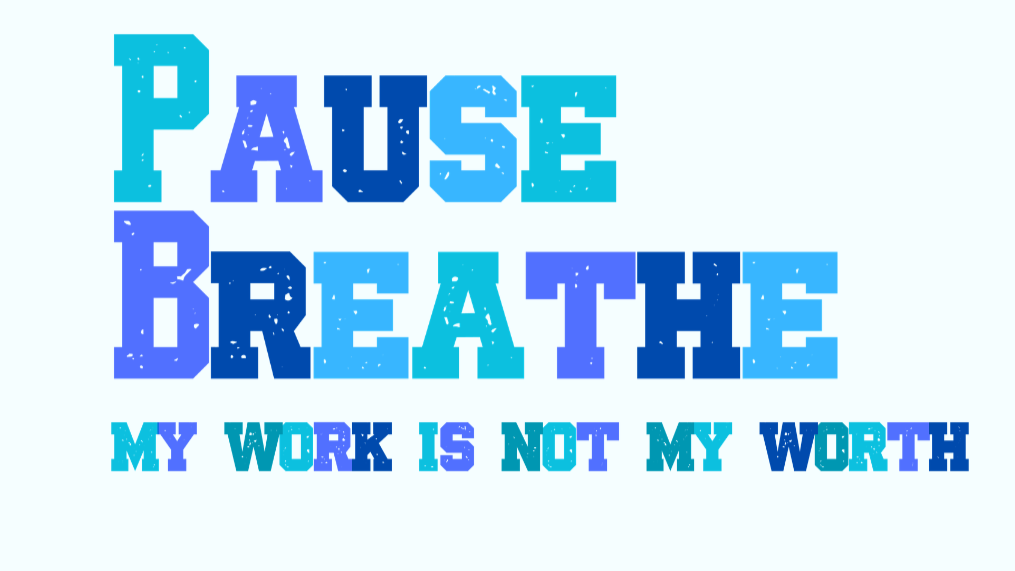
I also like affirmations and mantras tailored to the task at hand: My work is not my worth. I offer steadiness to the room. That is enough for today.
If You Are Curious
Here are some points of reference. I am really loving Deb Dana’s Nervous System Workbook lately.
Hank Green’s Autonomic Nervous System Crash Course: https://youtu.be/71pCilo8k4M?si=KIf1MKBT7cR-6T49 (be warned this is from 2015, the vibe is deeply millennial)
Anchored by Deb Dana (an introduction to understanding your nervous system and building regulation skills)
The Nervous System Workbook by Deb Dana (practical exercises for noticing and supporting your nervous system)

Why Creative Conflict Feels So Personal
Creative conflict feels personal because creative work is personal.
Artists create what feels like an extension of ourselves. It's no wonder that feedback and/or disagreement can feel so personal.
Creative conflict feels personal because creative work is personal.
Artists create what feels like an extension of ourselves. It's no wonder that feedback and/or disagreement can feel so personal.
To build a life in the arts also requires a tremendous amount of commitment. We sacrifice stability and risk economic uncertainty because we believe the work matters. That investment can make it even harder to separate criticism of the work from criticism of ourselves.
And look, passion is one of the great gifts of this profession. Creative life is a calling.
The challenge is learning to hold our passion without allowing our work to define our worth.
My work is not my worth.
My work is not my worth has become an important phrase and mantra for me of late.
The reality is this: not every grant application will be funded. In this last round of ArtsNL grants, 66% of project grants were rejected.
Likewise, work, if you get it, is not always going to resonate.
If my sense of worth rises and falls with those outcomes, that external validation, I'm giving away far too much control over my own life.
Centre the work.
So this is my antidote: centre the work.
Not “your” work, “THE” work.
The artists I love working with, those I return to again and again, are the ones who ask: How can I serve the work?
Make no mistake, these folks have strong points of view. They're passionate. They're smart. They do not back down from a scrap. I certainly don’t.
But what we do agree on is putting ego aside to serve the work at hand.
When you centre the work, you can let go of the idea that you're the only one responsible for its outcome. You're part of it. You have a responsibility to bring your your best, but the work doesn't live or die on your back.
And I find that incredibly liberating.
Some directors might balk at that idea. With love, I'd gently suggest that you were never making the show on your own anyway, babe. So get into it.
The best work I've ever been part of has always belonged to the room. It bloomed because a group of people were willing to bring their whole selves and then let the work become something bigger than any one of them could have made alone.
In Practice
So, in practice…. the next time you find yourself feeling defensive in a rehearsal, production meeting, or creative conversation, try asking yourself:
Am I protecting the work, or am I protecting my ego?
And then ask:
What best serves the piece we're making together?
A Thought
Perhaps we can let go of needing to be validated by the work, and instead allow the act of making it to be its own validation.
The Most Powerful Tool in the Arts Costs Nothing
I'm not going to bury the lead.
It's self-regulation.
The Most Powerful Tool in the Arts Costs Nothing.
I'm not going to bury the lead.
It's self-regulation.
The most powerful, game changing, under utilized tool in the arts is self-regulation. It’s free and you don’t need anyone else to give it to you.
I've been thinking about this a lot lately, so be forewarned. This is going to be a series.
I recently returned from the ID in-person intensive with Intimacy Directors and Coordinators (IDC). Before we ever stepped into the room together, our instructors spent a surprising amount of time talking about self-regulation and self-care.
I was surprised.
This was a room full of emerging and experienced professionals. Many people had multiple degrees, decades in the industry, and significant leadership experience. We had all chosen to pursue this work. I assumed self-regulation would simply be a given.
It wasn't.
Like so many creative spaces I've worked in over the years, I watched moments of activation pull people away from the work. Folks became defensive, withdrawn, frustrated, and overwhelmed.
And you know what? I saw myself.
I have certainly reacted defensively to a note, as previously discussed.
I have clapped back.
I have shut down.
I have behaved in ways that pulled everyone, myself included, away from the work.
There have been times when I was so caught up in my own activation that I failed to recognize what was happening around me. I was not seeing the room clearly. I missed signs that someone else was dysregulated and dangerous. Those experiences fundamentally changed how I think about professional practice.
That's why my hot take is that self-regulation is the most important professional skills an artist or creative can develop.
It keeps us focused on the work.
It allows us to stay connected to one another when conversations become difficult.
And ultimately, it helps keep our creative spaces safer.
More on this soon, but for now, an invitation:
Next time you notice yourself becoming activated (shoulders creeping up, face getting hot, chest tightening) see if you can pause.
Pause.
Take a breath.
Perhaps use an affirmation or a mantra.
Right now I’m digging: My work is not my worth.
It’s a practice.
Recs
If you are interested, this is what I’m taking a look at right now:
The Nervous System Workbook, Deb Dana
Atlas of the Heart, Brene Brown
Insight, Tasha Eurich (she also has an excellent article about self awareness in the Harvard Business Review)
Creds