
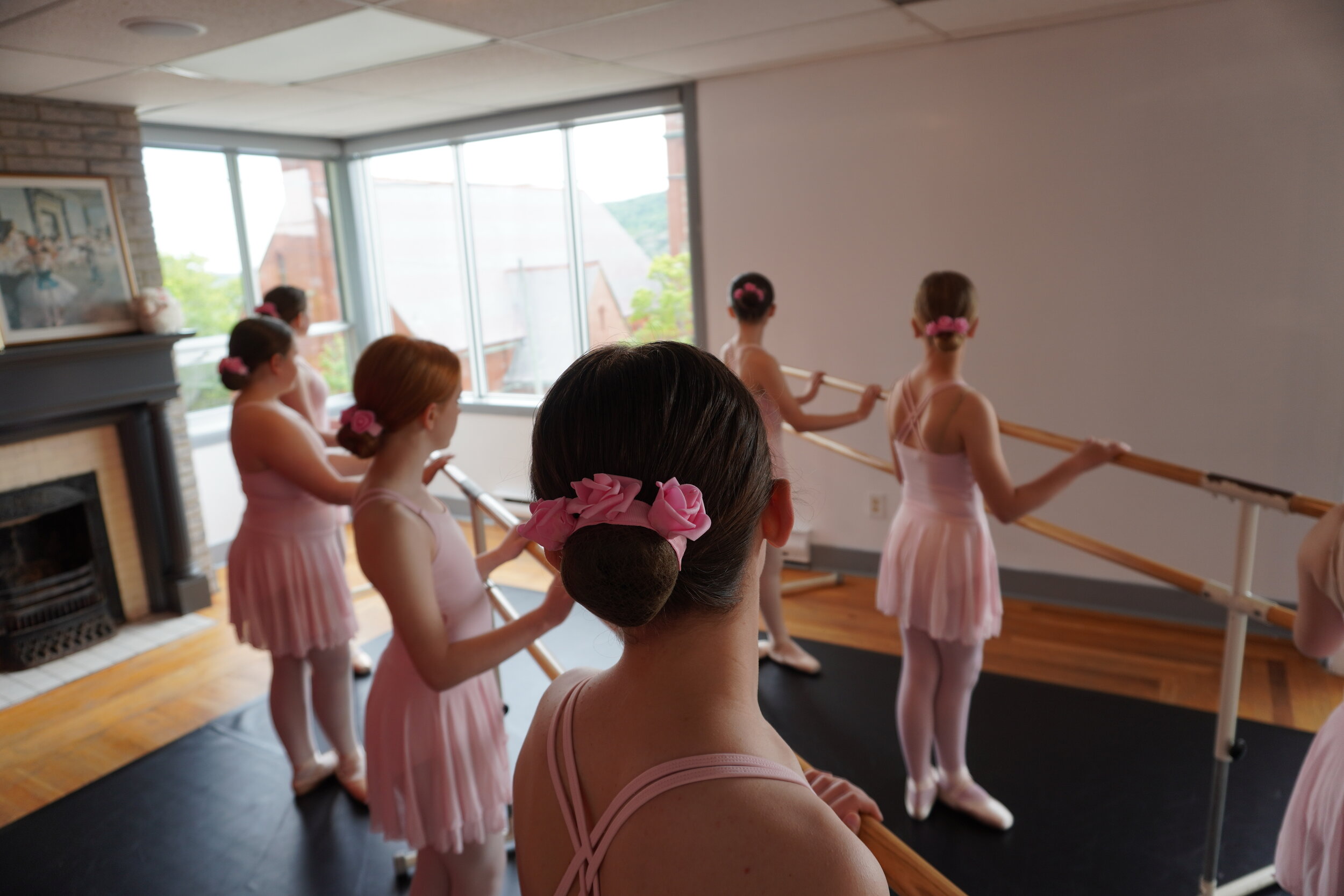
Dress Code
Dress the part. Dance the part.
What you wear to class matters. Your dress code helps you move safely, train effectively, and step into your role as a dancer. When everyone shows up prepared, it creates a focused, respectful, and professional space for everyone in the room.
Why do we have a dress code?
So you can move fully and safely without restriction
so your teacher can see your alignment and technique clearly
So you build discipline and consistency in your training
So you get used to the tights and shoes you will wear for performances
So you step into a shared studio standard with your peers
Changing for each class becomes a mental cue, helping you shift into a new style, focus, and way of moving
General Expectations
Hair is secured away from the face
Buns are required in ballet and pointe class
No loose or distracting clothing
Solid colours are prefered
LPD Merch is welcome
No jewelry
Dance shoes are clean and specific to your class
Come prepared and ready to move at the start of class
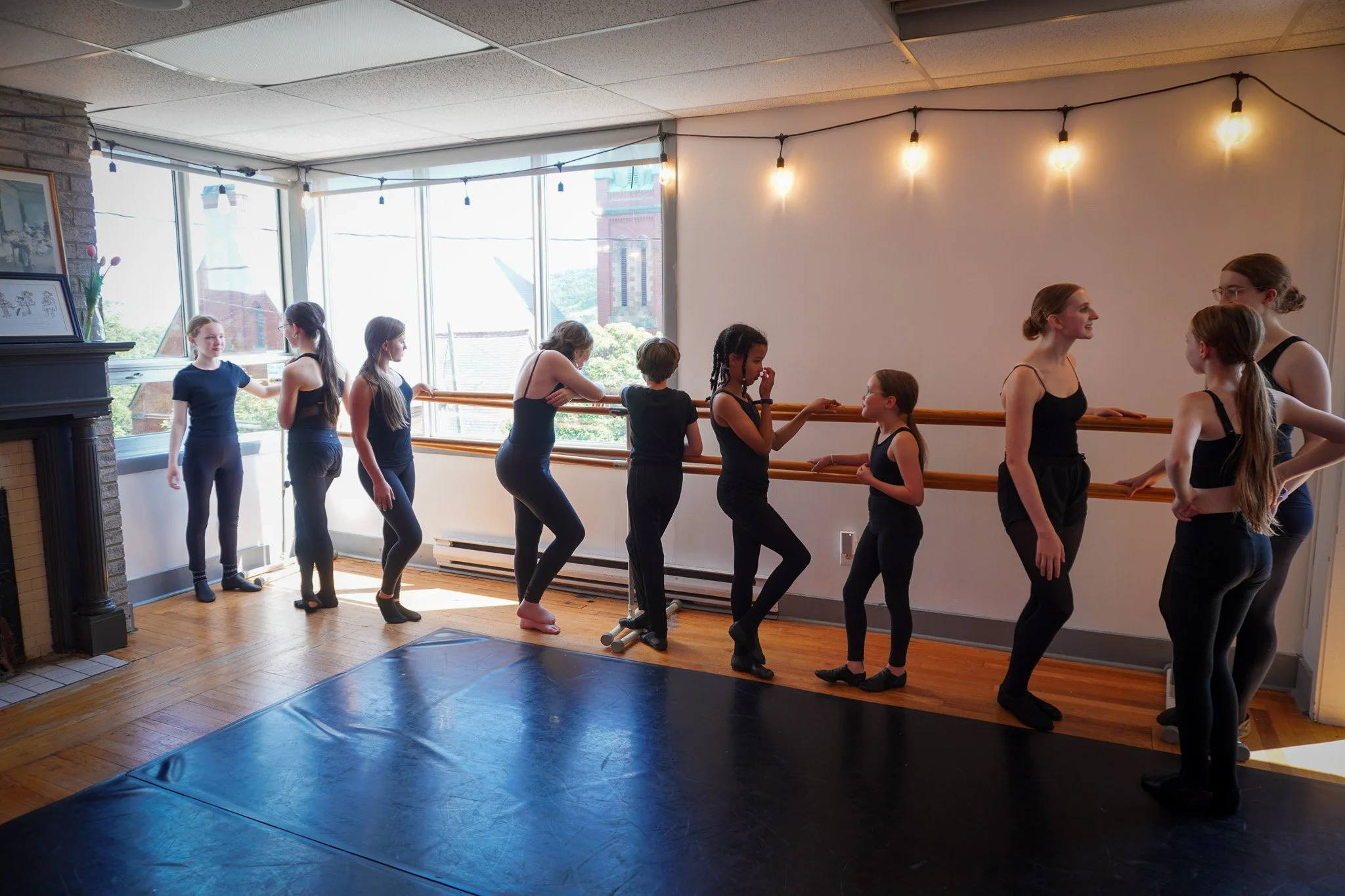
By Class Style
Ballet
Fitted dancewear or bodysuit and tights
Hair in a bun
Ballet slippers
Pointe
Fitted dancewear or bodysuit and tights
Hair in a bun
Pointe shoes (by teacher approval)
Jazz
Fitted dancewear
Black Jazz shoes
Musical Theatre
Fitted dancewear
Black Jazz shoes
Tap
Fitted dancewear
Black Tap shoes
Modern / Contemporary
Fitted dancewear, a loose layer is permitted
Barefoot or socks (as directed)
Latin Jazz / Latin Heels
Fitted dancewear
Latin heels
Hip-Hop
Sweatpants
T-shirt or sweatshirt
Clean black sneakers (indoor use only)
Additional Expectations
Performing Group
All black dancewear
Teaching Assistants
Dress code is expected to be followed to a high standard
Teaching assistants will be provided with an LPD t-shirt to wear in class
A Note to Dancers
Each time you change for class you’re stepping into a different technique, a different mindset, and a different way of dancing.
That shift matters.