Dream Devised
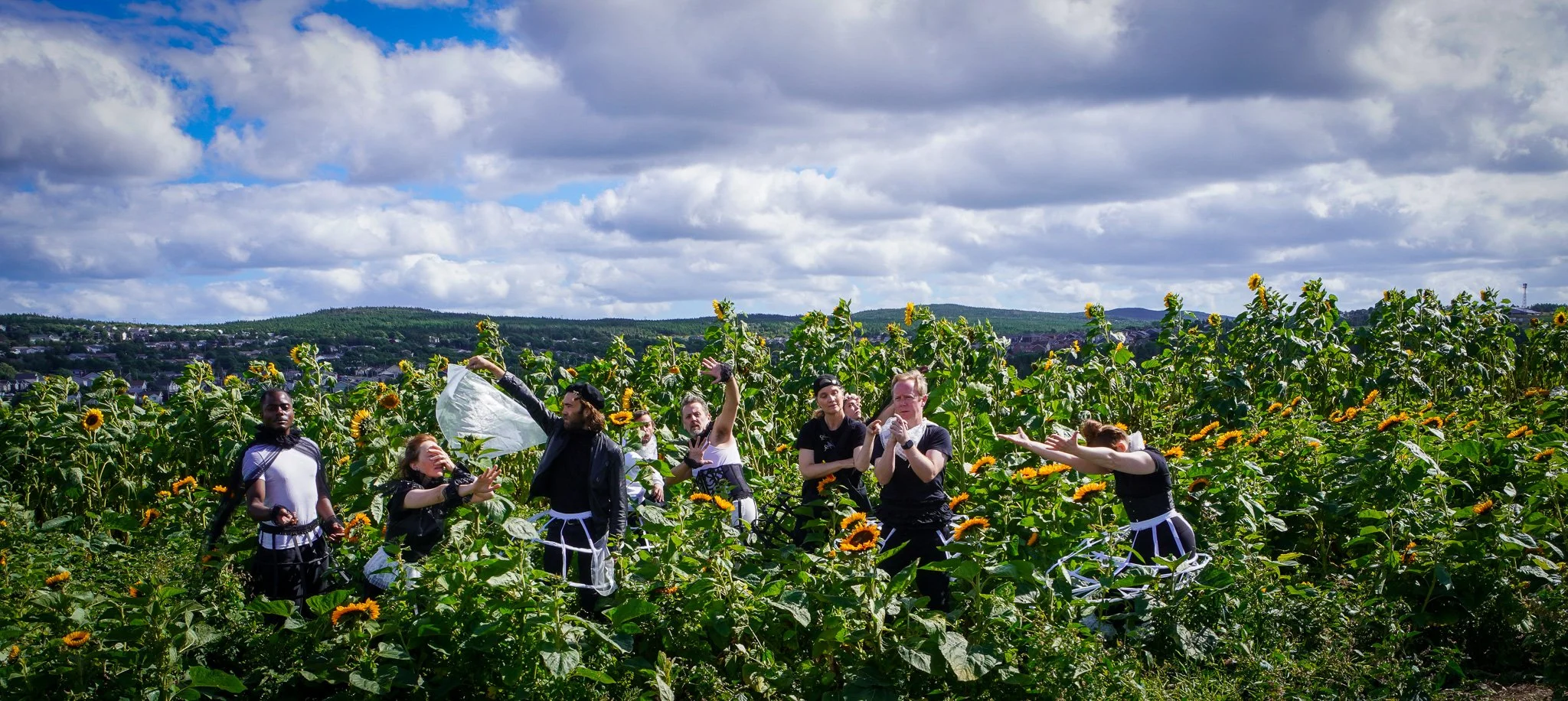
Just after Labour Day, I was lucky to have time in the room with ten artists to work on Dream Devised, supported by ArtsNL and the City of St. John’s.
Dream Devised is a movement-based, ensemble-driven adaptation of A Midsummer Night’s Dream that explores how devising can open Shakespeare’s text to new creative possibilities.
At the root of the project were two connected questions:
How can we challenge some of the traditional hierarchies of the rehearsal room?
And, how can we invite more people into the work?
The first is about dismantling harmful practices I've experienced in the performing arts as a sector. Specifically, I'm interested in challenging the more traditional hierarchy of the director as the ultimate authority in the room. I'm increasingly interested in what happens when we redistribute some of that authority and offer artists greater agency and authorship.
Spoiler: it’s actually kinda great. In my opinion, the work atmosphere and the work itself is stronger.
The second is about accessibility. Classical text, and Shakespeare in particular, can feel intimidating or out of reach to some folks. I wanted to explore whether there was a way of approaching the classical text that could bridge some of the gap between folks with more experience and less experience, and create a way in for people who have difficulty processing language or simply feel intimidated.
In the intersection of those two questions, a methodology formed:
What happens if authorship itself is a point of access?
Ensemble Building and Text Work
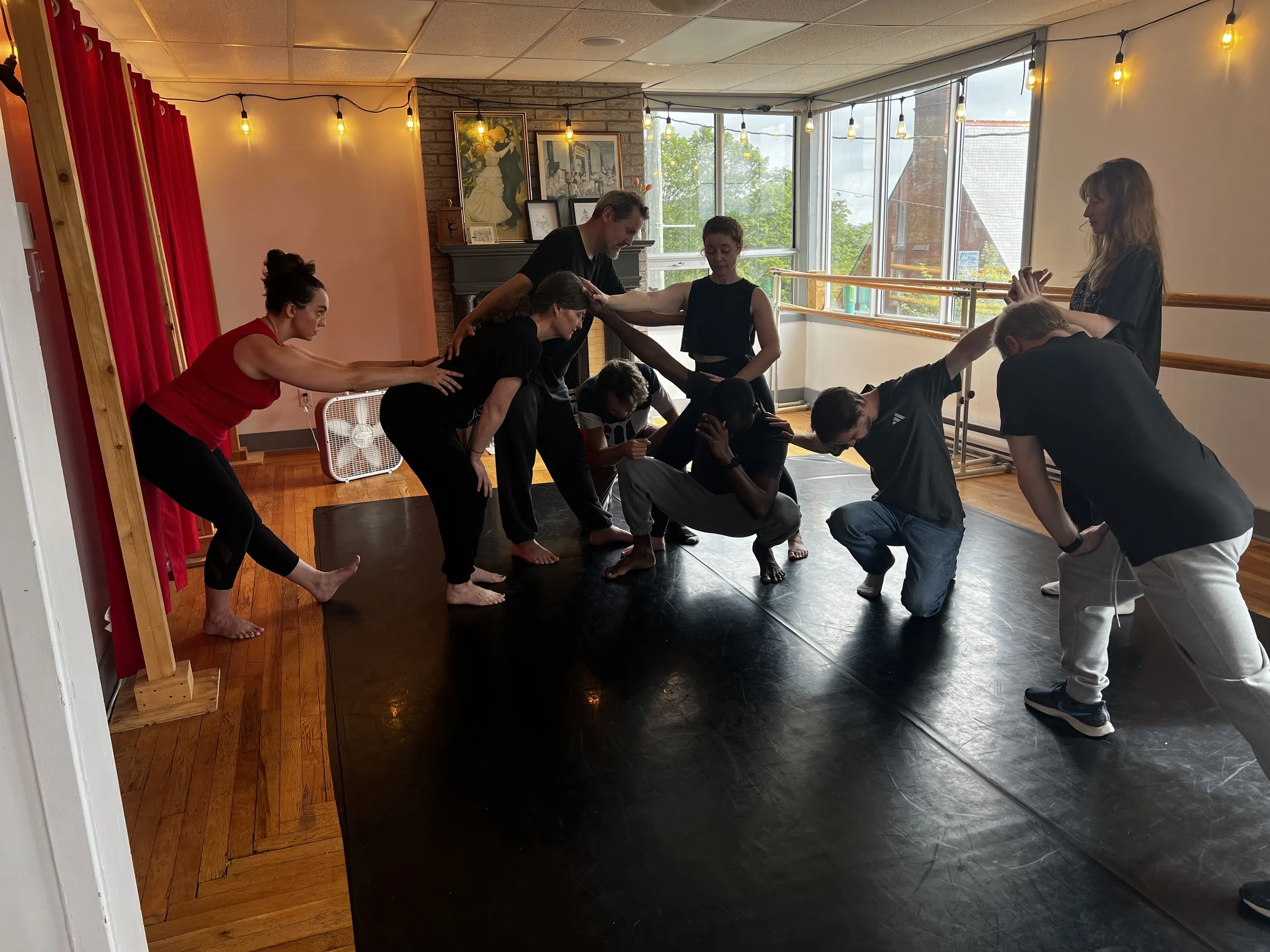
If you work with me, ensemble building is essential to my process. I think that the point of live performance is bodies in the room. Therefore, the body needs to be the starting point and shared physically is essential to world building.
Therefore, each day movement and ensemble building were given equal importance to text work.
Before we could ask people to collectively make something, we had to spend time developing relationships.
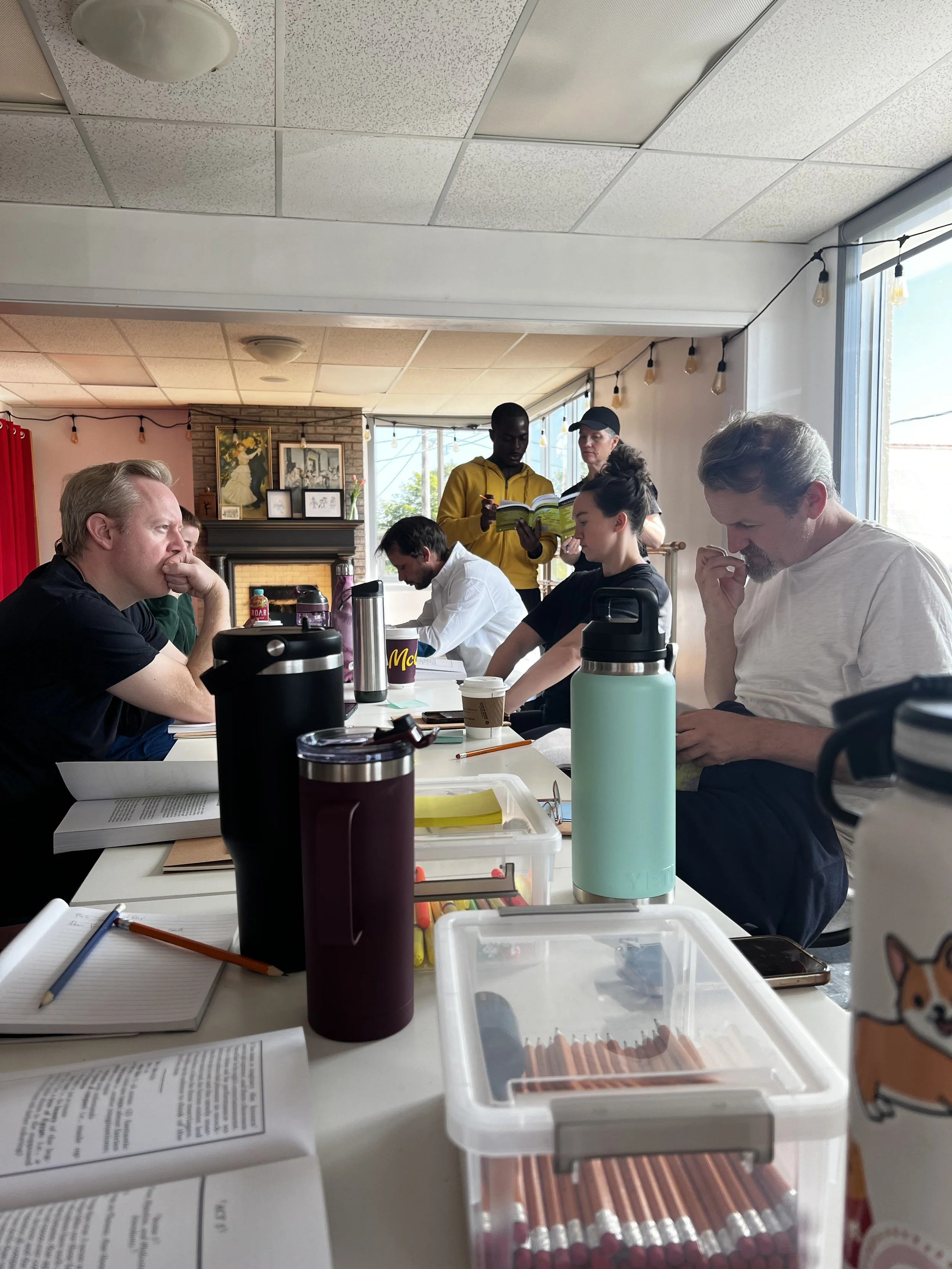
Alongside this physical work, we also read the play. The whole play. No cuts.
Here, I used an adaptation of the practice of Florilegium (collecting the flowers), asking the artists to note what was resonating in their own lines and in other’s lines.
The point was to discover what was resonant to this particular group of people, in this room, right now.
The same group might meet in six months and feel something different. The same group might meet in twenty years and find a different cut of the play.
That is juicey to me.
From there, we moved back to the physical work, developing relationships, creating specific vocabulary, and just generally developing the relationships in the room so that folks had a shared language and trust.
Then I asked the ensemble to cut the play.
Cutting Your Own Text
Each actor was responsible for cutting their own part to achieve a 45 minute version of Dream.
We got it to 52 minutes.
Actors could not cut the lines of their scene partner, only their own.
This is part of redistributing authorship. But interesting, it became more than that. Each actor’s cut reflected the actor's relationship with the language and demonstrated a commitment to supporting the larger project of telling the story as a whole.
If you're the one deciding which words you need to say, you get clear on what is essential to your character and to the story very quickly.
And man, those cuts were so smart.
It was so much better than what I would have come up with alone.
In fairness to my contribution, we also considered when physical representation did the job and when action rendered text moot.
Midsummer offers three very clear worlds to work in. The lovers speak largely in verse, the mechanicals are in prose, and the fairies are poetic and image-based.
Because of this, the fairies had the most interesting challenge.
With the lovers, there is a plot that needs to move forward. The mechanicals also have a fairly straightforward story to tell. But with the fairies, a lot of the language doesn't necessarily advance the plot in the same way.
Except that there is an argument that the magic is the plot. The magic is certainly essential.
If you cut everything that doesn't efficiently move the story forward, you risk cutting away the thing that makes the fairy world magical in the first place.
Our Oberon, Titania, and Puck made really smart and judicious cuts that threaded that needle. The language became leaner without losing the world it was creating.
Once everyone had made their cuts, we put the pieces back together and read the play again.
We listened to what we had made collectively and made a few tweaks.
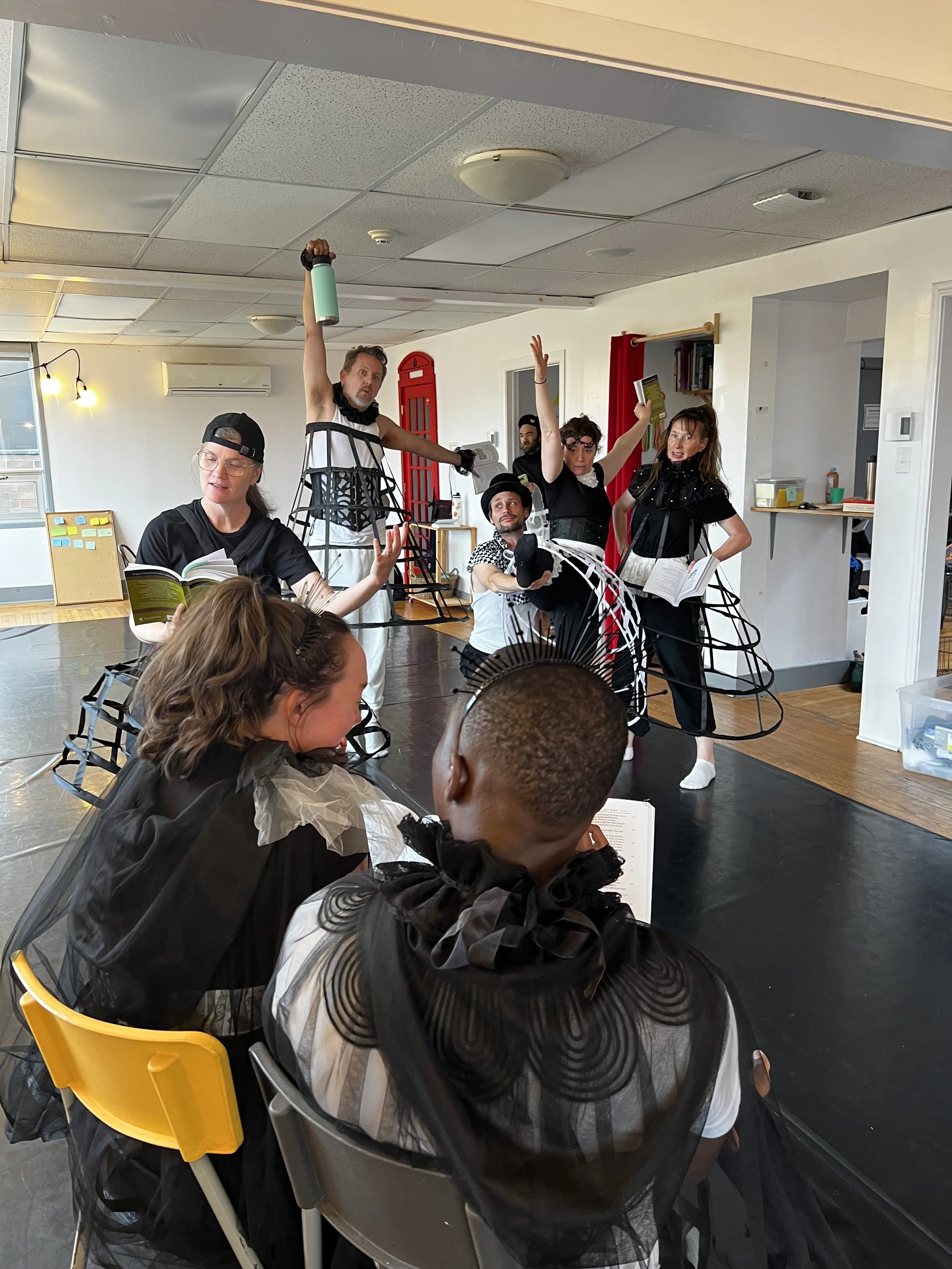
And then we put it on its feet.
Getting Off the Page
Something happened during the first run that I wasn't expecting.
People started taking their eyes off their scripts.
They absolutely did not know their lines. We'd only been together for a handful of hours. But they knew the thoughts.
Because they had made the decisions about what stayed and what went, the language already seemed more internal.
There is something very different about receiving a cut script and being asked to learn it, versus spending time deciding for yourself which thoughts and words you need.
The cutting itself was the text work (and part of the accessibility work too).
This is not to say that there isn't value in digging into the lexicon, scansion, history, imagery, and craft of the language. There is.
But perhaps understanding doesn't always have to come before participation.
Maybe participation can be one of the ways we get to understanding.
Our Dream
After the first run, we talked about what we had discovered and what we might change if this were moving toward an actual production.
Then we got to do it again.
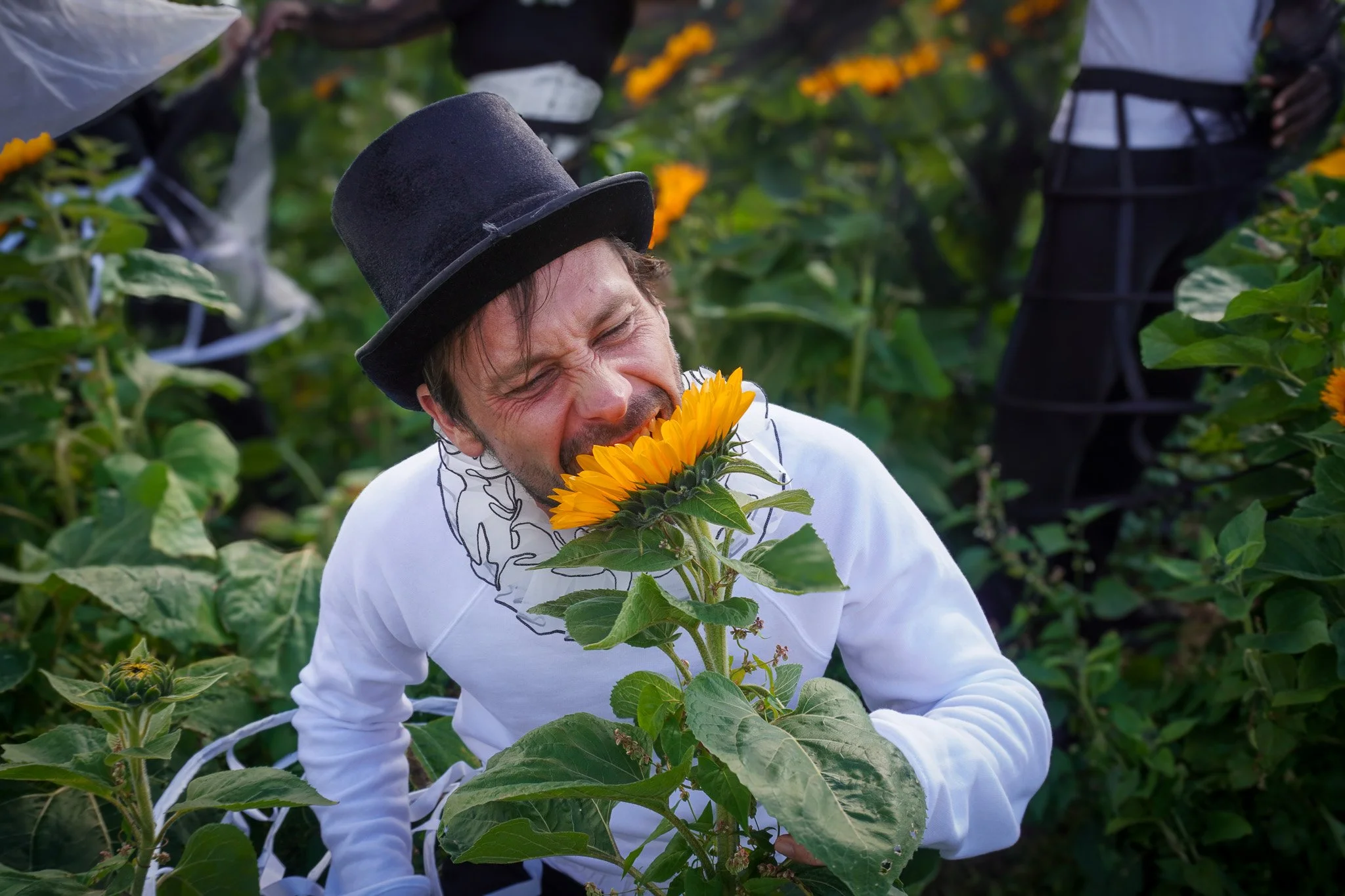
The second run wasn't a reproduction of the first. It was another play. Another opportunity to make different choices. To see what happens.
We had established relationships. We had physical vocabulary. We understood the text. But we didn't have prescribed blocking.
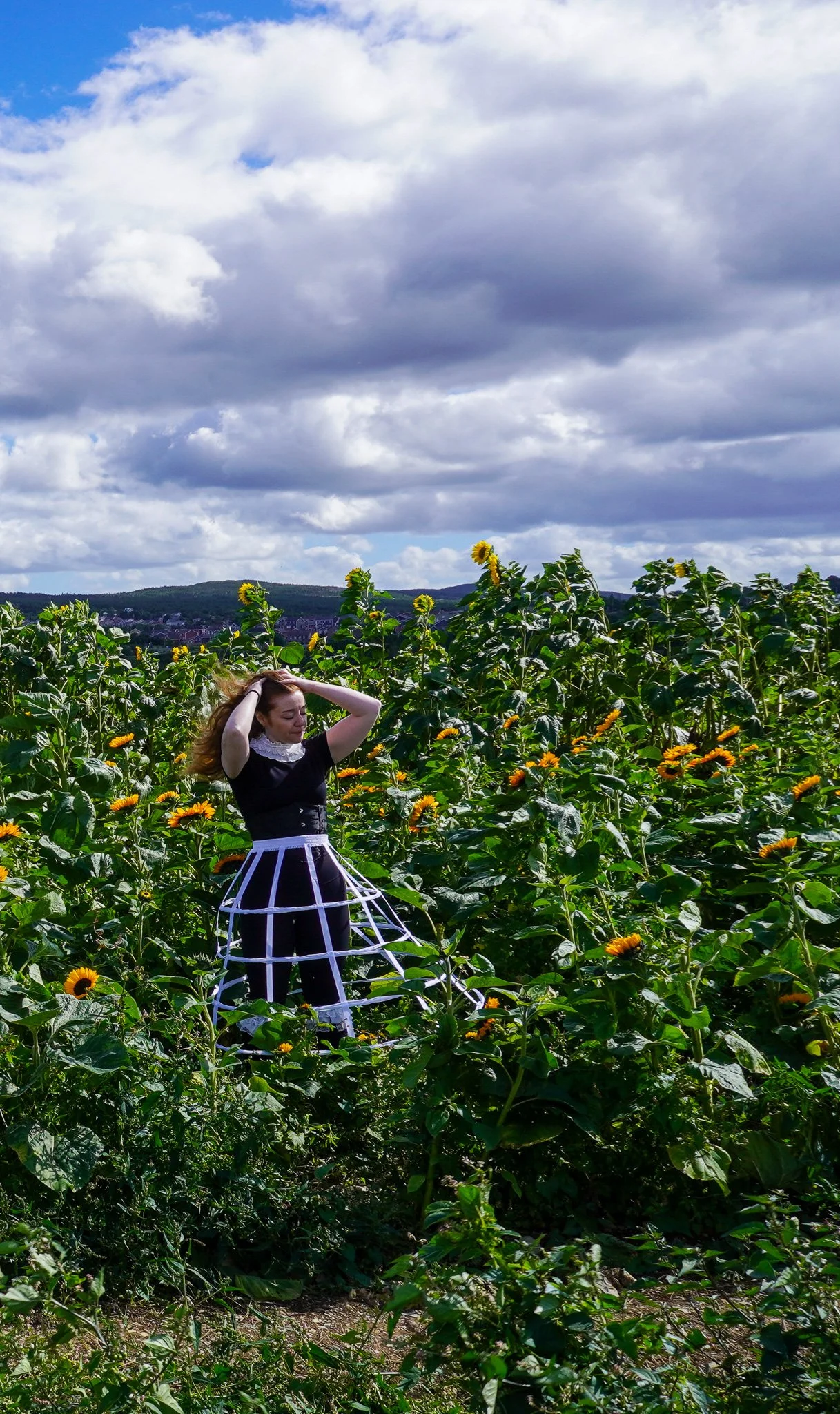
That means we could put the work in a garden, an alleyway, a room, wherever, and we wouldn't necessarily have to re-block the show every time.
Instead, we are working with a group of professional artists who are in tune with the text, with one another, and with a hypothetical audience. They understand the vocabulary of the work, and have permission to play.
I was still directing. I structured the process. I asked the questions. I helped establish the physical vocabulary and held responsibility for the room.
But I didn't have to make every decision.
This isn't my version of Dream.
It's our version of Dream.
Another group of artists could go through this exact same process and make a completely different version. Hell, this same group could come back tomorrow and make a completely different version.
That's the point. Art should be responsive and nimble.
What Next?
At the end of the process, we talked quite a lot about whether this methodology might actually be viable beyond this particular experiment.
We could see it working really well in an English classroom.
What happens if students encounter Shakespeare by making choices about it? Could cutting become part of interpretation and understanding rather than something that happens after someone else has already explained the play?
Could authorship itself become a point of access?
For my artistic purposes, I need to make it a little bit harder.
A Midsummer Night's Dream is a friendly text for this experiment. It's familiar. The worlds are distinct. That’s why I selected it as an entry point.
The real stress test is a denser, lesser-known text.
My instinct is to do Troilus and Cressida next. It's lesser known and thornier, but we're not quite at the density of the Histories.
And then?
History it up!
Being So for Real
I will offer here that there was actually a lot of grief on our final day working together, and for me afterward.
Part of that has to do with the system we currently find ourselves in and the question of how to make professional, ethical theatre.
The truth of the matter is that I don't have the resources to mount this production of Dream in a way that feels both ethical and professional.
I could do it through a profit-share model. I could ask people to donate time. I could call in favours. But in terms of paying the artists what they actually deserve for the time and skill it would take to make this work, I'm just not in a position to do that.
And that's disheartening.
The demand is there. There are extraordinary artists who want to work. There is excellent work being created. But the resources available to make that work professionally are increasingly difficult to find.
For me, as a mid-career artist, understanding what the next stage is can be hard.
How do I progress this methodology without asking people for volunteer hours?
How do I take what we learned during this week and actually give it the time and resources to become something more?
How do I create more rooms like the one we had?
I don't offer this as a big downer at the end of a joyful post. I offer it as a glimpse into the reality.
We had a fabulous week of work. The room was excellent. The work was excellent. Ten professional artists (plus me a fellow professional artist) had the time and space to come together, experiment, and make something none of us could have made alone.
That is a rare opportunity.
It's an opportunity I'm interested in creating again. But it is a real fight.
Rejection takes its toll. Lack of resources takes its toll. And there are real questions about how we continue making ambitious work without asking the artists themselves to absorb what the system isn't providing.
So, this is also an invitation.
If Dream Devised or this methodology is something you're interested in learning more about, please reach out.
I'm currently particularly interested in finding partners to support a two-day exploration of Troilus and Cressida. What I need most is support for artist fees.
And if you're interested in the methodology more generally, I'm very happy to talk.
I know what I want to test next.
Now I need to figure out how to get us back in the room.
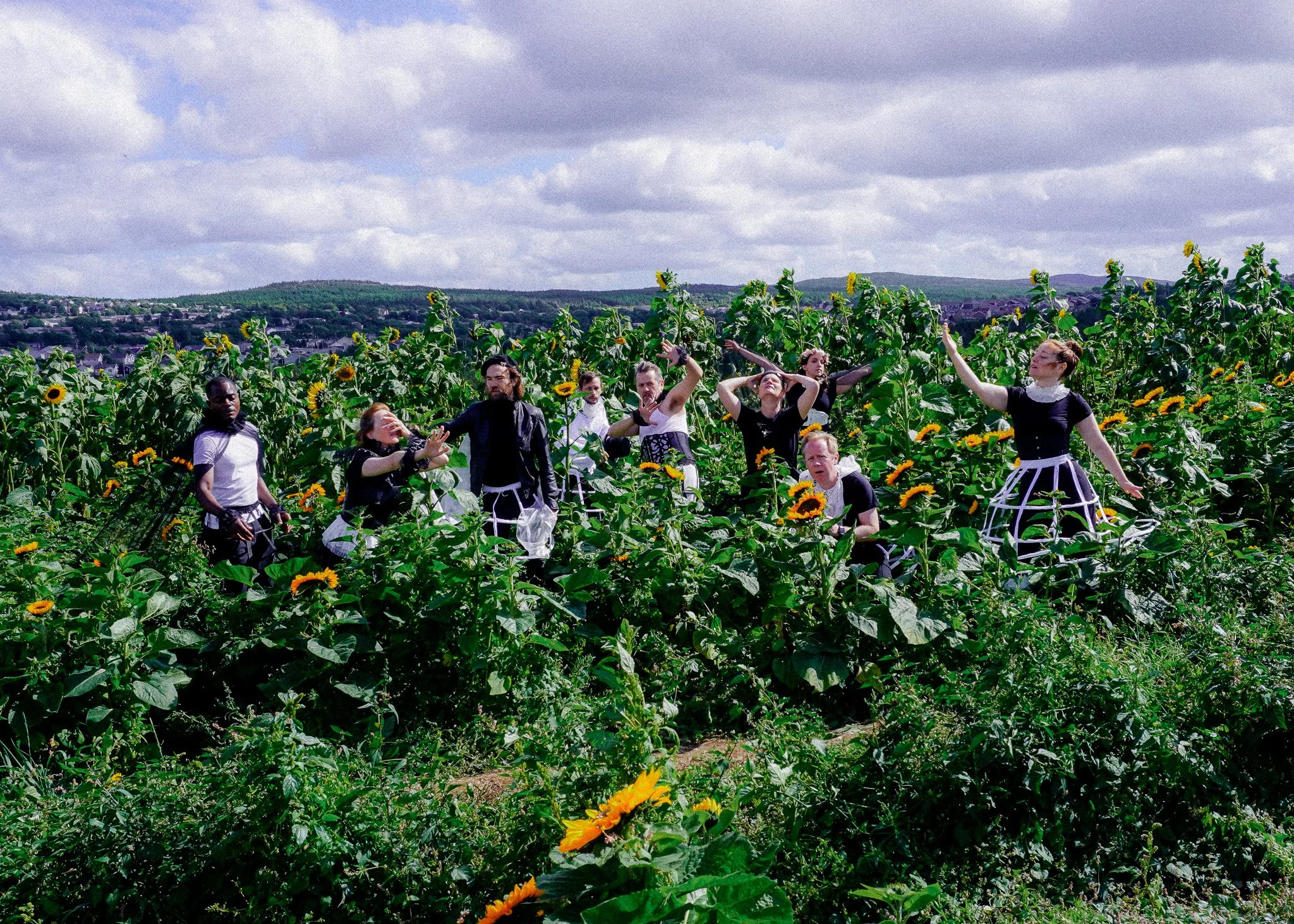
Dream Devised 2026 was created by:
Andrea Duff
Colin Furlong
Phil Goodridge
Allison Kelly
Erin Mackey
Evan Mercer
Jeremy Nolan
Lynn Penting
Jamie Tait
Jordan Vincer
Jamal Weekes
Supported by ArtsNL and the City of St. John’s.